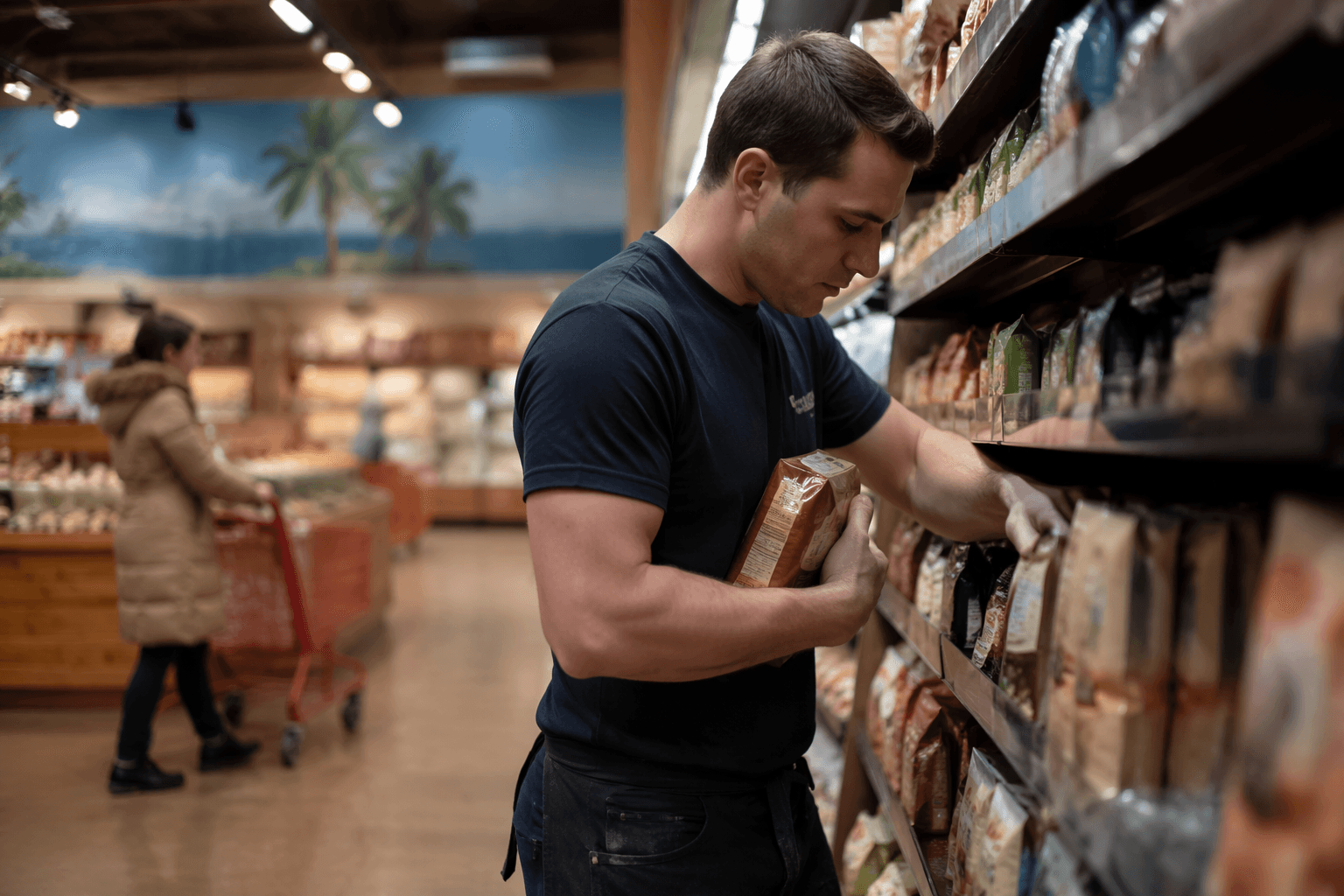
Crew explains why Trader Joe's is discontinuing vegan and plant-based items
Customers reported many vegan and plant-based items marked disco'd; crew replies said limited shelf space, case-ordering and sales thresholds drove the cuts.

Customers reported last week that a string of vegan and plant-based items had been removed from store shelves or labeled "disco'd," and responses from current and former Trader Joe's crew members offered a window into why those decisions happen and what they mean for crews and shoppers.
Crew commenters emphasized that Trader Joe's carries far fewer SKUs than typical grocery chains, which forces regular pruning of items. Limited shelf space means only the strongest sellers stay in rotation, and seasonal or specialty products that underperform are often not reordered. Several crew members explained that items can be discontinued at a single store level or chainwide when sales don't meet internal thresholds, so a product a customer loves in one neighborhood may vanish if it doesn't move at scale.
The store's case-ordering structure also came up repeatedly. Trader Joe's typically buys in cases, and low-velocity items can sit unsold for weeks. That creates two problems for crews: wasted product that must be discarded and extra labor to manage expirations and donations. Crew members described cycles where a slow mover is rotated out, a similar product rotated in to "test demand," and the process repeats if neither item reaches necessary sales levels.
Those assortment constraints shape both customer experience and crew workload. For shoppers who depend on specific vegan items, discontinuations can be frustrating and disruptive. For crew, the operational burden grows when stores need to track perishables, coordinate donations, and answer customer inquiries about why an item is gone. Repeated disco'd notices can also sour customer relations and sap morale among staff who face the fallout at register and by the shelves.

The thread offered a frontline perspective on how corporate assortment strategy and store-level logistics intersect. It showed that decisions often reflect a mix of sales data, supply rules, and experimental rotations rather than an ideological stance on plant-based goods. Crew members also noted that sometimes items return in new forms or under different private-label packaging if demand can be demonstrated.
The takeaway? If you're a crew member, document slow sellers and feed sales observations to your manager so the store can make a stronger case when requesting replacements or reorders. If you're a regular customer, bring the item to your crew's attention, ask managers about waiting lists or substitutions, and remember that small-format assortment means not every niche favorite will survive. Our two cents? Clear communication between crew and shoppers helps, track what moves, advocate for what customers want, and expect rotation as part of the Trader Joe's shopping experience.
This article was produced by Prism’s automated news system from verified source data, official records, and press releases, then run through automated quality and moderation checks before publishing. The system is built and supervised by the people who set the standards it runs under. Read our full AI policy.
Did this article answer your question?