Fifth Circuit Upholds NLRB Order Against Trader Joe's in Houston Labor Case
Jill Groeschel, an eight-year veteran of Houston's Store No. 426, was fired 10 days after filing her second NLRB charge. Now a federal appeals court says she gets her job back.
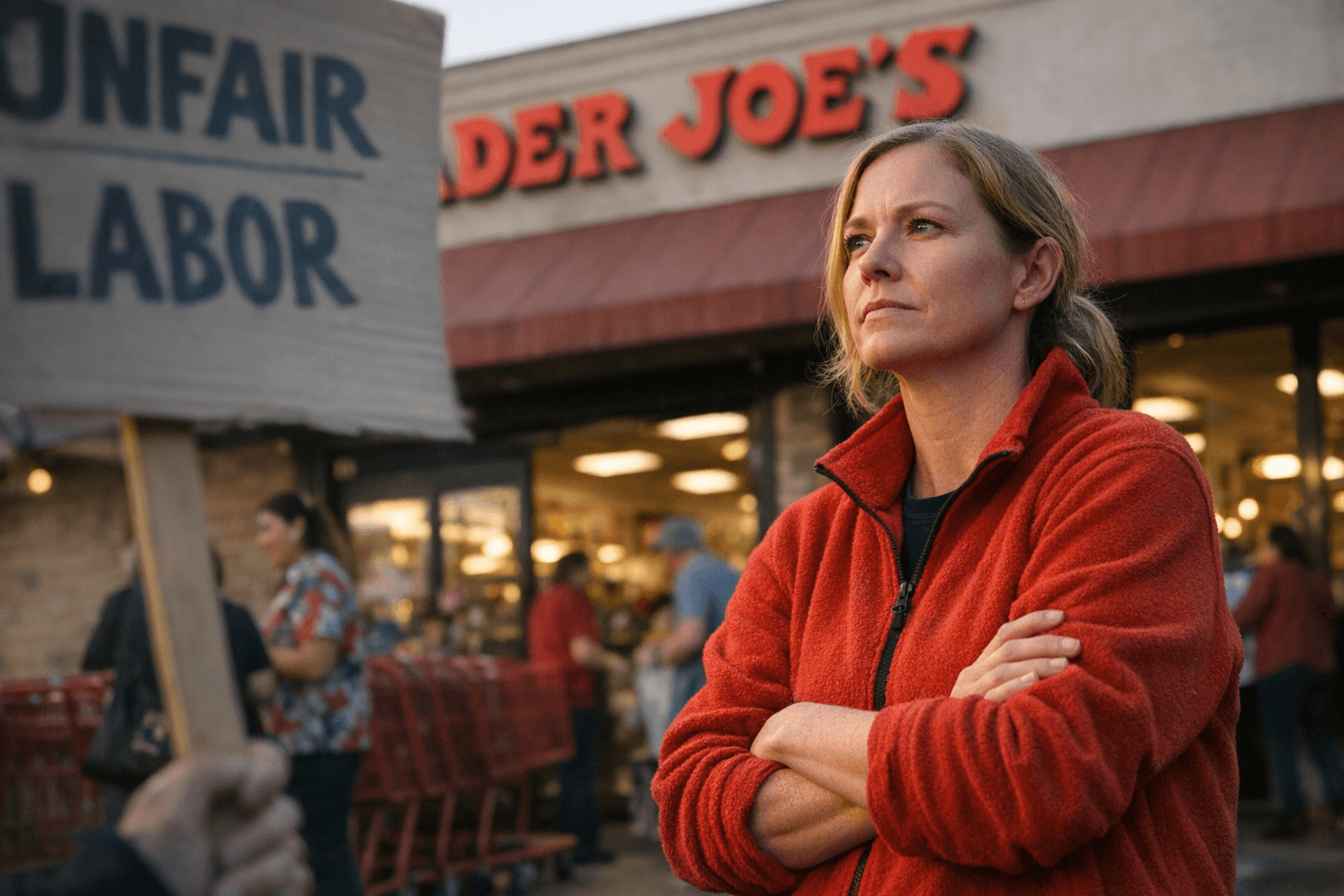
The federal enforcement order against Trader Joe's is now final. The Fifth Circuit upheld NLRB findings that Trader Joe's violated the National Labor Relations Act by issuing a written warning and then suspending and terminating a Houston store employee, Jill Groeschel, in retaliation for protected concerted activity. On February 18, 2026, the court denied Trader Joe's petition for review and granted the NLRB's cross-petition to enforce its order. That order requires Trader Joe's to reinstate Groeschel, expunge the written warning and suspension from her personnel record, and compensate her for lost earnings and every direct or foreseeable pecuniary harm flowing from her April 2022 termination under the NLRB's expanded Thryv standard for make-whole relief.
From 2014 through early 2021, Groeschel was an exemplary employee, consistently earning the company's highest performance rating. Her February 2021 review lauded her amazing rapport with customers and willingness to make the store a great place to shop. Then COVID-19 hit, and she spent roughly two years advocating for safety measures on behalf of herself and coworkers, raising concerns with management and corporate HR about COVID exposure notifications, mask policies, and the removal of plexiglass barriers. She claimed she was given a written warning about inappropriate behavior and a negative performance review in retaliation for those complaints. A month after she filed her first charge, Groeschel was suspended. Trader Joe's terminated her in April 2022, roughly ten days after she filed a second NLRB charge.
Applying the Wright Line framework, the court found substantial evidence of employer animus at each disciplinary step. Three independent grounds sank Trader Joe's affirmative defense. First, temporal proximity: Trader Joe's suspended Groeschel roughly one month after her initial NLRB filing and discharged her ten days after her second. Second, the employee complaints triggering discipline were themselves tainted, most filed only after coworkers learned of the NLRB charge and feared it might harm their store manager, and many concerned previously tolerated conduct. Third, Trader Joe's investigation was facially deficient: rather than pursuing specific allegations, management conducted a general "climate survey" that the Board characterized as a fishing expedition, while failing to contact the primary alleged victim of the most serious misconduct charge.
For crew at Store No. 426 and beyond, the ruling draws a clear line around Section 7 protections. The NLRB affirmed that Groeschel's discussion of 401(k) benefits with a coworker was protected concerted activity, even without evidence of intent to induce group action. Raising safety concerns with coworkers and filing an NLRB charge carry those same protections. Discipline that follows any of those activities, even if nominally supported by performance issues or coworker complaints, will be examined closely for employer animus.
For Captains and Mates, four interactions now carry the most immediate legal exposure. Issuing a written warning to an employee who recently raised a safety concern, particularly if similar conduct by others has been overlooked, is the clearest tripwire under this ruling. Schedule changes that cluster around a crew member's participation in union discussions face identical scrutiny. Solicitation rules applied only against employees talking about wages or working conditions, while letting other personal conversations slide, can themselves constitute a violation. And any investigation that skips obvious witnesses or launches only after an NLRB filing will struggle to convince a Board judge that the motive was clean.
The NLRB ordered Trader Joe's to reinstate Groeschel, remove unlawful disciplinary references from her record, and compensate her for lost earnings and other direct or foreseeable pecuniary harms. The precise dollar amount will be calculated in a future ALJ proceeding. The Board's order also requires Trader Joe's to post a notice at Store No. 426 informing current crew of their rights under the Act, a standard remedy that puts a store's entire workforce on notice that management conduct has been found unlawful by a federal agency.
This article was produced by Prism’s automated news system from verified source data, official records, and press releases, then run through automated quality and moderation checks before publishing. The system is built and supervised by the people who set the standards it runs under. Read our full AI policy.
Did this article answer your question?