How Trader Joe's Staff Can File NLRB Unfair Labor Practice Charges
You have six months to file an NLRB unfair labor practice charge; this step‑by‑step guide shows Trader Joe’s crew, managers, and HR partners how to document, file, and protect themselves through the process.
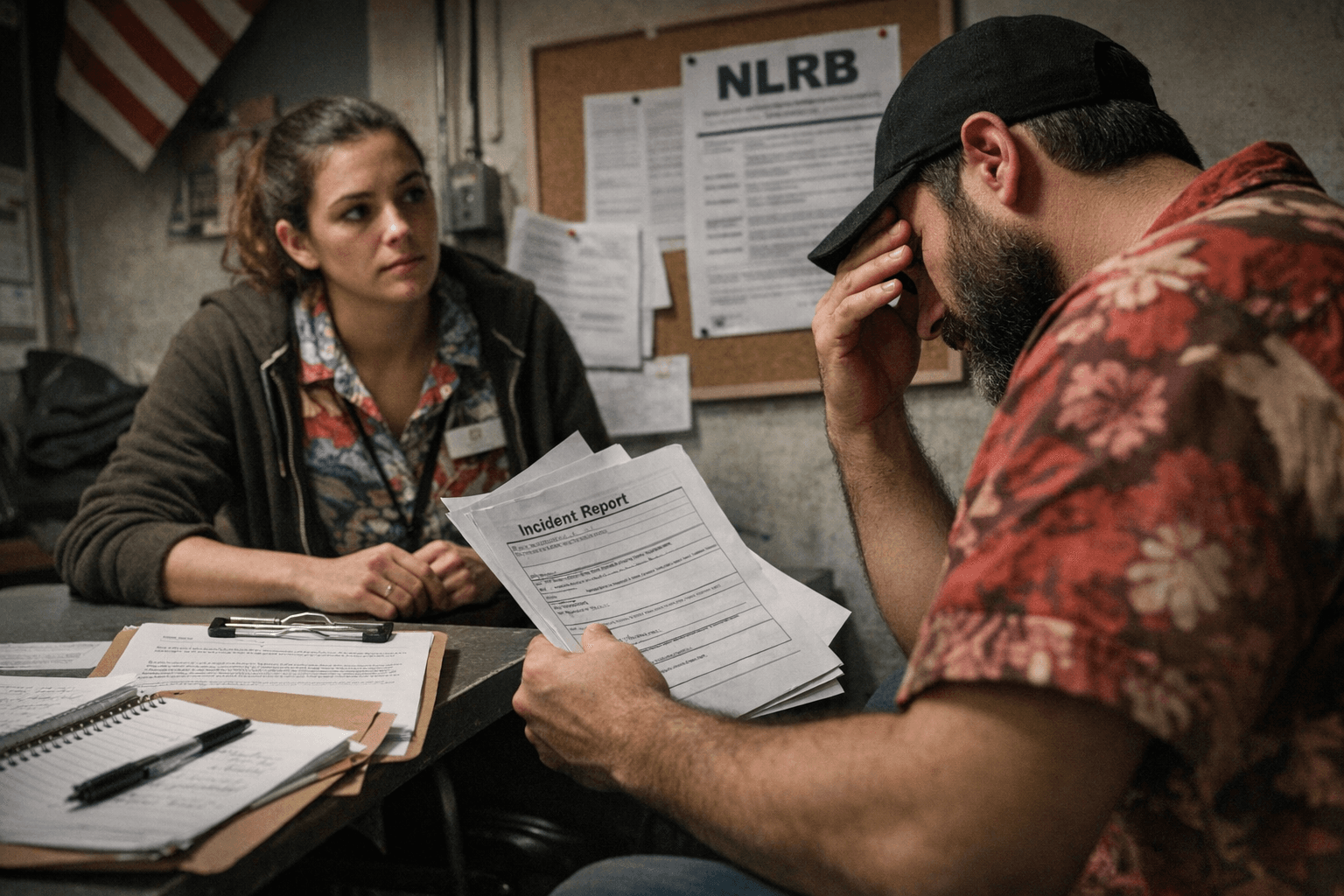
1. Identify the protected activity and the alleged unfair practice
Start by naming the exact behavior you believe violated federal labor law: Examples that commonly trigger NLRB unfair labor practice (ULP) charges include discipline or firing tied to union organizing, joint complaints about pay or schedule, threats or surveillance of employees discussing workplace issues, or refusal to bargain with employee representatives. At store level, note whether the conduct involved a manager, HR partner, or corporate directive and whether the action targeted individual opinions or “concerted” activity, two or more employees acting together or on behalf of coworkers. Being precise here determines whether the NLRB has jurisdiction and whether the conduct fits the statute.
2. Meet the six‑month deadline and calculate the relevant dates
Federal law gives you six months from the date of the alleged unlawful act to file a charge with the NLRB; missed deadlines often end the claim. For an ongoing practice (for example, an employer’s continuing refusal to recognize a union), calculate the six‑month window from the most recent discriminatory act you can document. Record calendar dates for the incident, any follow‑up meetings, and the date you plan to file so you don’t lose the right to bring a charge.
3. Document facts, assemble evidence, and preserve records
Good evidence makes a charge more likely to prompt a quick investigation or settlement. Collect specific items that store crews can access: written warnings and discipline notices, schedules and timecards showing changed hours, text messages or screenshots of supervisor messages, performance reviews, witness names, and dated notes of conversations. Preserve physical evidence (pay stubs, memos) and electronic items (screenshots, store Slack or crew messaging), do not alter or delete records, and write a short timeline keyed to dates and store locations.
4. Get witness statements and coworker confirmations
ULP cases frequently turn on corroboration. Ask coworkers who observed or participated in the protected activity to write short, dated statements describing what they saw, using plain language and specific times, locations, and names. Include store manager names, HR contacts, and store address or number so the charge ties to a precise Trader Joe’s location. Keep contact information for witnesses; the NLRB investigator will want to interview them.
5. Decide who will file: employee, union, or representative
Charges can be filed by an individual employee, a union, or another person acting on behalf of employees. If coworkers or a local union are involved, coordinate who will submit the charge so statements and facts are consistent. Store managers and HR partners should be aware that employers themselves can also file charges if alleging unfair practices by unions or employees.
6. Prepare the charge: what to put in the filing
A charge should state the employer’s name and the exact store location or corporate office involved, the specific unfair acts, the dates they occurred, the names of managers implicated, and a concise statement of requested remedies (for example, reinstatement with back pay or an order to stop interrogation of employees). Sign and date the charge and attach supporting documents and witness statements. A clear, chronological narrative with named witnesses and documents dramatically improves the NLRB’s ability to act quickly.
7. File with the NLRB, e‑file or your regional office
Trader Joe’s staff can file ULP charges electronically through the NLRB’s official e‑filing portal or deliver a paper charge to the nearest regional NLRB office; the agency will notify the employer once a charge is filed. Note the regional office that handles your state or nearest city, investigators are assigned by region and that determines who will pick up the case. Keep copies of everything you file and note the filing date as the official start of the case.
8. What to expect after filing: investigation and possible settlement
After a charge is filed, the NLRB typically opens an investigation and will contact both parties to obtain additional documents and statements. Many cases resolve through settlement discussions before a formal complaint is issued; settlements can include back pay, reinstatement, or a neutral posting to inform employees of their rights. If the agency finds merit but cannot settle, it may issue a formal complaint and proceed to an administrative hearing before an ALJ, store‑level staff should expect contact from investigators and should not delete records or influence witnesses.
9. Remedies, hearings, and appeals
If the NLRB proves unfair labor practices, typical remedies include reinstatement, back pay, orders to bargain, and cease‑and‑desist directives; in rare cases, the Board can issue bargaining orders if an employer unlawfully refuses to recognize a majority. After an ALJ’s decision, either party can ask the NLRB Board in Washington to review; Board decisions can be appealed to federal court. Keep in mind that many matters are resolved informally, but serious or precedent‑setting disputes can extend for many months.
10. Responding to retaliation or additional unlawful acts
If your employer disciplines, suspends, or fires you after you file a charge or engage in protected concerted activity, document the new action immediately and file an amended or new charge. The NLRB treats retaliatory acts that occur after an initial charge as separate unfair practices and will investigate them alongside the original allegations. Store managers and HR partners should know that any post‑filing discipline is scrutinized for motive; employees should continue to preserve evidence and maintain written notes of subsequent encounters.
11. When to get legal or union help
Consider consulting an experienced labor attorney or a union representative before filing if the situation is complex (multi‑store discipline, allegation involving corporate policy, or simultaneous state law claims). Legal counsel can help frame the charge, advise on additional remedies, and coordinate parallel actions such as state wrongful‑termination claims where appropriate. For many Trader Joe’s crew members, a union organizer or an experienced labor lawyer can draft a charge and handle communications with the NLRB on your behalf.
- Continue showing up and performing your duties unless an explicit safety or work rule prevents it; abandonment can complicate back‑pay claims.
- Keep a private folder of all documentation with timestamps and witness contact information.
- Avoid posting detailed case strategy or witness identities on public social media or in shared crew chats; that can escalate conflict and create evidentiary issues.
- Notify the NLRB investigator if the employer takes new adverse actions so they can be added to the charge.
12. Store‑level practical tips to protect yourself while the case proceeds
Conclusion Filing an NLRB unfair labor practice charge is a time‑sensitive, document‑driven process that starts at the store level: identify protected concerted activity, preserve clear evidence with dates and witness names, and file within six months. For Trader Joe’s crew, managers, and HR partners, rigorous timelines and organized records, plus early coordination with coworkers, union reps, or counsel, are the clearest paths to a prompt investigation and meaningful remedy.
This article was produced by Prism’s automated news system from verified source data, official records, and press releases, then run through automated quality and moderation checks before publishing. The system is built and supervised by the people who set the standards it runs under. Read our full AI policy.
Did this article answer your question?