‘Ingredients of alienation’: worker‑organizers reflect on the rise of Trader Joe’s United (analysis and crew perspective)
Crew-organizers at four unionized stores mapped the exact friction points - scheduling, emotional labor, pay erosion - that are now shaping Trader Joe's United's bargaining table.
The stores that rewrote the handbook
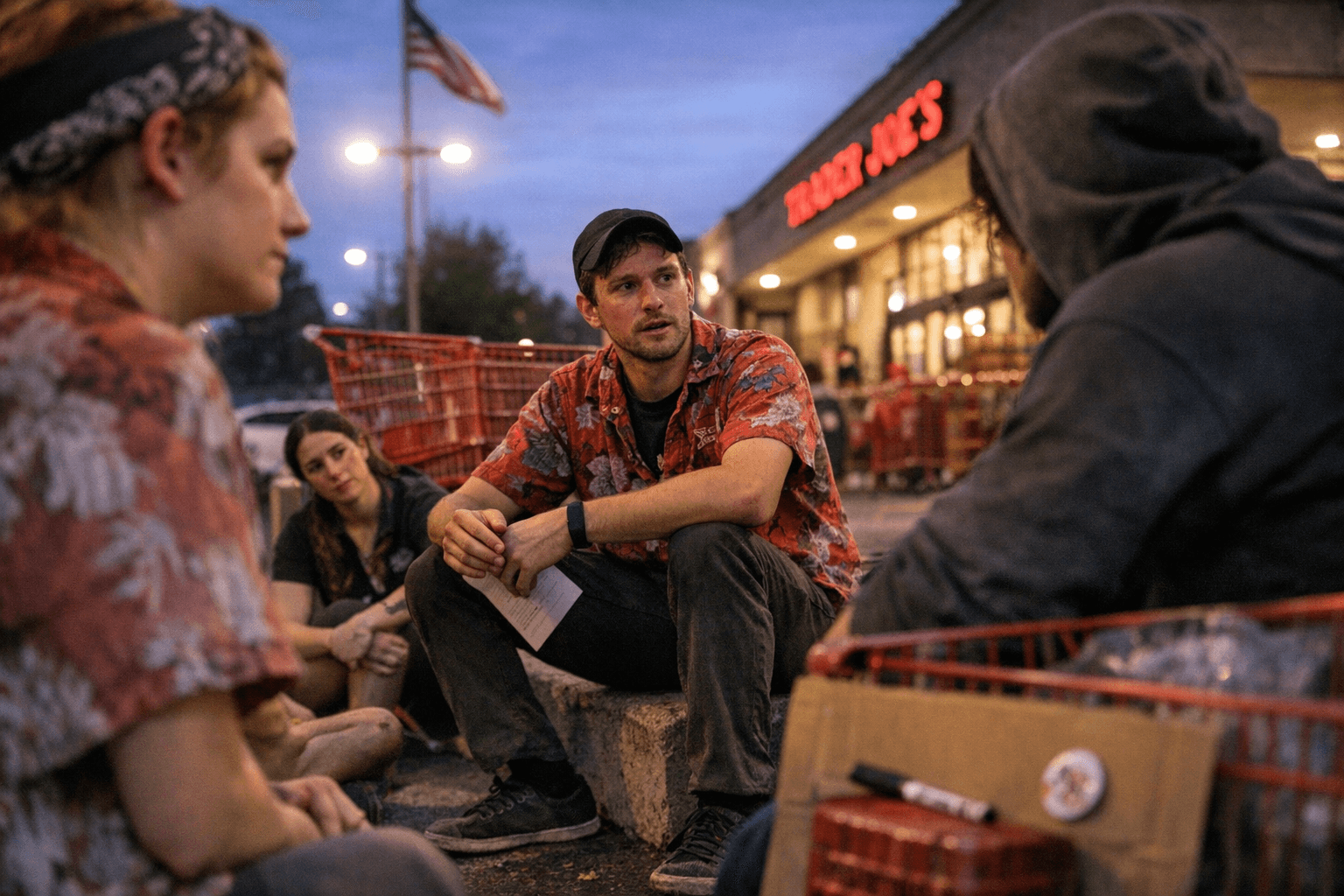
A small grocery in Hadley, Massachusetts, population 5,000, best known for its asparagus festival and university move-in traffic, became the most consequential Trader Joe's location in the company's history on July 28, 2022. The crew there voted 45-31 to form the first union in the chain's existence, choosing to go independent rather than affiliate with an established national union. What followed was a cascade: Minneapolis organized under the Trader Joe's United banner that August. Louisville, Kentucky voted in January 2023. Oakland's Rockridge store followed with a decisive 73-53 result. By the time a New York Essex Crossing vote ended in a 76-76 tie, the independent union had become a durable institution with a bargaining committee, a public website, filed unfair labor practice charges, and published proposals spanning wages, healthcare, retirement, and paid time off.
A recent analysis published by WorkerOrganizing.org, titled "Ingredients of Alienation: The Emergence of Trader Joe's United," synthesizes crew testimony from across these locations and builds a detailed account of what specifically drove workers to organize. It is explicitly pro-worker in framing, not neutral journalism, but for anyone standing on a Trader Joe's store floor right now, it functions as something more practical: a field map of the friction points that organizers have identified, aggregated, and are now bringing to bargaining tables.
The contradiction baked into the job
The analysis centers on a tension that veteran crew members recognize immediately. Trader Joe's built its brand on genuine, proactive customer connection: the kind of service that turns a grocery run into a neighborhood ritual. That culture is real, and it is also, by the analysis's account, a source of structural strain. Workers are expected to perform emotional labor continuously, maintaining enthusiasm and warmth across eight-hour shifts that also involve restocking pallets, managing dense stockrooms, and absorbing the physical demands of a high-velocity small-format store. That emotional labor, the analysis argues, is mandated but unpaid.
The point is not abstract. A crew member from a store on the Upper West Side of New York City alleged their termination was connected to not smiling enough, a claim that has since become the subject of active litigation. For workers who read that story, it crystallizes something they may have felt but struggled to name: the performance expectations are not just cultural norms, they carry discipline weight. The gap between the company's warm public identity and the mechanical enforcement of that identity is precisely where organizing arguments find their footing.
Pandemic as accelerant
The WorkerOrganizing.org piece identifies the pandemic period, specifically late 2021 and early 2022, as the moment when that tension became impossible for many crews to compartmentalize. Crew members named Yosef and Ryther, cited directly in the analysis, describe stores that had built tight, mutually supportive communities among workers, communities that held together under pressure. What eroded trust, per their accounts, was not the pandemic itself but the corporate response to it: a "fear-filled environment" enforced through store leadership, an unwillingness by executives to hear workers out on safety conditions, and a growing sense that the company's above-market pay and benefits positioning was being quietly walked back.
That pay positioning had always been a central part of Trader Joe's identity. The company historically paid above retail-industry norms and used that premium to offset lower staffing levels and generate higher per-employee productivity. When crew members perceived that wage trajectory flattening, or watched retirement and healthcare benefits shift, it undermined the implicit deal. You accepted the physical demands and emotional performance requirements because the compensation was genuinely better than alternatives. Once that assumption cracked, the calculus changed.
What organizers actually want at the table
Trader Joe's United's bargaining priorities, drawn from published updates across the Hadley, Minneapolis, and Louisville sessions, map directly onto the grievances the WorkerOrganizing.org analysis documents. Scheduling transparency sits at the top: crew members describe the current system as unpredictable in ways that make childcare, second jobs, and basic financial planning difficult. Paid break guarantees, discipline procedure clarity, and promotion pathway transparency follow closely. The union has also pushed hard on appearance and identity accommodations, including the right to wear pronoun pins legible enough to be read, a deceptively specific demand that surfaced a real policy gap. During a March 2023 bargaining session, Trader Joe's announced a national policy allowing pronoun nametags for crew "who feel misgendered." TJU pressed on the limiting language, was verbally assured the pins would be available to any crew member who asked, and then began receiving reports that store-level implementation was inconsistent. That sequence, promise at the table, friction on the floor, is the recurring pattern organizers cite to argue the company negotiates in bad faith.
The Louisville situation has produced the most formal legal consequence so far. An NLRB administrative law judge ruled in September 2025 that Trader Joe's East Inc. violated federal labor law by refusing to begin contract negotiations with TJU at the Louisville store. The company had challenged the bargaining unit certification after losing its objections before the regional director. The ruling requires the company to bargain, and TJU has used the Louisville proceedings as a public record of what delay and procedural resistance look like in practice.
What this means on the floor, store by store
The WorkerOrganizing.org analysis is valuable to crew not primarily as a legal document but as a mirror. It aggregates the specific, ordinary frustrations that individually feel manageable but collectively become the texture of a working life: a schedule posted too late to plan around, a break shortened because a shift ran long, a discipline conversation that felt disproportionate to the infraction, a pay raise that didn't keep pace with tenure expectations. These are not dramatic events. They are the slow accumulation of small signals that the company's stated values and its operational reality are not quite aligned.
For managers, the analysis functions differently. The grievances the piece documents are not abstractions; they are the specific agenda items that union organizers bring to authorization card conversations. A crew member who doesn't know the company's formal break policy, or who has watched discipline applied unevenly across shifts, or who has never seen a clear promotion pathway posted anywhere, is a crew member for whom an organizer's pitch is easier to make. The WorkerOrganizing.org piece essentially publishes the organizing script alongside the grievances that make it legible.
The information gap that remains
What the analysis does not resolve, and what crew and managers alike should hold in mind, is the gap between documented grievances and documented company responses. Trader Joe's has consistently maintained that its pay, benefits, and working conditions rank among the best in grocery retail. The company's public posture has been that unionization is unnecessary because those conditions already exceed what organizing would achieve. That counter-argument is not tested in the WorkerOrganizing.org piece, which is written from the crew-organizer perspective.
What that leaves is a credibility question readers have to resolve themselves: where crew testimony describes specific practices (shortened breaks, inconsistent discipline, stalled pay progression), and the company's position is that conditions are above-market, the gap between those accounts is where the real story lives. TJU's published bargaining updates, NLRB filings, and the ongoing Louisville proceedings are the most concrete public record available. The analysis is a useful lens; the primary documents are the test.
The four organized stores represent a tiny fraction of Trader Joe's roughly 530 locations. But the pattern they've established, independent, crew-run, bargaining store by store, has already produced a national policy shift on pronoun nametags, a federal labor ruling in Louisville, and a public account of workplace conditions detailed enough that it's reshaping how customers ask questions at the register. The ingredients, as the organizers put it, were already in the store.
This article was produced by Prism’s automated news system from verified source data, official records, and press releases, then run through automated quality and moderation checks before publishing. The system is built and supervised by the people who set the standards it runs under. Read our full AI policy.
Did this article answer your question?