OSHA ergonomics guidance highlights hidden injury risks for Trader Joe's crew
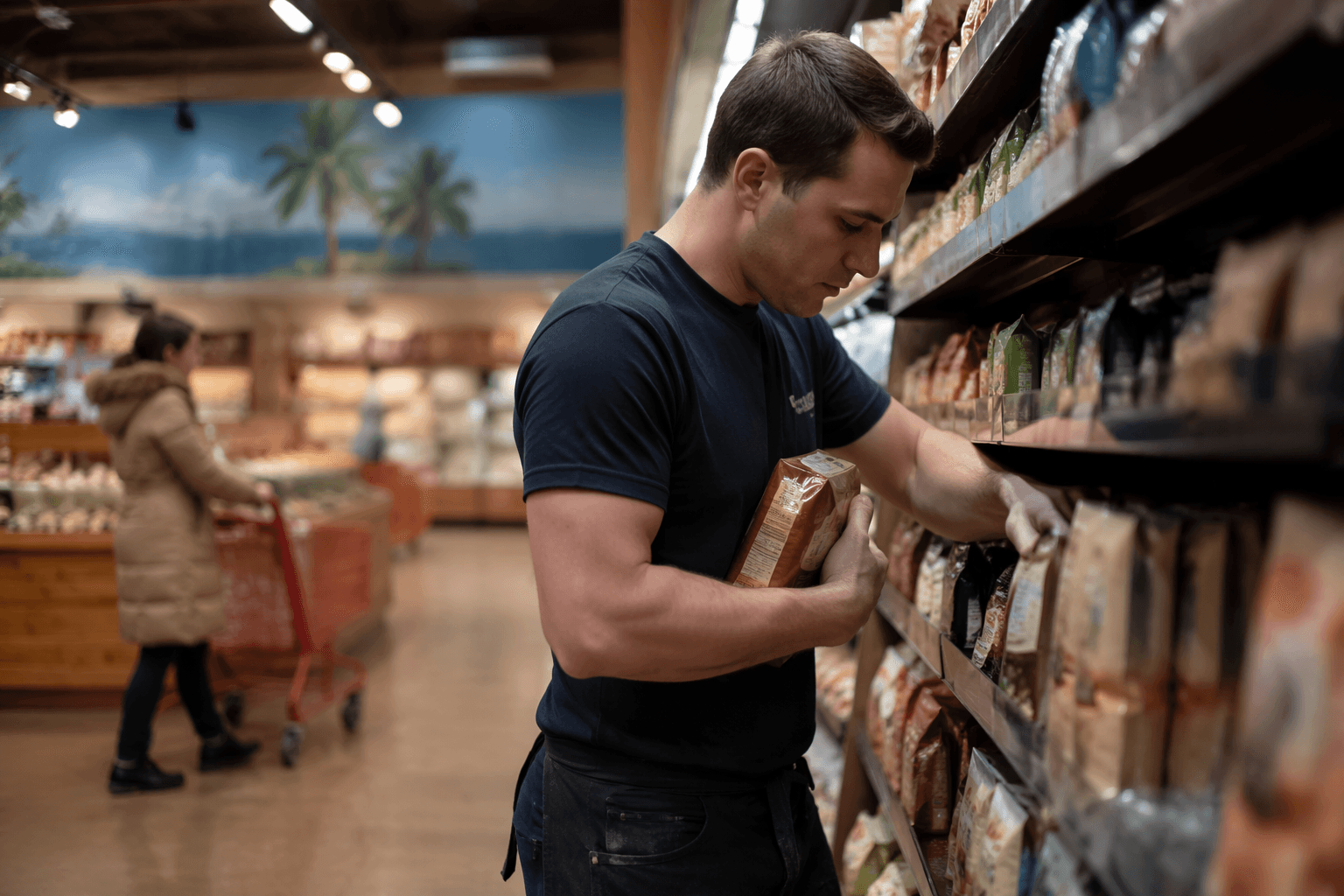
OSHA’s grocery ergonomics guidance is really a map of Trader Joe’s hidden injuries. The biggest risks come from routine lifting, stocking, reaching, and pallet work, not the dramatic stuff shoppers notice.
Hidden injuries are the real floor risk
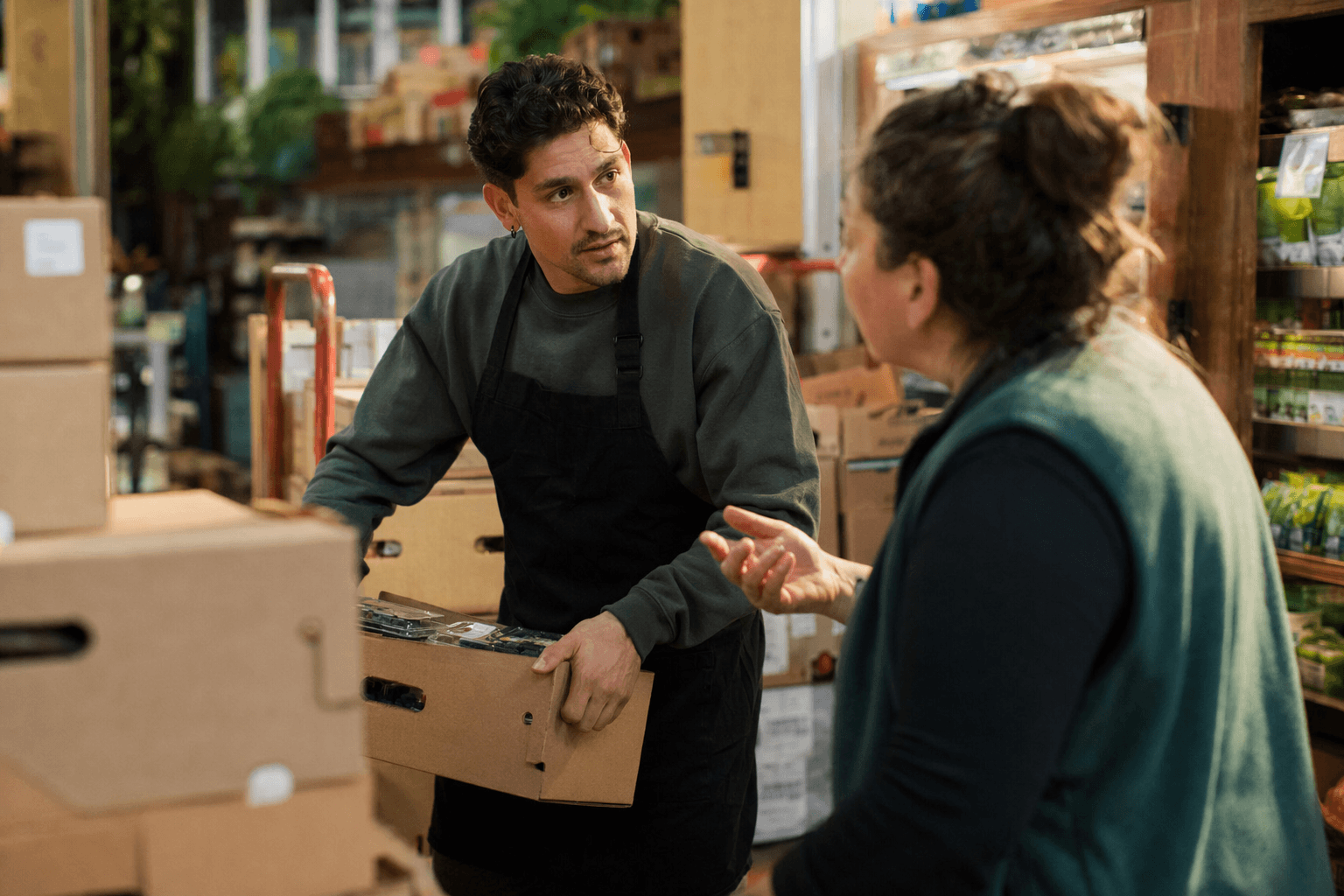
Trader Joe’s crew already know the job is physical. What OSHA’s retail grocery ergonomics guidance makes clear is that the most common injuries do not come from rare accidents, but from the ordinary grind of lifting, bending, reaching, pushing, and pulling all shift long. NIOSH says manual material-handling injuries, also called overexertion injuries, account for 60% of injuries and lost work in select retail businesses, which is why a sore back or aching shoulder should never be treated as just part of the culture.
That matters at Trader Joe’s because the work is intentionally broad. The company says crew members “do a little of everything,” from running the register to stocking shelves and creating displays. That mix makes the physical load feel diffuse, but it also means the same body parts can get hit again and again across different tasks, with little recovery in between.
Where the strain really builds
The risky work is usually not dramatic. It is the low shelf that forces a deep bend, the dairy case that has to be rotated quickly, the case of water that gets lifted awkwardly, the pallet breakdown that happens before the floor gets busy, or the repeated register motion that never quite lets a wrist or shoulder rest. OSHA’s ergonomics overview points to exactly these kinds of risk factors: lifting heavy items, bending, reaching overhead, pushing and pulling heavy loads.
For Trader Joe’s crews, that means the hidden injury story is tied to routine store rhythm. Unloading a truck, moving product across the backroom, stocking high shelves during a rush, and breaking down pallets are not separate safety issues. They are the same ergonomic problem showing up in different parts of the shift.
OSHA’s retail grocery guidance is designed for store managers and employees, and it aims to reduce musculoskeletal disorders in grocery workplaces. The practical message is simple: when a task repeatedly strains the same motion or muscle group, it needs to be redesigned, not normalized.
What OSHA and NIOSH are actually telling grocery teams to do
The strongest part of the federal guidance is that it is not abstract. OSHA says ergonomic changes to equipment, work practices, and procedures can help control costs and reduce employee turnover. That is a useful reminder for any store running lean: prevention is not just about avoiding pain, it is about keeping crews available, experienced, and steady on the floor.
NIOSH adds a very retail-specific tool kit. Its retailer booklet highlights mechanical assist devices such as powered pallet jacks, pallet stackers, stocking carts, handcarts, and vacuum lifts. Those tools are not glamorous, but they matter because they reduce the exact kinds of repetitive force that stack up in grocery work.
OSHA’s retail grocery guideline also went through a public process before becoming the agency’s reference point. OSHA disseminated a draft for comment on May 9, 2003, held a stakeholder meeting on October 2, 2003, and then issued the final guideline. That history matters because the guidance was shaped for the store floor, not written as a distant compliance memo.
A practical checklist for crew and managers
The best way to use the guidance is to treat it like a daily floor checklist, not a binders-on-a-shelf document. The point is to spot the tasks that keep loading the same joints and then change the workflow before discomfort becomes an injury.
- Watch for tasks that require repeated bending, twisting, or reaching above shoulder height.
- Ask for help with heavy, awkward, or unstable items instead of muscling through alone.
- Use mechanical aids when they are available, especially for pallet movement and case handling.
- Rotate tasks when one motion is starting to wear on the same muscle group.
- Report early pain, numbness, or stiffness before it turns into a missed shift.
Crew can use this OSHA-style checklist during a shift:
Managers can turn that into a floor habit by looking at the work itself, not just the injury report. If the same stock section always forces deep crouches, if a display setup requires too much overhead reach, or if a team keeps improvising handoffs because no cart is nearby, those are workflow problems that can usually be fixed faster than a claim can be filed.
Three to five fixes a Trader Joe’s-style manager can make immediately
A Trader Joe’s-style store manager does not need a yearlong ergonomics initiative to start reducing injury risk. The most useful fixes are operational, visible, and doable now:
- Put mechanical aids where the work happens. If powered pallet jacks, stocking carts, or handcarts exist, they should be staged so crews actually use them during unloads and restocks.
- Rework the lowest and highest shelves. Move the heaviest items to easier reach zones whenever possible, and assign the most awkward restocks to pairs instead of one person.
- Build micro-rotation into busy periods. If one person has been scanning, stocking, or breaking down product for too long, switch the task before fatigue changes the body mechanics.
- Slow the urge to rush pallet breakdowns. A faster break can be a more expensive injury if cases are being twisted, lifted, or carried badly.
- Treat early discomfort as a staffing signal. If several people flag the same body strain in the same area, the problem is likely the task design, not individual toughness.
Those fixes matter because small retail teams often normalize soreness as the price of a good shift. OSHA’s guidance pushes the opposite idea: discomfort is useful data, and it should trigger a change in how the store works.
Why this is also a Trader Joe’s business story
Trader Joe’s builds a lot of its identity around neighborhood feel and crew personality. The company says it has been transforming grocery shopping since 1967, and its public image depends on friendly, high-energy floor work. That makes ergonomics more than an HR topic. It is a retention issue, a service issue, and a consistency issue.
The company’s safety record also shows why store-floor practices stay under scrutiny. In April 2024, federal OSHA said Trader Joe’s was cited in Colorado and proposed penalties totaled $216,902. OSHA said the Colorado case involved repeated blocking of electrical equipment, and that Trader Joe’s had previously been cited for similar issues in Maine, New York, and New Jersey. That case was about electrical safety, not ergonomics, but it reinforces the larger point: safety is not theoretical in a Trader Joe’s store, and regulators are paying attention when day-to-day practices slip.
For crew members, the clearest takeaway is that pain is not a badge of honor. For managers, the challenge is to design the shift so people can keep moving without wearing down the same joints every day. In grocery work, that is what protecting the floor actually looks like.
This article was produced by Prism’s automated news system from verified source data, official records, and press releases, then run through automated quality and moderation checks before publishing. The system is built and supervised by the people who set the standards it runs under. Read our full AI policy.
Did this article answer your question?