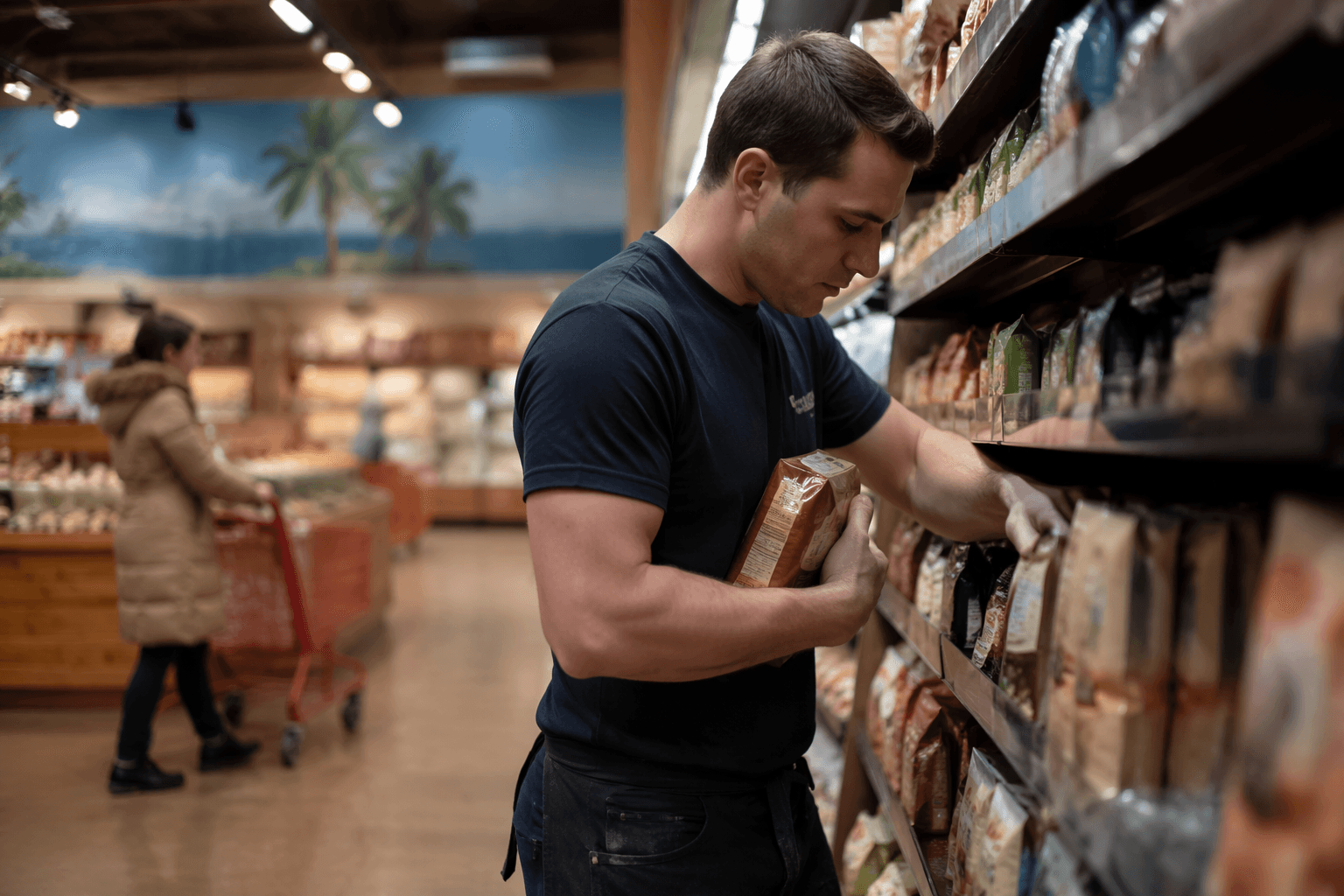
OSHA Highlights Hidden Warehouse Hazards Behind Trader Joe's Stores
Trader Joe's shelves depend on a hidden warehouse system, and OSHA says lifting, forklifts, and rushed workflows drive the injuries that can slow every store.
The warehouse sets the pace for the store
Trader Joe’s store experience begins long before a crew member faces the first shopper. OSHA’s grocery-warehousing guidance makes that plain: a grocery warehouse has three core jobs, to receive bulk goods from the supplier, order-pick the desired goods, and ship those goods onward. That is the machinery behind the neighborhood-store image Trader Joe’s promotes, and it is why a late truck, a damaged case, or the wrong quantity of product lands first in the backroom before it reaches the shelf.
Trader Joe’s describes itself as a national chain of neighborhood grocery stores committed to outstanding value and says it has been transforming grocery shopping since 1967. It also says a lean office crew in Monrovia, California, and Boston, Massachusetts, supports the stores behind the scenes. That support only works when the physical flow does. Every pallet, case, and piece of backstock reflects a larger chain of receiving, sorting, transport, and timing, which means the warehouse is not a separate world from the sales floor. It is the part of the operation that decides whether a store feels stocked, steady, and manageable, or chaotic and short-handed.
Why OSHA treats grocery warehousing as a safety issue, not just a logistics issue
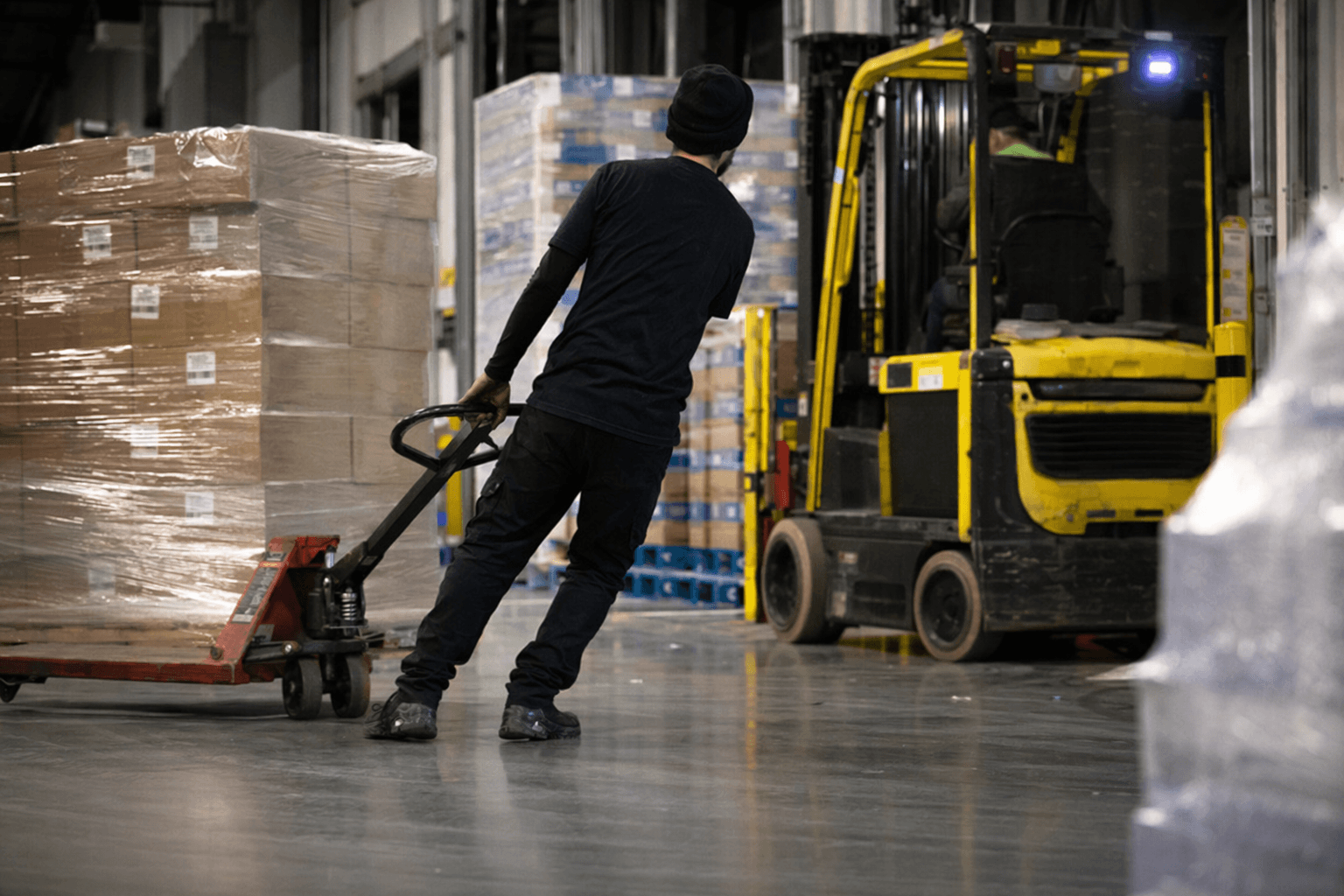
OSHA groups warehousing and storage hazards into a familiar list: powered industrial trucks, ergonomics, material handling, hazardous chemicals, slip and trip hazards, falls, and robotics. The agency says the most common injuries are musculoskeletal disorders, especially from overexertion in lifting and lowering, along with injuries from being struck by powered industrial trucks and other materials-handling equipment. For a grocery business, that means the same physical steps that keep product moving can also create the injuries that slow the whole store down.
OSHA’s point is not just that warehouse work is hard. It is that proper design, planning, and training can reduce those hazards. The agency also says work practices such as pallet-unloading patterns, break schedules, training, and the number of hours worked can materially affect injury risk. That matters to managers on the floor as much as to anyone in a warehouse, because a crowded backroom, a poorly timed unload, or a rushed stocking push can turn the store itself into an ergonomic problem. When the system is built well, it lowers strain and speeds work. When it is built badly, the friction shows up in every department.
What crew members notice first when the system slips
Crew members do not need a warehouse badge to feel warehouse problems. If a delivery arrives late, the morning starts with a scramble. If product shows up damaged, someone has to sort salvageable items from write-offs. If cases come in the wrong quantity, the floor team has to explain gaps that are not really a sales problem at all.
That is why backroom discipline matters. Communication with drivers and vendors, careful handling, and clear stockroom organization are not abstract best practices; they are what keep the store from losing time and throwing labor at preventable problems. A congested or overstuffed backroom forces employees to work around each other, move product twice, and lift under pressure. Those are exactly the conditions OSHA warns can increase overexertion and struck-by risks.
For managers, the lesson is blunt: labor allocation starts upstream. If receiving is understaffed, if pallets are unloaded in a messy sequence, or if breaks are compressed because the truck arrived late, the store pays for it later in slower stocking, more clutter, and more strain on the team. The customer may only see an empty shelf or a missing favorite, but the cause is often a warehouse process that never got enough attention.
Trader Joe’s product filter makes the warehouse even more important
Trader Joe’s vendor page reinforces how selective the company is about what enters its system. The company says it is focused on products that offer real value, and that potential vendors should expect submissions to be reviewed before the company will contact them if there is a fit. That selectivity helps define the brand, but it also means the warehouse and ordering system have to be disciplined once a product is approved.
A tight product mix can make operations easier in some ways, yet it also increases the pressure to move the right item to the right store at the right time. For crew members, that means the backroom is not just a holding area. It is where the company’s promise of value is either protected or weakened. If the item flow is off, the store feels it immediately in labor, shelf condition, and customer service.
Growth raises the stakes for distribution and backstock
Trader Joe’s has been expanding, and that expansion makes the warehouse side of the business more important, not less. The company said in early 2025 that it expected to open dozens of stores that year. At the start of 2025, Trader Joe’s had 579 locations across 42 states and Washington, D.C., according to Grocery Dive. By April 21, 2026, the company had also announced a 2026 coming-soon store in McKinney, Texas.
Each new store adds another node to the same operating chain. More locations mean more receiving, more order-picking, more transport, and more opportunities for error if the system is stretched. That is why warehouse planning is not an invisible administrative problem. It is one of the main reasons a chain like Trader Joe’s can keep its stores feeling local while scaling nationally.
A recall shows how quickly warehouse decisions become store realities
Trader Joe’s recall notice involving certain Moonlight brand yellow peaches makes the point in a very concrete way. The company said those peaches were shipped to its stores in listed states between September 24, 2025, and October 28, 2025. That kind of distribution window shows why timing, location tracking, and shipment records matter so much in grocery retail.
For managers, a recall is not just a compliance task. It is a test of how well the store can identify affected product, isolate backstock, and communicate fast enough to protect customers and minimize waste. For crew members, it is another reminder that the backroom is where corporate systems meet daily reality. The warehouse does not stay hidden for long. It shows up in what gets stocked, what gets pulled, and whether the store can keep faith with the customer when something goes wrong.
Trader Joe’s likes to present itself as a neighborhood store with a distinctive culture and a clean, curated assortment. OSHA’s warehouse guidance shows the harder truth behind that image: the customer experience depends on the discipline, pace, and safety of the operation long before a shopper reaches the aisle.
This article was produced by Prism’s automated news system from verified source data, official records, and press releases, then run through automated quality and moderation checks before publishing. The system is built and supervised by the people who set the standards it runs under. Read our full AI policy.
Did this article answer your question?