OSHA, SHRM say Trader Joe's should treat training as essential
OSHA and SHRM point to the same answer: Trader Joe’s training works best when it is repeated on the floor, tied to real tasks, and refreshed before mistakes stack up.
Training belongs on the floor, not just at orientation
A strong Trader Joe’s training program should look less like a binder and more like a shift in motion. OSHA’s position is straightforward: when workers face hazards, employers must train them, and the agency also provides training and reference materials to help make that happen. SHRM adds the workforce-management case, saying continuous learning is a competitive advantage because it can reduce skills gaps, improve retention, and accelerate innovation.
Put those ideas together in a grocery store, and the message is practical. Crew members do not need abstract theory, they need task-specific coaching that matches the pace of a crowded sales floor. That means the kind of training that helps someone ring register, answer a sample question, clear a spill, or hand off a customer issue without freezing up or improvising.
What good training looks like during a busy shift
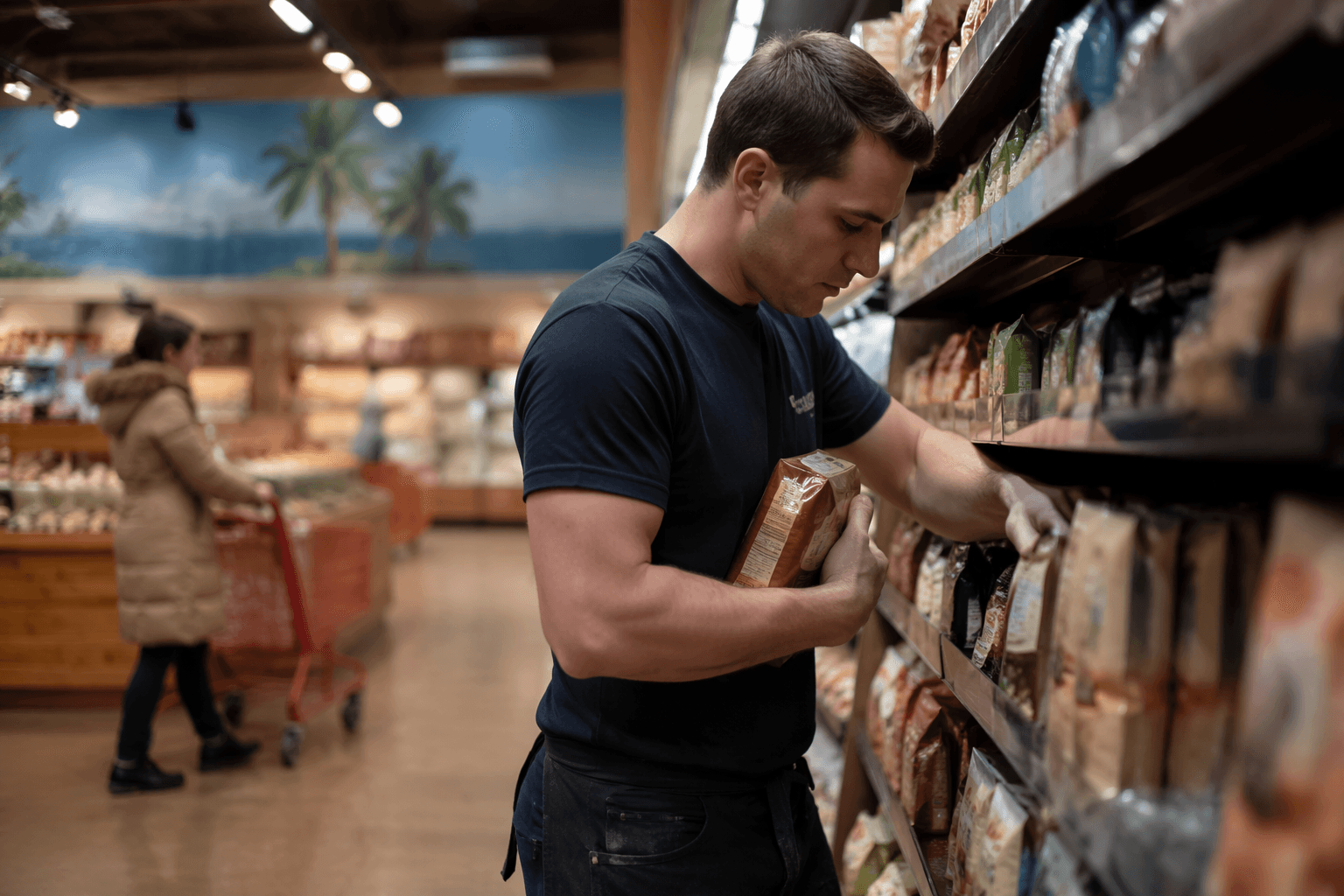
At Trader Joe’s, the best training is the kind that survives a rush. A crew member should know how to cover a register smoothly, when to call for backup, how to handle customer questions at the sample table, and how to move quickly when a spill happens near an aisle or endcap. The same applies to stocking: if a pallet hits the floor, the team needs clear routines for backroom organization, product rotation, and safe lifting, not vague advice that only makes sense when the store is quiet.
That is why refreshers matter. Retail changes fast, and a skill learned during onboarding can get fuzzy months later if nobody revisits it. If a display changes, a food safety step changes, or a procedure changes for handoffs between the front end and the backroom, the training needs to change too. Workers are safer and faster when they know exactly what to do, and managers spend less time correcting preventable mistakes.
A store that trains well also trains for judgment. Crew members should know who to ask when they are unsure, where written procedures live, what a good buddy system looks like, and how to report a hazard without feeling like they are causing trouble. That matters in a culture that prizes autonomy, because autonomy only works when people have enough structure to make the right call under pressure.
Trader Joe’s own model puts managers on the floor
Trader Joe’s already describes its store leadership in ways that fit this approach. On its careers page, the company says Mates work side by side with the Crew while providing training, guidance, and development. It also says Captains develop the Crew from the store floor rather than from back offices. That is more than a slogan. It suggests a training model built into daily operations, where coaching happens while carts are moving, samples are being handed out, and the line at checkout is getting longer.
For crew members, that kind of leadership can make a shift feel less chaotic. A manager who trains in the moment can spot where a new hire is hesitating at a register, where a stocker is lifting awkwardly, or where a customer handoff needs a cleaner explanation. For managers, it creates a store that can move faster because fewer steps are left to guesswork. The result is not just better morale, but cleaner execution when the floor gets busy.
Safety training has a real-world warning behind it
The need for repeat training is not hypothetical. On April 10, 2024, the U.S. Department of Labor said OSHA fined Trader Joe’s nearly $217,000 after a December 2023 inspection at its Greenwood Village, Colorado store. OSHA said the inspection found unsafe forklift operations and a lack of training for forklift operators. The agency also said Trader Joe’s had previously been cited for the same standards in Pennsylvania, Maine and Massachusetts.
That history gives the training conversation real weight. Forklift safety is not a side issue in a grocery operation that depends on moving goods efficiently, it is central to whether the backroom can support the floor without creating risks for workers or customers. The lesson carries beyond forklifts, because the same logic applies to spills, stock handling, and any task that gets more dangerous when employees are rushed or underprepared.
OSHA’s training library reinforces the point. The agency says its training and reference materials may be used for employer and worker training, which underscores a basic expectation: training is not just something a company announces, it is something it has to equip people to do well. In a store environment, that means practical guidance that workers can use in the middle of a shift, not just information handed out during onboarding and never revisited.
Why this matters for Trader Joe’s specifically
Trader Joe’s has a reputation for drawing strong interest as an employer, and that makes its people practices matter to workers who care about how the job actually runs. Forbes ranked the company No. 1 on its 2026 America’s Best Large Employers list, and trade coverage cited a 2026 customer satisfaction ranking that put Trader Joe’s at the top of major supermarkets with an 86 satisfaction score. Those numbers do not happen by accident. They usually reflect stores that can deliver a consistent experience, and consistency starts with training that works on the floor.
SHRM’s view helps explain why the issue reaches beyond safety. When a company invests in employee development, it can close skills gaps, improve retention and accelerate innovation. In a Trader Joe’s setting, that means fewer weak spots at the register, fewer mistakes in stocking, clearer food safety habits, and stronger customer interactions. It also means crew members are less likely to spend a shift guessing their way through a new task and more likely to execute with confidence.
The clearest standard is also the simplest: if a task is unsafe, unclear or newly introduced, it needs a refresher before it becomes a problem. For Trader Joe’s, that is what turns a friendly store culture into a high-performing operation. Training is not a box to check once. It is the system that lets a busy crew keep moving, safely and consistently, when the floor is full and the work is changing by the hour.
This article was produced by Prism’s automated news system from verified source data, official records, and press releases, then run through automated quality and moderation checks before publishing. The system is built and supervised by the people who set the standards it runs under. Read our full AI policy.
Did this article answer your question?