Private-label sales surge, reinforcing Trader Joe’s own-brand appeal
Private-label sales hit a record $282.8 billion, and Trader Joe’s says more than 80% of its assortment is own-brand. For crew, that means the chain’s core play is getting stronger.
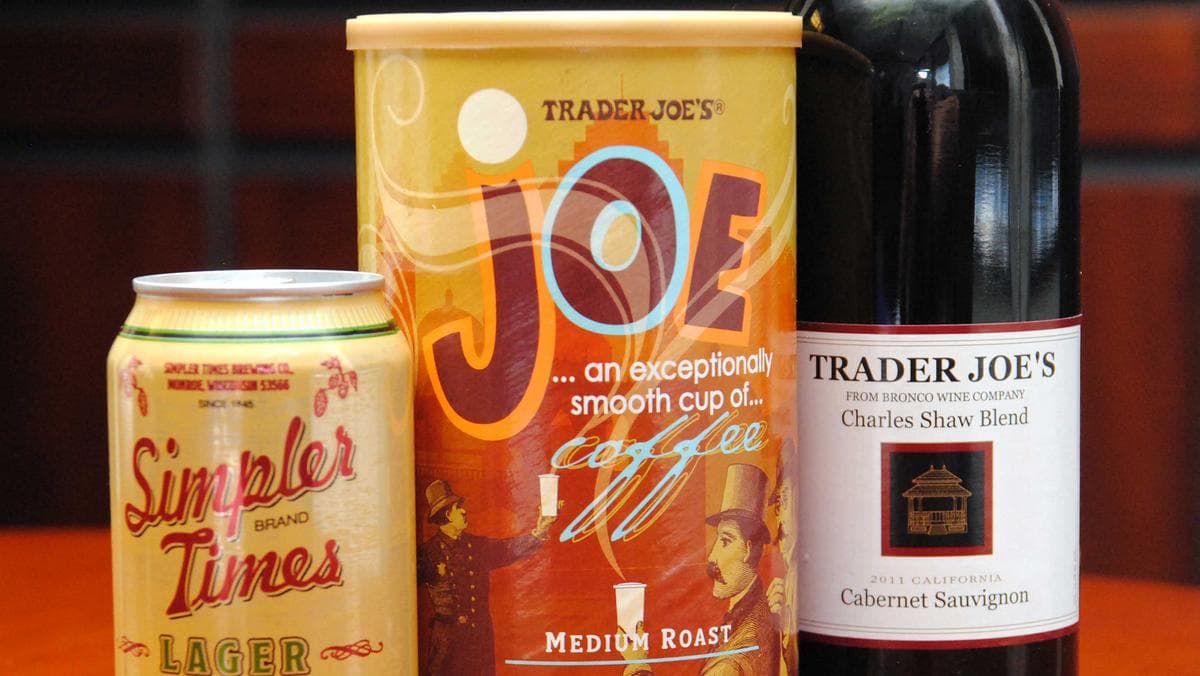
Private label is no longer a niche grocery tactic. It is becoming one of the main ways shoppers decide where to spend, and Trader Joe’s sits near the center of that shift because the chain has built its entire identity around products carrying its own name.
Industry data points to the scale of the change. Private-label sales reached $330 billion, with store brands taking 24% of unit share and 23% of dollar share. PLMA data put private-label sales at a record $282.8 billion in 2025, up 3.3% from 2024. The strongest growth is showing up in refrigerated foods, beverages, indulgent snacks and wellness items, the same broad territory where Trader Joe’s has long built repeat traffic through a mix of familiar staples and rotating finds.
That matters on the floor. When shoppers ask whether a product is “the same as” a national brand, or whether there is a substitute for a missing item, the answer at Trader Joe’s often comes back to the chain’s own-brand system. Trader Joe’s says more than 80% of what it sells is private label. It also says it does not run sales, offer coupons, or use loyalty programs or membership cards, and that it does not collect slotting fees. The company’s product standards are built around tasting and selection, with private-label items offered only when they are considered extraordinary. That is a different kind of value proposition than a conventional supermarket wall of competing labels, and it explains why the chain’s limited assortment can feel like a feature rather than a constraint.
The model has deep roots. Trader Joe’s opened its first store in Pasadena, California, in 1967 on Arroyo Parkway. Its first private-label product, Trader Joe’s Granola, arrived in 1972 under founder Joe Coulombe. What began as a retailer with a private-label line became a retailer whose store itself functions as the brand. That approach still shapes how customers read the shelves, how crew members explain value, and how the company keeps its merchandising tight.
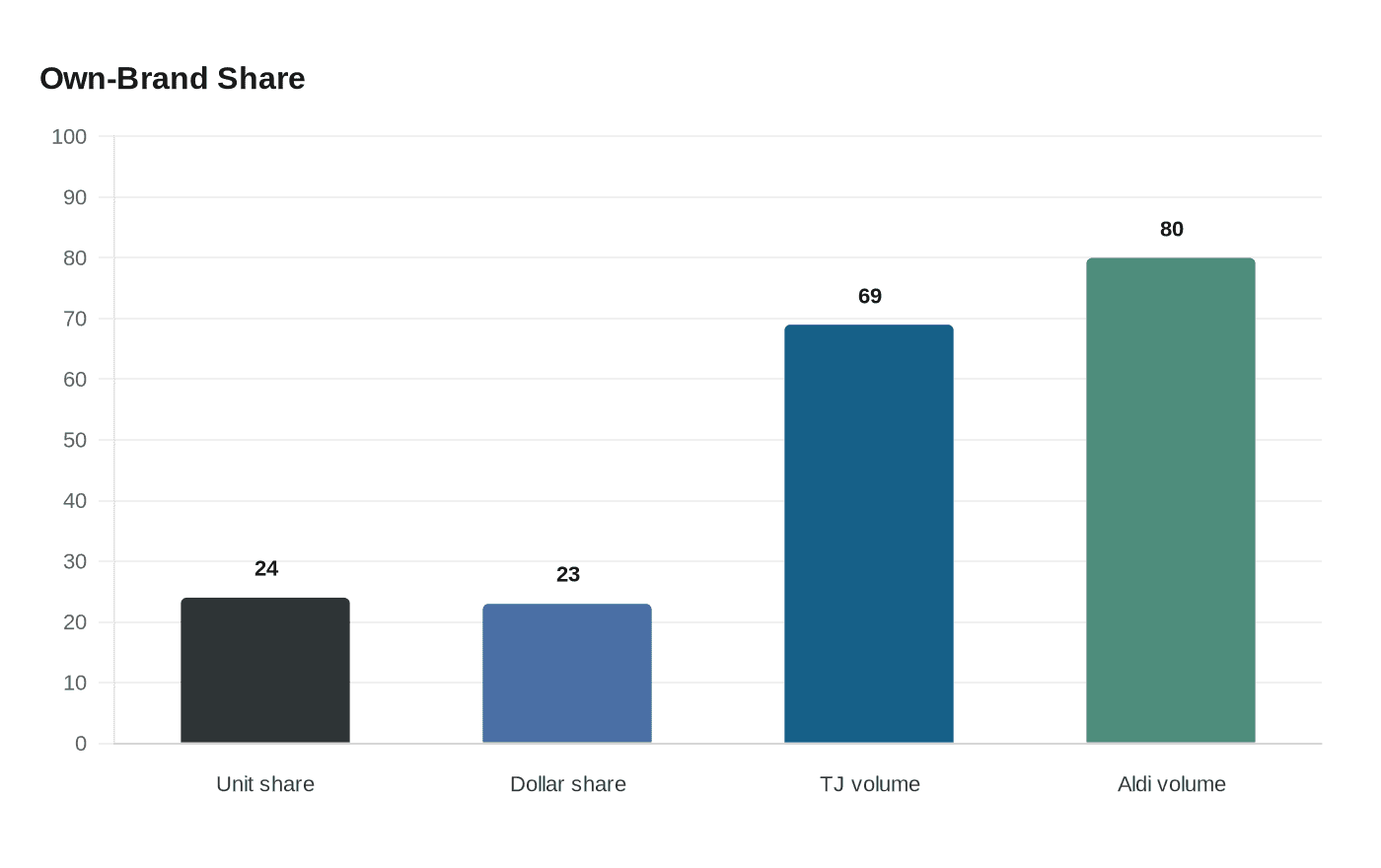
The numbers also show Trader Joe’s is not alone, even if it remains one of the strongest examples. A 2024 Numerator report found that Trader Joe’s owned brands accounted for 69% of its overall sales volume, behind Aldi’s 80%. Trader Joe’s still looks like a benchmark for own-brand retailing, but the broader market is now moving in its direction.
The company is also expanding while that model holds. Trader Joe’s said on April 21 that a new store was coming soon to McKinney, Texas, and April 2026 reporting said the chain was opening at least 18 new stores across 12 states. Trader Joe’s Neighborhood Shares program also donates 100% of products that remain fit to be enjoyed, reinforcing a business built around control of product, price and presentation. For workers, the message is straightforward: private label is not just a sourcing choice. It is the engine behind the Trader Joe’s experience, from the first customer question at the register to the last case on the shelf.
This article was produced by Prism’s automated news system from verified source data, official records, and press releases, then run through automated quality and moderation checks before publishing. The system is built and supervised by the people who set the standards it runs under. Read our full AI policy.
Did this article answer your question?