Rising prices squeeze shoppers, raising stakes for Trader Joe's value pitch
Shoppers still feel the squeeze: Numerator found everyday household goods up 2.9% year over year, while 39.7% of consumers now call rising prices their top worry.

Rising prices are still shaping what lands in Trader Joe’s carts, even as headline inflation cools elsewhere. Numerator’s Consumer Goods Price Index showed everyday household purchases rose 0.47% in May after a 0.43% increase in April, and those same goods were up 2.9% over the past 12 months.
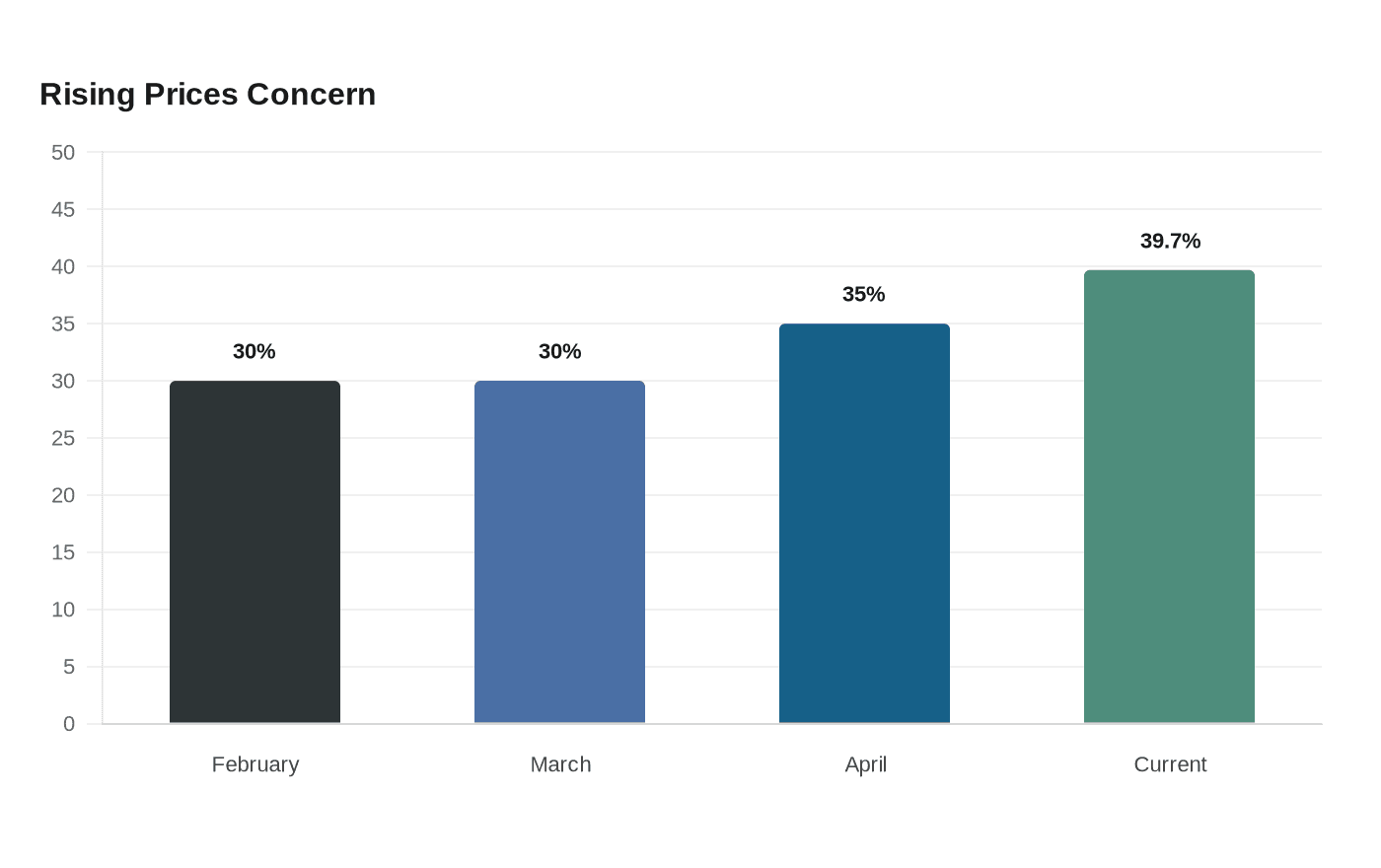
The pressure is not landing evenly. Numerator said prices for everyday household goods have climbed 34.9% since January 2018 for low-income consumers and 38.2% for Gen Z shoppers, compared with a 32.9% national average. Supermarket News said 39.7% of consumers named rising prices as their top concern for the year ahead, up from about 35% in April and 30% in both February and March. That is the kind of share that changes how people shop, especially when they are watching every ounce, every serving count, and every item that feels optional.
For Trader Joe’s crew members, that shows up on the floor in small but telling ways. Customers who are more price-sensitive tend to ask sharper questions about substitutions, portions, and whether a product is a treat or a true value buy. Baskets can get smaller, and the value conversation gets more specific: not just what something costs, but how far it goes, how often it gets used, and whether a private-label item is worth trying instead of a familiar brand.
That makes Trader Joe’s own value pitch more important, not less. The company has said value is not just retail price, but the intersection of quality and price, and it has said its private-label shoppers have unusually high expectations for the products. In an early 2025 look-ahead, Trader Joe’s said it expected dozens of store openings and said customers had bought more than 13 million packages of Trader Joe’s Kimbap from its freezers, a reminder of how much the chain depends on distinctive items to pull traffic.
For managers and crew, the practical takeaway is straightforward: price sensitivity has become part of normal shopping behavior. In a store built on curated assortment and private-label storytelling, the ability to explain what makes a product worth it has become core work, right alongside ringing bell, stocking shelves, and keeping the line moving.
This article was produced by Prism’s automated news system from verified source data, official records, and press releases, then run through automated quality and moderation checks before publishing. The system is built and supervised by the people who set the standards it runs under. Read our full AI policy.
Know something we missed? Have a correction or additional information?
Submit a Tip