Trader Joe's Rejects Self-Checkout, Betting on Human Crew Instead
Self-checkout is a $6.89B industry racing toward 24,000 stores by 2030. CEO Bryan Palbaum calls it "work for customers" and Trader Joe's crew stays at the register.
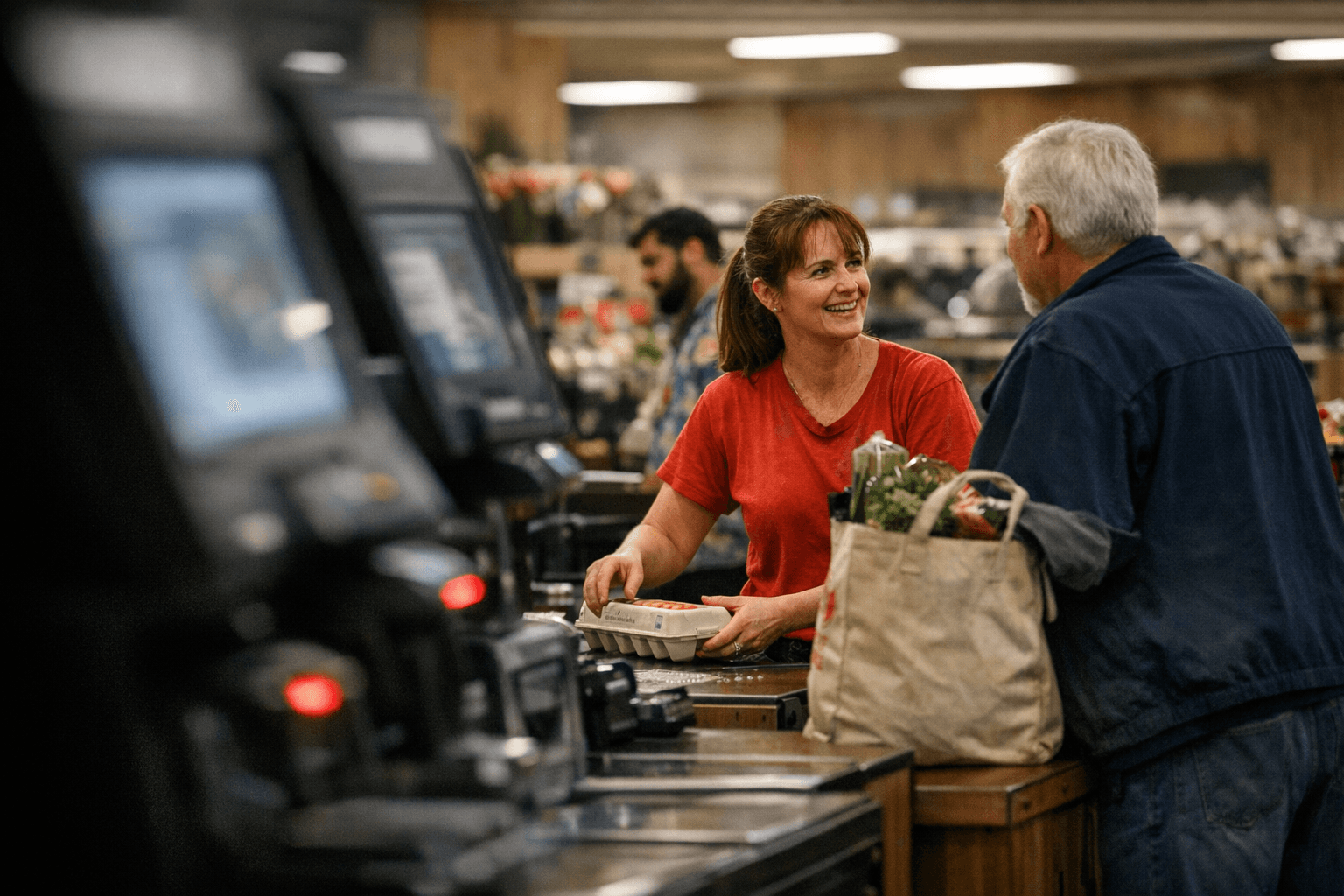
While competitors race toward self-service kiosks, CEO Bryan Palbaum has a plain answer on where Trader Joe's stands: self-checkout is work, and customers shouldn't have to do it.
That position, stated by Palbaum and President Jon Basalone on the company's "Inside Trader Joe's" podcast, carries concrete operational weight for every crew member who punches in for a shift. It means staffed registers, human baggers, and a frontline model running counter to an industry accelerating hard toward automation. The global self-checkout systems market is valued at $6.89 billion in 2025 and is projected to nearly double to $13.5 billion by 2030. An estimated 10,000 retailers globally had installed self-checkout systems as of 2024; that figure is projected to surpass 24,000 stores by the end of the decade. Between 29% and 55% of grocery transactions moved through self-checkout lanes as of 2022, a share that keeps growing at most major chains.
Basalone killed the rumor directly during the podcast. "That's as false as false can be," he said of any self-checkout rollout. "We believe in people. We're not trying to get rid of our crew members for efficiency's sake." Palbaum reinforced the point from the customer's perspective: "I have fun bagging groceries and working at the register. Self-checkout is work. I don't want that."
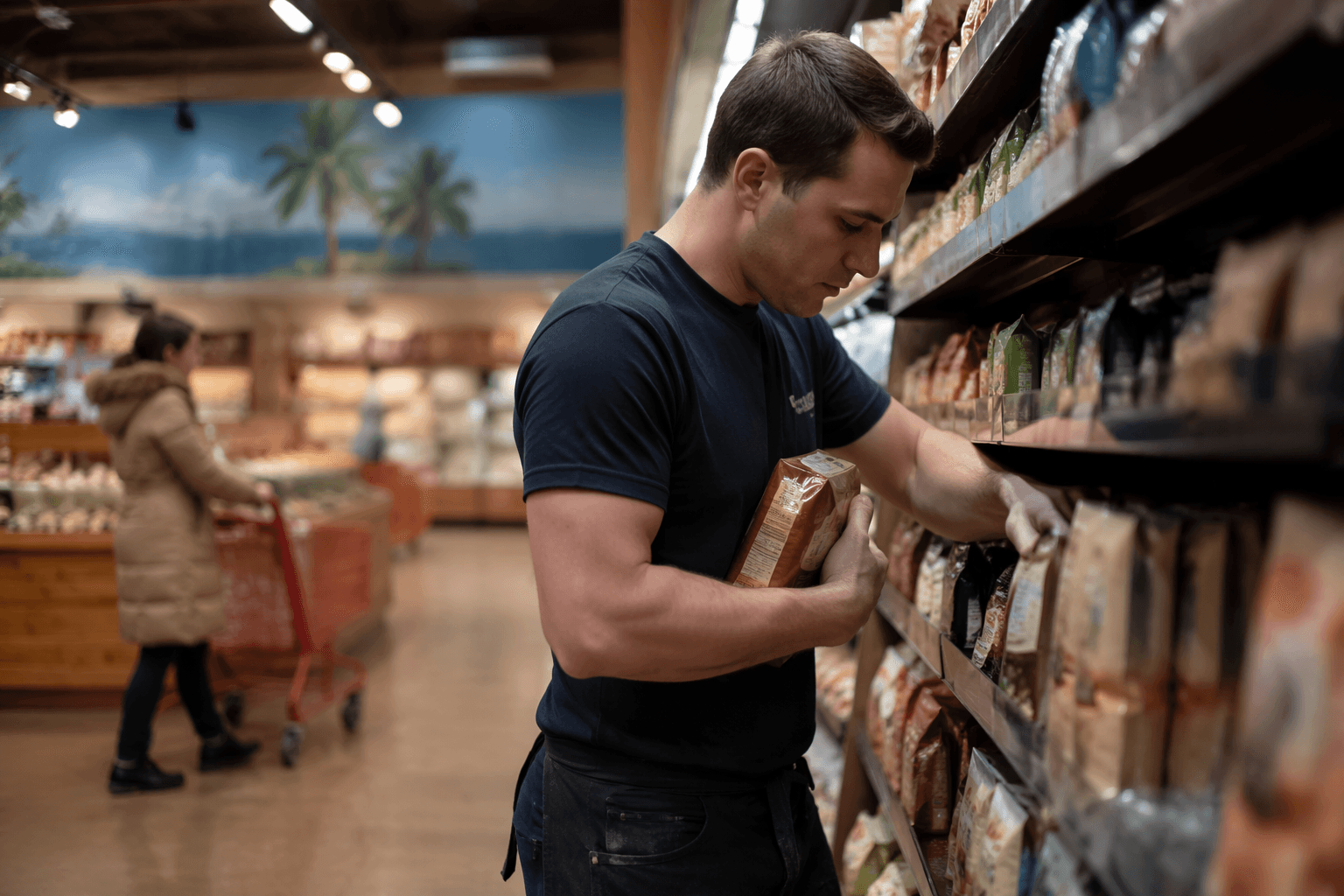
For the store floor, those words define the job. Registers stay staffed. Bagging stays human. The store model depends on crew genuinely engaging with customers, which makes product knowledge, personal recommendation, and fluid rotation between the register, the sales floor, and the sampling station the actual work of the shift, not an add-on to it. That's a meaningfully different daily cadence than what a crew member running a self-checkout queue monitor at Kroger or Walmart experiences.
Cross-training carries real strategic value under this model. Crew who move comfortably between checkout, stocking, and merchandising aren't plugging holes; they're executing the brand's differentiation. Managers who invest time in product storytelling and soft-skill coaching are doing the same.
The technology bet Trader Joe's is actually making runs through the back of the house. The company has already replaced 7 million pages of paper ordering with tablets, giving store teams sharper inventory visibility while keeping crew focused on the floor rather than on paperwork. The lens Trader Joe's applies to any technology decision is direct: does it enhance the customer-crew relationship, or does it replace it? Inventory automation, demand forecasting, and workforce scheduling tools that answer yes to the first question are fair game. A kiosk that answers yes to the second is not.
In the next 12 to 24 months, expect continued investment in ordering, forecasting, and scheduling systems that sharpen back-of-house efficiency without shrinking register staffing. What will improve is the quality of data informing those staffing decisions, the speed at which inventory gaps surface, and the precision of ordering to reduce out-of-stocks that frustrate everyone on both sides of the counter.
Customers who've grown accustomed to self-service lanes elsewhere will keep asking. Basalone's answer to that question is already on the record, and Palbaum's hasn't changed either.
This article was produced by Prism’s automated news system from verified source data, official records, and press releases, then run through automated quality and moderation checks before publishing. The system is built and supervised by the people who set the standards it runs under. Read our full AI policy.
Did this article answer your question?