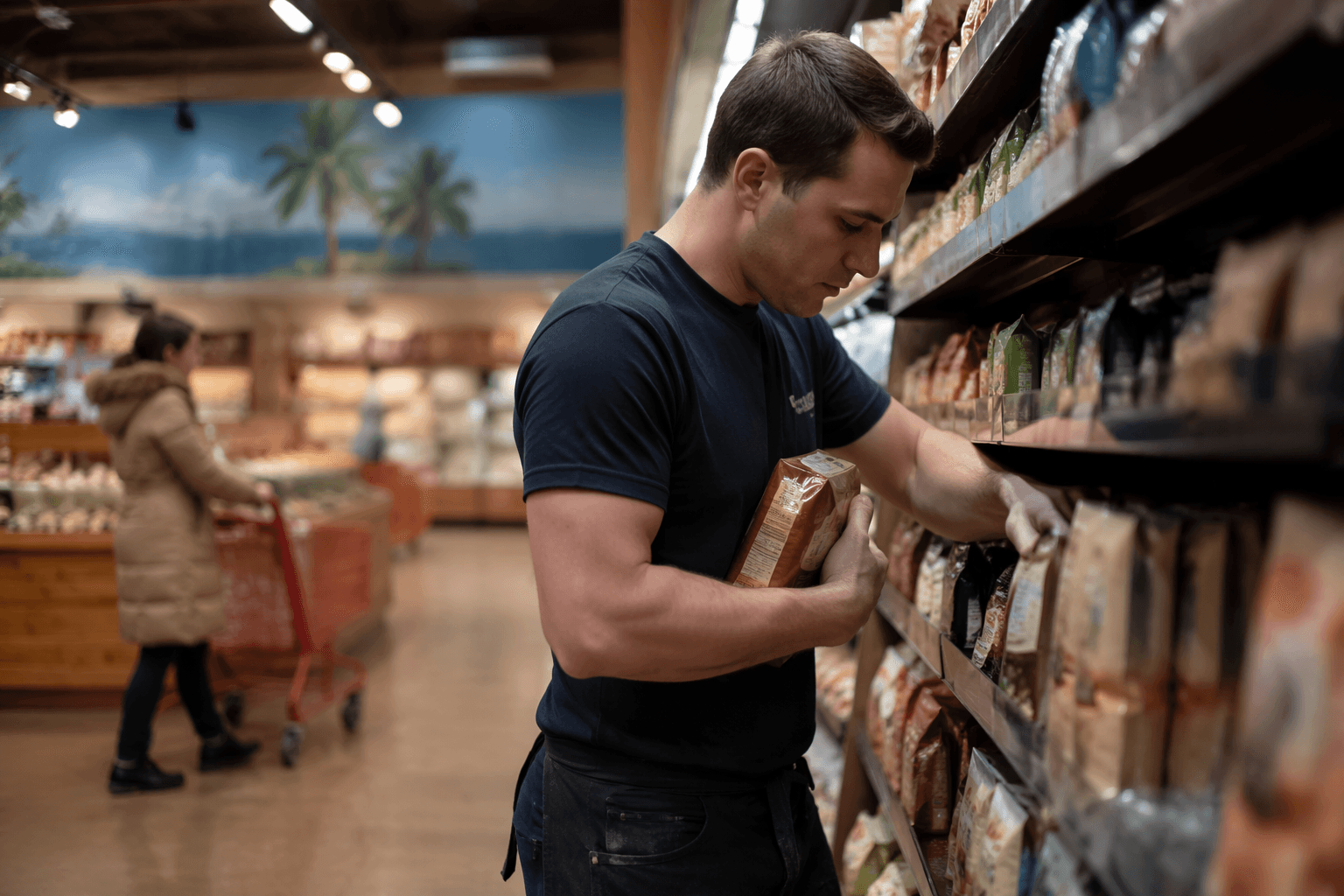
Trader Joe’s Tops ACSI 2026 Supermarket Rankings with 86 Score
Trader Joe’s topped the ACSI supermarket rankings with an 86 score, a sign that value-focused operations and consistent store execution are paying off for frontline staff and managers.

Trader Joe’s took the top spot in the American Customer Satisfaction Index’s 2026 supermarket rankings with a score of 86 out of 100, edging past Publix, which scored 84. The ACSI data reflect shopper feedback gathered across a 12-month period and signal what grocery workers and managers should prioritize as shoppers chase value and convenience.
The ACSI published its 2026 supermarket rankings on Feb. 4, 2026, based on survey work that covered January through December 2025. The index measures satisfaction on a 100-point scale across categories including store hours and location convenience, store layout and cleanliness, quality and freshness of meat and produce, merchandise availability and variety, speed of checkout and pickup orders, accuracy of order fulfillment, courtesy and helpfulness of staff, website and mobile app satisfaction, and pharmacy and call center support. The survey drew roughly 30,000 shoppers, and ACSI framed the challenge this way: "With customers returning to stores, but also shopping more online, supermarkets are tasked with ensuring a satisfying, seamless experience no matter how their customers choose to shop." ACSI also said it helps supermarkets "capture the voice of the customer and apply state-of-the-art predictive technology to improve customer satisfaction with the greatest impact on profitability."
Beyond the top two, H-E-B scored 83, Sam’s Club 82, and Aldi 81. Costco and Whole Foods registered at 81 in some reporting. Not all chains improved: Wegmans dropped from 83 in 2025 to 78 in 2026 amid customer complaints about store layout, staff courtesy, and checkout speed, while Giant Eagle finished at the bottom with a 73, repeating poor performance from the prior year.
Regional results show Trader Joe’s scoring highest in the West at 87, Sam’s Club leading the South at 84, and Aldi topping the Northeast and Midwest. Company footprint details vary by report: one account says Trader Joe’s now operates more than 600 stores in 43 states, while another describes locations in 42 states plus the District of Columbia. Publix remains concentrated in eight states, with the largest presence in Florida.

Trader Joe’s business model - limited selection, private-label products, everyday low prices, and a direct-sourcing approach that avoids coupons and loyalty programs - is central to its customer satisfaction gains. Expansion across new markets often strains consistency, but Trader Joe’s increase from 84 to 86 shows the chain improved on the metrics that most affect shoppers. As one industry observer noted, "What makes the win even more impressive is that Trader Joe’s keeps opening new stores across the country, which usually hurts consistency."
Academic perspective underscores the shift to value. Scott Laing, Clinical Assistant Professor of Finance at the University at Buffalo School of Management, said, "Customers care more about value proposition," and added, "They want to go further with their money than they do in traditional supermarkets." Laing warned that inflation fatigue is driving shoppers to demand affordable staples: "They want their staples to be affordable again. And stores that can deliver that are being rewarded."
For employees, the ACSI results point to operational priorities: faster, friendlier checkout; clearer store layout; reliable pickup and fulfillment; and maintaining product freshness. Chains that raise scores are likely to double down on frontline hiring, training, and shift coverage to protect service levels. For store managers and merchandisers, the message is practical: delivering value at scale requires both efficient back-room operations and consistent in-aisle execution. As grocers respond, workers can expect pressure to hit speed and courtesy targets, but also potential investment in staffing and tools to meet customer expectations.
This article was produced by Prism’s automated news system from verified source data, official records, and press releases, then run through automated quality and moderation checks before publishing. The system is built and supervised by the people who set the standards it runs under. Read our full AI policy.
Did this article answer your question?