Trader Joe's Union Wins Elections, But Contracts Remain Elusive
Four Trader Joe's stores have been union for more than three years, and not one has a contract — a pattern repeating across Starbucks, REI, Apple, and Whole Foods.
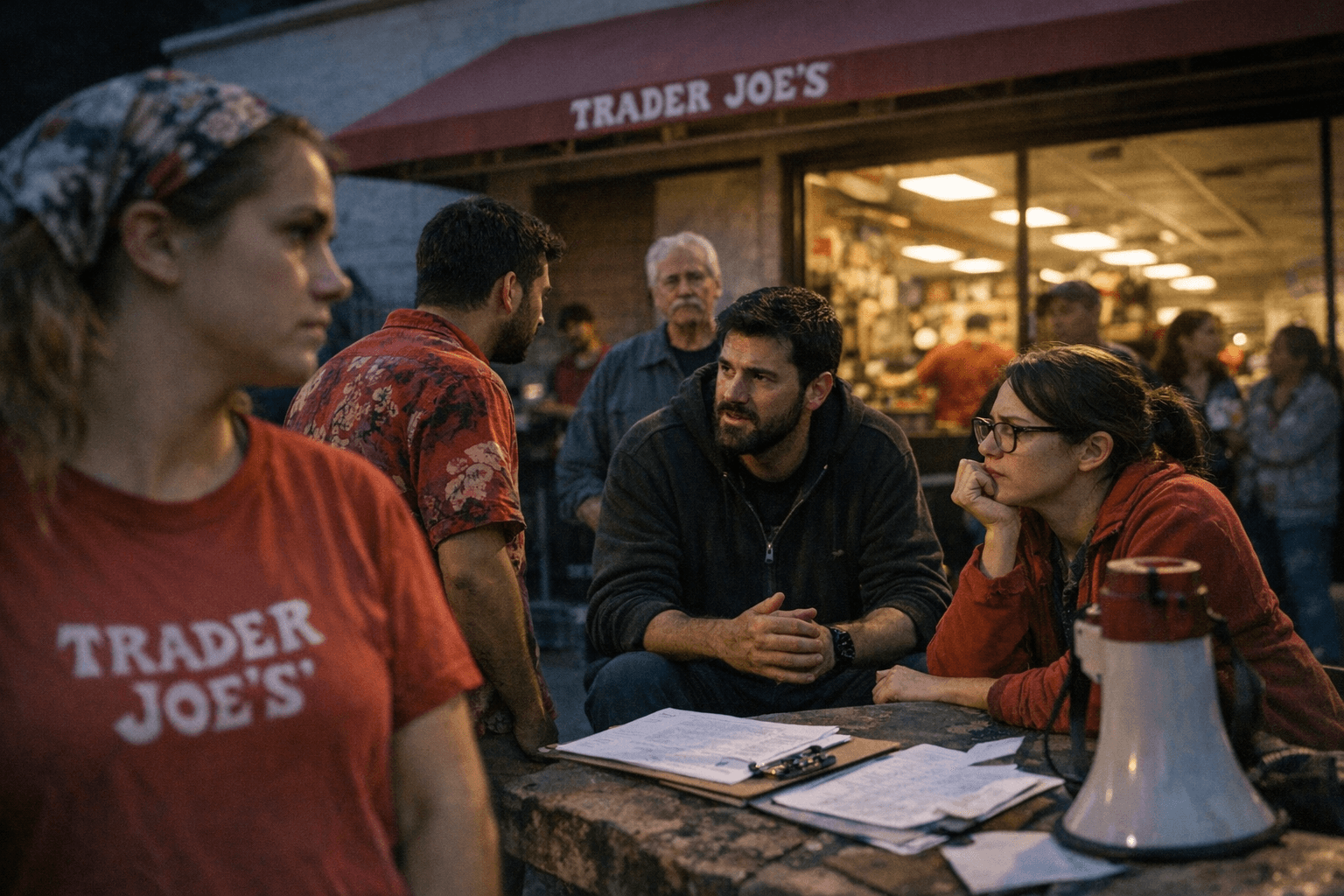
Four stores, four union victories, zero contracts. That is where Trader Joe's United stands more than three years after the Hadley, Massachusetts store became the first in the chain to vote for union representation in the summer of 2022.
Trader Joe's United now represents four stores: Oakland, California; Louisville, Kentucky; Minneapolis; and Hadley. Each won its election. Trader Joe's said at the time it was "prepared to immediately begin" negotiations, but none of the four unionized stores have won a first bargaining agreement covering wages, benefits, and working conditions.
That failure is not unique to Trader Joe's. A Labor Relations Insight analysis published March 23, 2026, by Michael VanDervort examined the post-election silence across a wave of consumer-facing brands that workers had presumed would be more responsive at the bargaining table. "Unions have been winning elections at some of the most culturally progressive, consumer-facing brands in the country, but almost none of these wins have resulted in a contract." Trader Joe's, REI, and Apple have all had successful campaigns. Even Whole Foods saw a Philadelphia store vote to unionize in 2025. But what unites nearly all these efforts is what's missing: a finalized collective bargaining agreement.
Some negotiations have dragged on for more than three years. Some haven't even started. Others fell apart at the ratification stage.
At Trader Joe's, the stall has come with legal friction. Trader Joe's violated federal labor law by refusing to begin contract negotiations with workers' union in Kentucky, an NLRB administrative law judge ruled. Trader Joe's East Inc. must bargain with Trader Joe's United, which represents Louisville store employees. The grocer challenged the January 2023 Louisville election up to the full NLRB after the regional director overruled its objections and certified the bargaining unit in January 2024. During the wider bargaining effort, Trader Joe's United also filed unfair labor practice charges against the company for not bargaining in good faith.
Trader Joe's United is an independent labor union founded and powered entirely by Trader Joe's workers, with all leadership roles filled by crew members. That structure is a point of pride and a practical burden. Workers have had to pay lawyers and put people on the stand through a lengthy court process, while unionized stores trying to negotiate say the company is "stonewalling: They're not opening the books, they're not making reasonable responses to any proposals that the union is making."
The picture at peer brands is only slightly less bleak. A majority of employees at the Whole Foods flagship in Philadelphia's Center City voted in January 2025 to join UFCW Local 1776, with 130 workers in favor and 100 against, making it the first Whole Foods store in the chain to unionize. No contract has followed. At REI, UFCW and RWDSU agreed in July 2025 to establish a national bargaining structure for 11 unionized stores, but when a proposal came to a vote, employees rejected it at a rate of 98.5% against ratification. At Starbucks, bargaining efforts have stalled amid constant litigation and PR battles, while no contracts are yet in place across the more than 600 unionized stores; Starbucks Workers United submitted a new comprehensive offer in March 2026 in an attempt to break the deadlock.
The VanDervort analysis framed the broader corporate response with precision: the traditional management playbook focused on avoiding a union win; now it is about managing the slow spiral afterward.
The story isn't "unions are winning." The real story is: unions are getting in the door, but they can't get to a deal. That means employers are now managing a new class of labor risk, one that stretches long past the vote.
For crew members in Hadley, Minneapolis, Oakland, and Louisville, who cast their ballots more than three years ago expecting a contract to follow, that labor risk is a lived daily reality. More than two years after workers at the Hadley store voted to join Trader Joe's United, the union had not finalized terms of their employment with the retailer. That gap has only grown wider since.
This article was produced by Prism’s automated news system from verified source data, official records, and press releases, then run through automated quality and moderation checks before publishing. The system is built and supervised by the people who set the standards it runs under. Read our full AI policy.
Did this article answer your question?