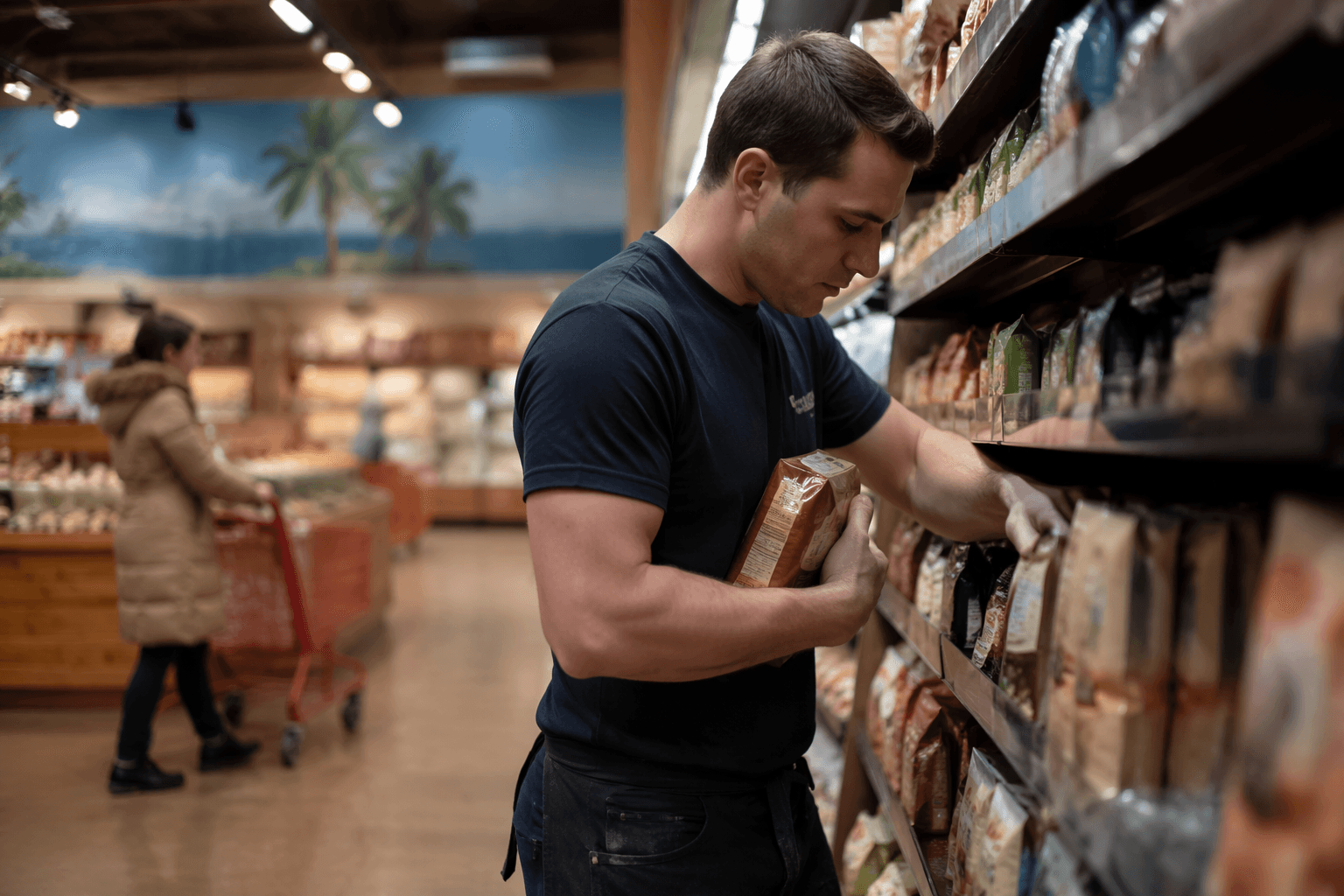
Trader Joe's workers face daily hazards under OSHA walking-surface rules
Trader Joe’s safest shifts are won in the smallest habits: fast spill response, clear aisles, and disciplined back-room housekeeping. OSHA says those routines can be the difference between a clean pass and a preventable injury.
The small routines that keep a shift upright
Slip-and-fall prevention in a grocery store rarely fails in one dramatic moment. It usually breaks down in the ordinary places: a wet spot by produce, a box drifting into a narrow aisle, a cooler leak, or a back-room path that was meant to be temporary and became part of the floor plan. For Trader Joe’s Crew, those everyday details matter because the store model is built around constant movement, frequent product rotation, and a lot of customer traffic in tight space.
OSHA’s walking-working-surfaces rule is plain about what that means. Employers must keep walking-working surfaces clean, orderly, sanitary, and, to the extent feasible, dry. Floors also need to be free of hazards such as sharp or protruding objects, leaks, spills, snow, and ice, with safe access and egress, regular inspection, and repairs or guarding of hazards before employees use the surface again. In a busy neighborhood grocery, that is not abstract compliance language. It is the difference between a normal run of the floor and an injury that slows the whole store down.
What the rule asks workers to do
For Crew members, the daily standard is simple: see it, mark it, clean it, and if it cannot be cleaned right away, guard it and report it. That sequence matters because a small delay can turn a minor spill into a full hazard, especially when customers, stockers, and carts are all moving through the same space. The rule is designed to make workers think about access, visibility, and speed, not just whether the floor looks clean at the end of the day.
Managers need the same discipline, but with a broader view. Teams should know who owns spill response, where the equipment lives, and how fast a hazard has to be fixed. In a store with frequent product handling, prevention only works when it is built into repeatable routines, not left to memory or a quick verbal reminder at the start of a shift.
Why grocery is a special risk zone
Grocery stores are unusually exposed to walking-surface problems because the work itself creates them. Product breaks, condensation, leaking cases, and crowded service areas all raise the odds of a fall. OSHA’s retail grocery guidance says stores that have put injury-prevention efforts in place have reported fewer injuries, lower workers’ compensation costs, increased worker efficiency, and lower operating costs, which is a reminder that safety and operations are not separate projects.
The scale of the problem is still large. The U.S. Bureau of Labor Statistics reported 479,480 private-industry cases involving falls, slips, and trips in 2024, along with 844 fatal work-related falls, slips, and trips across all sectors. OSHA estimated its 2016 walking-working-surfaces rule update would prevent 29 fatalities and 5,842 lost-workday injuries each year. Those numbers make one thing clear: even though a grocery slip can sound minor, the cumulative risk is serious and expensive.
What the Colorado case says about store conditions
Trader Joe’s walking-surface risks do not exist in a vacuum. On April 10, 2024, OSHA said the company faced proposed penalties totaling $216,902 after a December 2023 inspection in Greenwood Village, Colorado. The agency said the case involved unsafe forklift operations, lack of training for forklift operators, and blocked electrical equipment, and it said Trader Joe’s had eight locations in Colorado and 568 stores across the country.
That matters because spill control is only one part of a wider safety picture. Forklift traffic, blocked equipment, and cluttered work zones all increase the chance that a worker has to move around a hazard instead of through a clear path. When walkways are blocked, hazards multiply fast, and the store loses the kind of orderly flow that keeps people safe and keeps product moving.
Why Trader Joe’s floor culture changes the job
Trader Joe’s says its stores have no back offices and that Captains, Mates, and Crew work from the floor of the store. That operating style shapes safety in a very direct way: housekeeping is not a distant back-room function, it is part of the same floor presence that handles product, customers, and displays. The person spotting the spill is often the same person who can help contain it, and the manager walking the store is also part of the response.
The company also says it has been transforming grocery shopping since 1967, a reminder that its brand depends on a high-energy, close-quarters store experience. That same environment can produce the repeat hazards OSHA worries about most. A dropped jar in an aisle, a leak from a cooler, or a box left in a path can become a customer issue and a worker injury in the same minute.
How to build a safer shift, every shift
The most effective habits are the least glamorous ones. They are the routines that make hazards visible early and keep them from spreading across the store.
- Check high-traffic areas first, including produce, coolers, service spaces, and narrow customer lanes.
- Clear the back room as aggressively as the sales floor, because clutter tends to migrate outward.
- Keep spill kits, warning signs, and cleanup tools where the team can reach them without hunting.
- Reinspect after product movement, because new boxes and new displays can create new blind spots.
- Treat blocked equipment, cords, leaks, and loose objects as the same kind of problem: an open path that has stopped being open.
That is the real lesson of OSHA’s walking-surface rule for Trader Joe’s workers. Safety is not mainly a policy document or a training slide deck. It is the repeated habit of making sure every path, aisle, and storeroom is clean, orderly, and usable before the next person steps into it. In a grocery store built on speed and tight teamwork, that habit is what keeps a normal shift from turning into a reportable injury.
This article was produced by Prism’s automated news system from verified source data, official records, and press releases, then run through automated quality and moderation checks before publishing. The system is built and supervised by the people who set the standards it runs under. Read our full AI policy.
Did this article answer your question?