Trader Joe's workers should document injuries immediately, OSHA says
A Trader Joe’s injury is a race against the clock. Report it, document it, and know when OSHA and state workers’ comp deadlines kick in.
What to do first
If you get hurt unloading a pallet, twisting in the backroom, or carrying a heavy case, the first move is not to tough it out. Tell a supervisor immediately, get the right medical care, and make sure the store starts an incident report right away.
1. Report the injury at once. Let a supervisor or Mate know as soon as it happens, even if the pain seems minor.
In a busy grocery store, a small strain can turn into lost time if it is ignored.
2. Get medical attention. If the injury needs care, seek it promptly and follow the treatment instructions.
The point is not just recovery, but creating a clear record that ties the injury to the work event.
3. Make sure the incident is written down. Ask that an incident report be completed and request a copy for your own records.
If the store creates paperwork, you should know what it says.
4. Write down the details while they are fresh. Note the time, the location, what you were doing, and who saw it happen.
If a wet floor, a blocked aisle, a faulty cart, or another environmental issue played a role, take photos if you can.
5. Keep following up. If pain worsens or symptoms change, say so immediately.
The earlier the store understands the injury, the sooner it can address the hazard that caused it.
That sequence matters because paperwork is not just bureaucracy. It is the first layer of protection for you and for the next Crew member who steps into the same aisle, dock, or stockroom.
Workers’ comp and OSHA are different tracks
Trader Joe’s workers need to know that workers’ compensation is handled separately from OSHA. The U.S. Department of Labor says private-company employees should contact their state workers’ compensation board, because those systems are run at the state level.
OSHA, by contrast, is about workplace injury reporting and hazard prevention. That split matters after an injury because the store may be dealing with one process for medical coverage and another for federal safety reporting. If the injury is severe, the employer has a fast reporting duty to OSHA; your job is to make sure the injury is not treated like a side note.
The deadlines that matter most
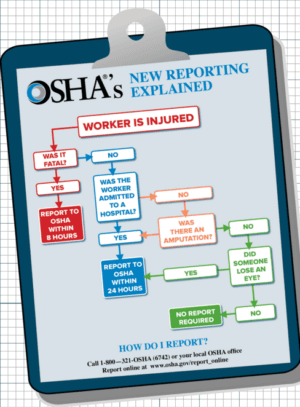
OSHA says employers must notify the agency within 8 hours after a work-related death. It must be notified within 24 hours after an inpatient hospitalization, an amputation, or a loss of an eye.
Those deadlines are why speed matters from the start. OSHA’s severe injury reporting requirement began on January 1, 2015, and the agency says its Severe Injury Report dataset covers establishments subject to federal OSHA jurisdiction, which is about half of U.S. workers. In other words, the federal record is substantial, but it is not the full national picture.
OSHA also says many employers with more than 10 employees must keep Forms 300, 300A, and 301, or equivalent records. Those logs are part of how repeated hazards get spotted, whether the issue is a slipping risk on the sales floor, a lifting strain in the backroom, or a powered industrial truck problem in the warehouse area.
Why your report protects more than one person
OSHA says recording injuries and illnesses helps identify hazards and reduce future harm. That means the report you file is not just a claim that something went wrong, it is part of the store’s safety system.
That is especially important in a fast-moving grocery environment like Trader Joe’s, where lifting, twisting, slips, and repetitive motion are routine parts of the job. When workers report injuries early and accurately, the store gets a chance to fix the underlying problem before someone else gets hurt. Silence does the opposite: it lets the hazard stay invisible.
There is also a cultural point here. Trader Joe’s says its store leadership structure includes Mates who train, guide, and develop Crew members, and the company says it places high importance on the health and safety of customers and crew members. If that is more than branding, then early injury reporting should be met with action, not hesitation or blame.
What Trader Joe’s recent OSHA history suggests
Trader Joe’s has already been in OSHA’s enforcement spotlight. In April 2024, the U.S. Department of Labor said OSHA proposed $216,902 in penalties after a Colorado inspection, including alleged problems with forklift safety training and blocked electrical equipment.
OSHA also said the company had previously been cited for blocked electrical equipment in Maine, New York, and New Jersey. Public violation records show Trader Joe’s East Inc. was cited in 2023 for failing to examine industrial trucks before use, and OSHA records also show a 2024 citation for failing to evaluate powered industrial truck operators at least once every three years.
Those citations are a reminder that the hazards are not abstract. Forklifts, electrical access, and industrial truck checks are ordinary operational issues, but they are also the kinds of details that can create injuries and trigger enforcement when stores do not keep up with training and inspections. For Crew members and managers alike, the message is simple: the paperwork trail and the safety culture have to match the floor reality.
What managers should do right away
For store leadership, the first response to an injury should be disciplined and immediate. Confirm the worker is safe, get medical care moving, document the event, preserve any relevant equipment or area conditions, and make sure the report is complete and accurate.
Managers should also look beyond the single incident. If a backroom strain, a forklift issue, or a blocked electrical panel shows up once, it may be the first visible sign of a bigger problem. OSHA’s own approach to recordkeeping is built on that idea, that a report helps reveal patterns before they become a larger injury count.
In a company that leans hard on Crew identity, the real test is whether that culture shows up when something goes wrong. The best stores will not wait for a severe injury to force the issue. They will treat the first report as the start of prevention, not the end of the conversation.
This article was produced by Prism’s automated news system from verified source data, official records, and press releases, then run through automated quality and moderation checks before publishing. The system is built and supervised by the people who set the standards it runs under. Read our full AI policy.
Did this article answer your question?