UPS safety page tests whether company words match workplace reality
UPS says safety comes first, but workers can test that claim against heat, staffing, discipline and equipment on every shift.
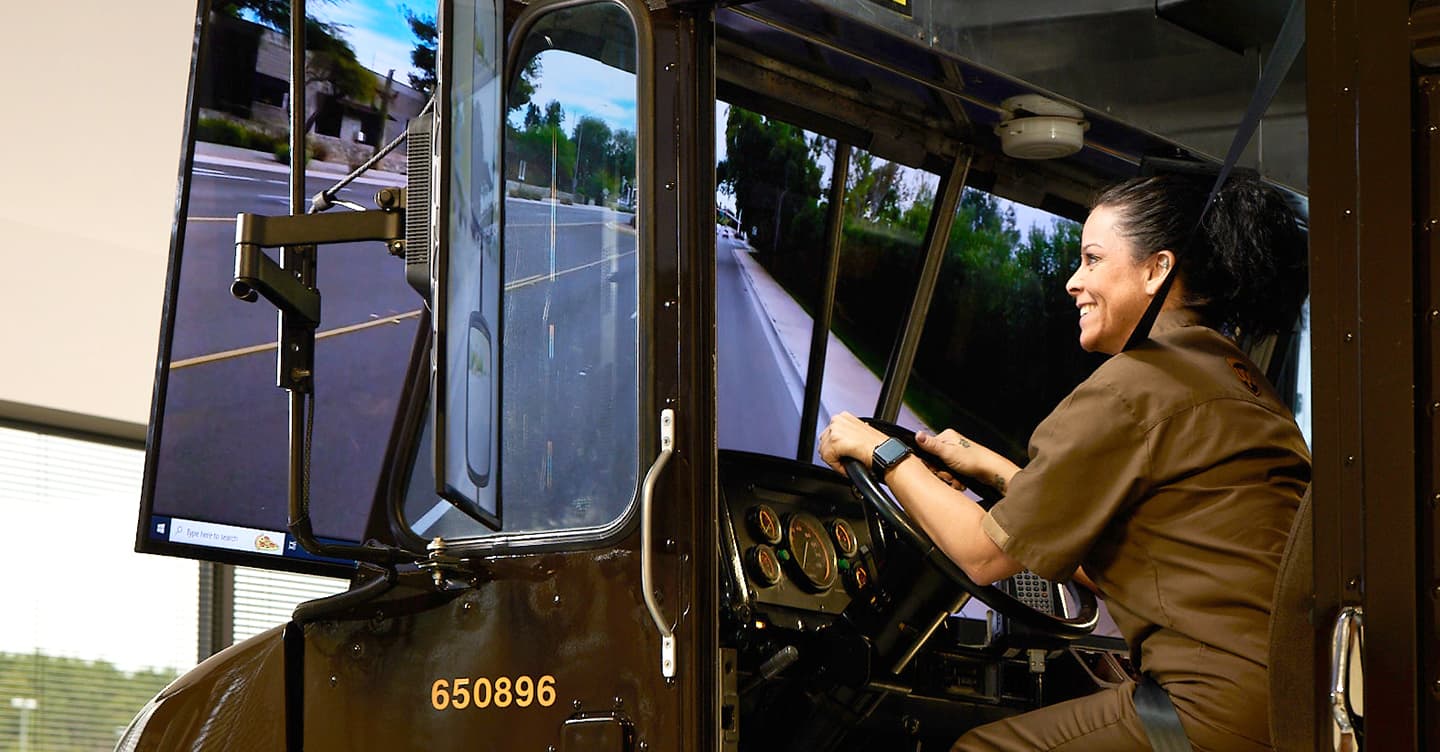
UPS puts “Priority No. 1: Safety” on an official page, and that slogan only matters if it reaches the floor in a hub, a package car, a feeder cab or a shop bay. For UPS workers, the real question is whether the company’s words survive the pressures that drive injuries: rushed routes, heat, fatigue, damaged equipment and production demands that leave little room to slow down.
What UPS is actually promising
UPS also maintains a page called “UPS has unmatched safety culture,” and it has posted a safety message on Facebook saying, “Safety is number one goal. We do annual training. We do weekly training. We do weekly coaching.” That language tells you how the company wants to frame the job: safety as part of the culture, not a side issue.
On a UPS shift, though, the value of that message depends on whether it shows up in the everyday basics. Proper lifting, reporting hazards, checking damaged equipment and stopping when a task turns unsafe matter more than polished branding. In a logistics operation built on speed and repetition, the difference between a slogan and a standard is whether management lets workers make the safe choice when the safe choice slows production.
What the page should mean on the floor
For package handlers, drivers, feeder drivers and mechanics, the biggest injuries are often not dramatic one-off accidents. They come from repeated strain, heat exposure, heavy lifting, tight dispatches and the kind of urgency that makes workers ignore pain until it becomes an injury. A safety page is useful only if it reinforces that these are not personal failings, but conditions the company is supposed to control.

That is where staffing, inspections and equipment condition enter the picture. If a belt is broken, a package car is unsafe, a trailer is poorly maintained or the workload is impossible for the crew on hand, the safety claim should mean more than training slides. It should mean a work environment where concerns can be raised without retaliation and where a stop-work decision is treated as a safety decision, not a discipline issue.
Heat turned safety into a contract issue
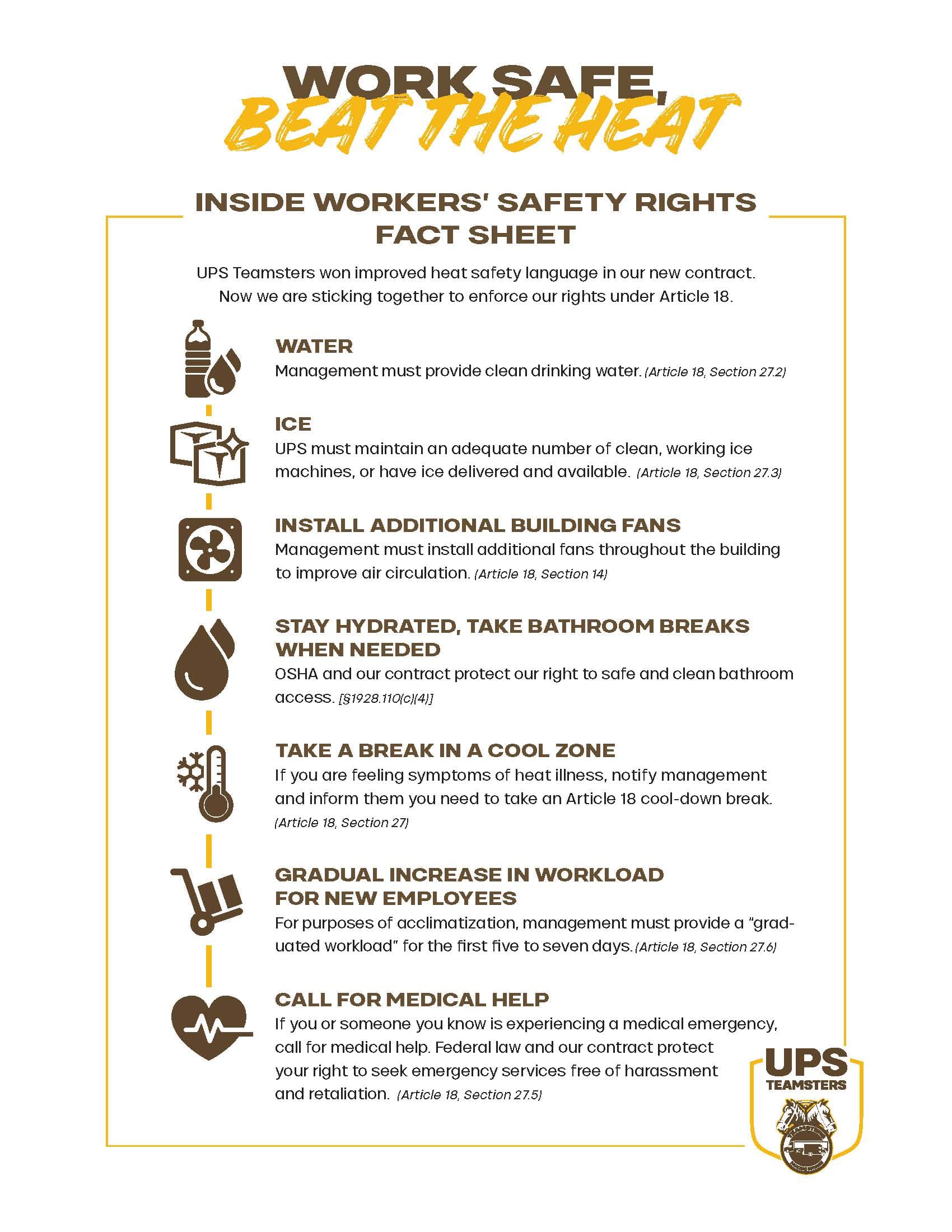
Heat has become one of the clearest tests of whether UPS’s safety language has teeth. In June 2025, the International Brotherhood of Teamsters said it was requesting UPS data on heat protections, overtime violations and staffing. That request showed the fight was not about abstract culture, but about measurable conditions that affect whether workers can get through a route, a preload or a sort without getting hurt.
The pressure sharpened after a McKinney, Texas, crash on 2024-08-20. Teamsters Local 767 said the UPS driver had suffered heat-related illness, and the incident left the driver nearly hitting oncoming traffic before crashing into trees. A day later, North Texas UPS workers and union leaders were pressing for heat safety, which put a public face on what many workers already know: a hot truck or a hot sort is not just uncomfortable, it can become a safety emergency.
El Paso gave the same issue a different outcome. On 2023-09-05, UPS workers there voted overwhelmingly for a new contract that added safety protections after a historic heat wave. That contract fight followed broader coverage in July 2023, when extreme heat was treated as a key issue in UPS bargaining, and when E&E News by POLITICO noted that climate change was one reason drivers were threatening to strike. In other words, heat was not a seasonal complaint, it was a bargaining issue tied to how long a UPS worker can safely keep moving.
How Teamsters members can use the company’s safety language
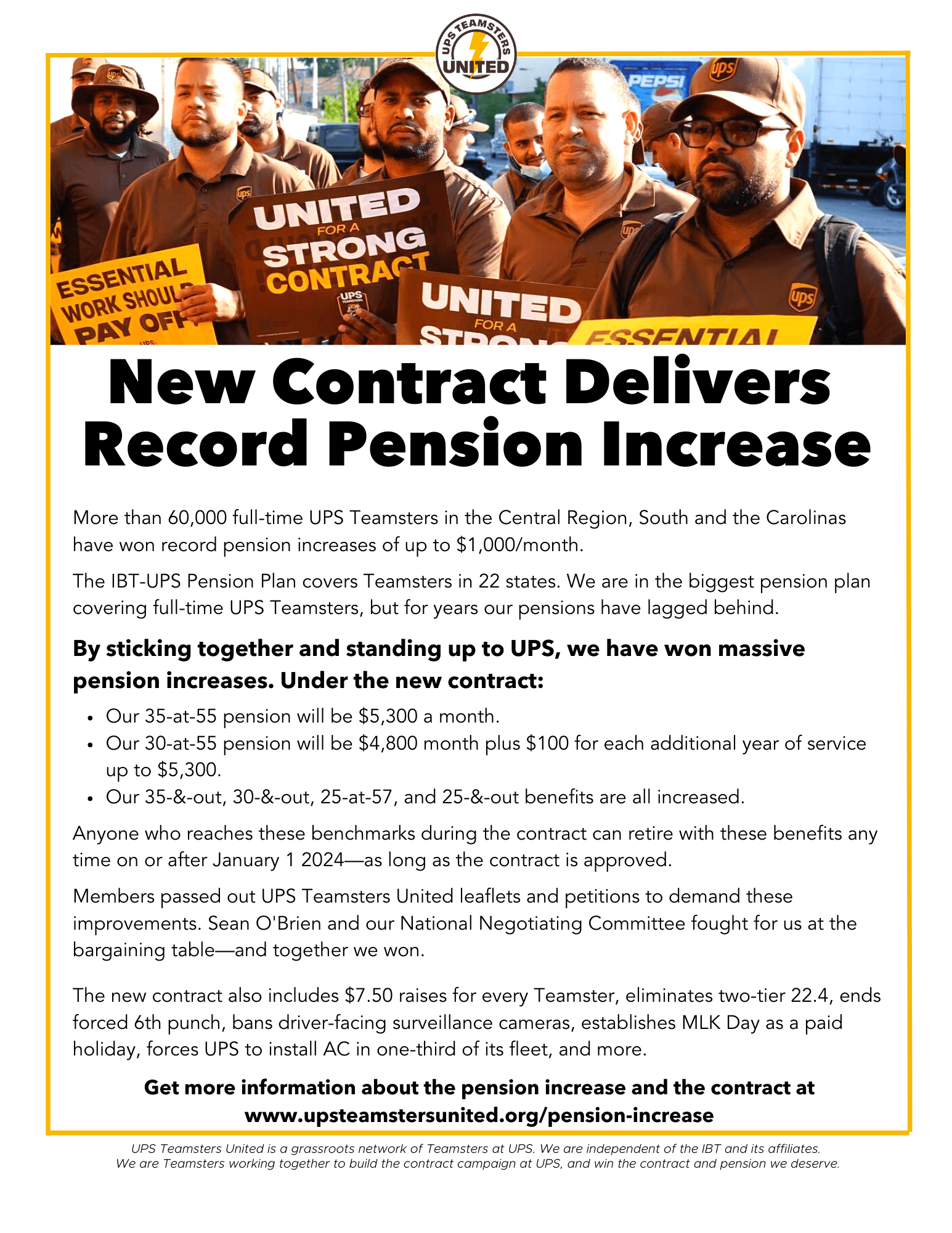
The strongest use of a company safety page is as a benchmark. If UPS says safety is first, workers can compare that claim with the actual conditions on the floor: staffing levels, overtime, vehicle condition, heat protections and whether supervisors respect a decision to slow down or stop when a task is unsafe. That is where the Teamsters’ contract language and grievance process matter, because a posted value is only meaningful when it can be enforced.
Union safety materials have pushed the same point. UPS Teamsters United put out a heat-safety toolkit saying the contract won stronger heat safety language and urging members to enforce their rights during summer. For a new hire, that kind of guidance matters because it pairs the company’s stated standards with the practical question of how to use them. For a veteran package car driver, feeder driver or mechanic, it is a reminder that repeated strain and weather exposure are not personal problems to push through alone.
Why the numbers matter
The scale of injury risk in this work is not theoretical. An American Journal of Public Health article cited OSHA data showing that nearly 900,000 injuries and illnesses reported by more than 350,000 establishments were posted for 2023. That figure helps explain why a huge employer like UPS cannot treat safety as a public relations line item.
UPS moves people and freight through physically demanding jobs that combine lifting, driving, repeated motion and weather exposure. That makes every claim about safety culture something workers can test against the daily reality of heat, overtime, staffing and discipline. If the company wants “Priority No. 1: Safety” to carry weight, the proof will show up in fewer hazards, better staffing and real authority on the floor to stop unsafe work before it becomes the next injury report.
This article was produced by Prism’s automated news system from verified source data, official records, and press releases, then run through automated quality and moderation checks before publishing. The system is built and supervised by the people who set the standards it runs under. Read our full AI policy.
Did this article answer your question?