Alabama Court Rules Workers' Comp Acceptance Bars Duke's Tort Suit Against Walmart
A Walmart distribution-center worker accepted workers' comp checks, then sued for the same parking-lot accident. Alabama's Supreme Court ruled those checks closed the door permanently.
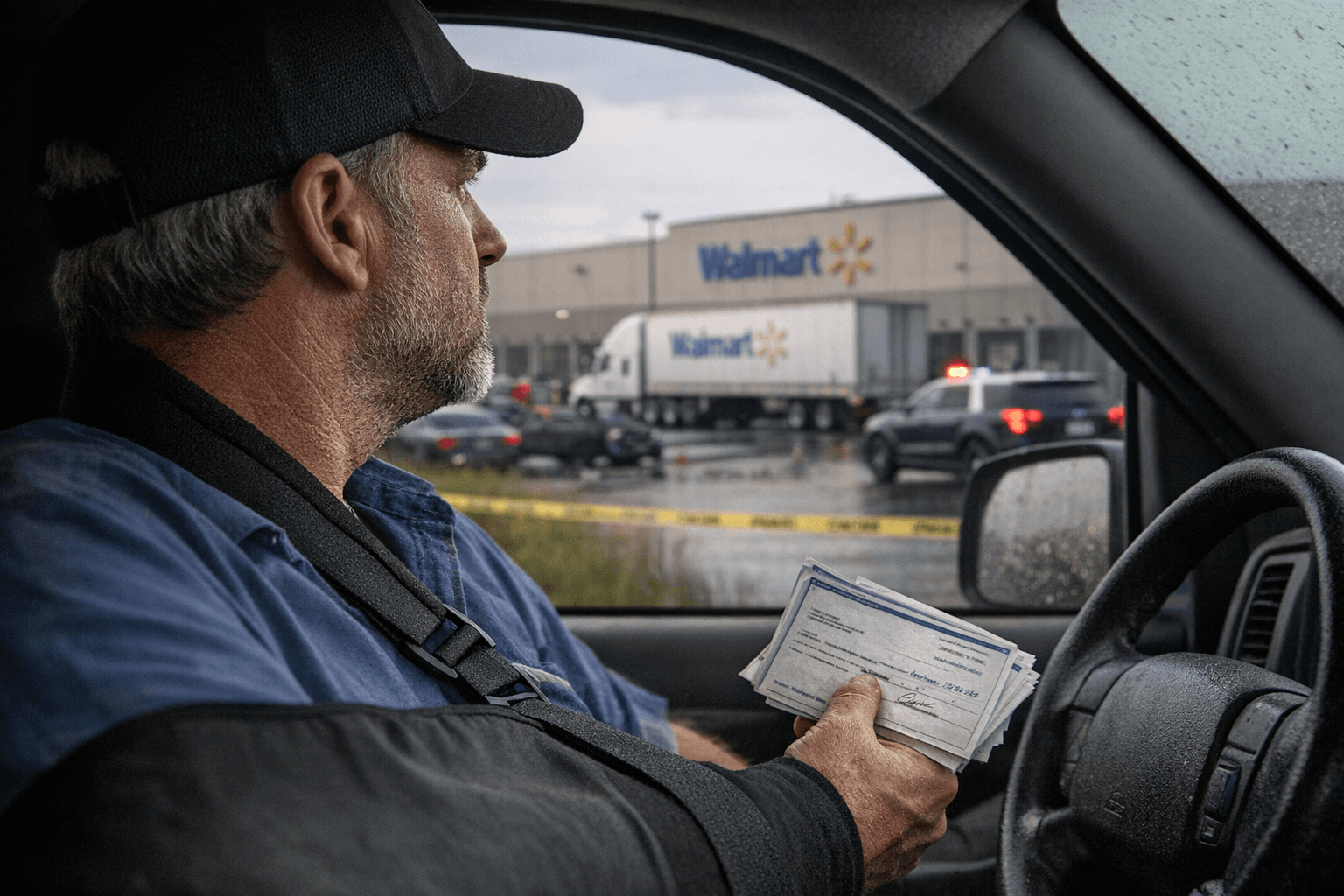
The ruling that ended Phillip Duke's lawsuit against Walmart didn't turn on whether a tractor-trailer hit him in a distribution-center parking lot. It turned on what Duke did in the weeks after: he accepted workers' compensation checks.
That detail, confirmed by the Pike Circuit Court and affirmed by the Supreme Court of Alabama on March 20, 2026, is the practical core of a decision every Walmart associate working near a loading dock, delivery lane, or company parking area should understand before an accident happens, not after.
Duke, a Walmart employee, said he was off duty and jogging on company property when he was struck by a tractor-trailer driven by coworker Qeon Gray in 2024. He accepted workers' compensation payments and medical benefits for his injuries. Then he filed a separate civil tort lawsuit against both Walmart and Gray.
The courts never reached the question of who was at fault. The Pike Circuit Court granted summary judgment to both defendants on the threshold issue: Duke had accepted workers' comp while represented by counsel and without reserving any right to pursue other remedies. That decision, the trial court found, was legally binding. The Alabama Supreme Court agreed, with Justice Sellers authoring the opinion affirming the lower court's judgment.
"The acceptance of compensation payments under the Workmen's Compensation Act constitutes an election that estops the employee from resorting to any other remedy," the court wrote, citing prior precedent.
Under Alabama's exclusive-remedy rule, workers' compensation functions as the sole recovery channel once an employee accepts benefits for an injury. The system prohibits double recovery, and Duke's acceptance was ruled an election he could not reverse after the fact. Arguments that Duke may not have understood the nature of the compensation checks were not considered on appeal because they had not been raised at the trial court level.
Duke also attempted to hold Gray individually liable, alleging the driver may have been under the influence of drugs and had acted "recklessly." Alabama's standard for suing a coworker is narrow: the plaintiff must demonstrate willful conduct and an intentional "design to injure." Duke's own initial complaint described Gray as someone who "did not see" him, and the court found that language fell well short of the intentional wrongdoing standard required to reach a coworker through civil litigation.
For associates at Walmart distribution centers, where tractor-trailers and pedestrians share the same lots and access roads around the clock, the case maps out a sequence that matters more than the legal outcome itself.
The moment an accident occurs on company property, whether on the clock or not, the workers' compensation system is already in play. Notify a supervisor and request a formal incident report before leaving the premises. Get a copy of that report, or document in writing the time and identity of whoever you notified if a copy is not immediately available. Record witness names and badge numbers, the precise location within the facility or parking area, and the time the incident occurred. Photograph the scene and any visible injuries before conditions change.
Before accepting any workers' compensation check or signing any benefit documentation, consult a personal injury or workers' compensation attorney who is independent of Walmart. If preserving the option to pursue a separate civil claim matters to you, your attorney can insert a written reservation of rights into the acceptance documentation before any benefits are received. Duke accepted checks while already represented by counsel but without that reservation, a combination the courts found dispositive.
Walmart's People Leaders and Employee Relations teams are required to explain the workers' comp process at the time of an injury. The Safety team at each facility handles initial incident documentation. These internal channels exist to help, but they operate within a system designed to route claims toward workers' comp resolution. Your broader legal options depend entirely on the steps taken before any payment is accepted.
Duke's argument that he was off duty did not change the court's analysis. Being outside your scheduled shift hours on company property does not automatically place you outside the workers' compensation system, particularly when you accept benefits under that system for the same injury. The workers' compensation benefits Duke already received are now his only source of recovery. That outcome was not decided by what happened in the parking lot. It was decided by what happened at the mailbox.
This article was produced by Prism’s automated news system from verified source data, official records, and press releases, then run through automated quality and moderation checks before publishing. The system is built and supervised by the people who set the standards it runs under. Read our full AI policy.
Did this article answer your question?