Amazon expands 30-minute delivery, raising pressure on Walmart speed
Amazon Now’s 30-minute promise in dozens of cities tightens pressure on Walmart stores to nail batching, staging, substitutions and staffing.

Amazon’s push into 30-minute delivery is not just another fast-shipping headline. For Walmart pickup and delivery associates, it raises the bar on what counts as “fast” and puts more pressure on the basics that decide whether an order leaves on time: batching, staging, substitutions, wait-time metrics and whether enough labor is on hand to keep the backroom moving.
Amazon said its new Amazon Now service is widely available in Atlanta, Dallas-Fort Worth, Philadelphia and Seattle, while expanding in Austin, Houston, Minneapolis, Orlando, Phoenix, Denver and Oklahoma City. The company said the service is rolling out to dozens of U.S. cities and is headed toward tens of millions of customers by the end of 2026. Its mini-warehouses are about the size of a CVS drugstore and carry about 3,500 items, including groceries, beer, diapers, pet food, over-the-counter medications and phone chargers.

That matters inside Walmart because the customer benchmark is shifting again. Amazon said Amazon Now first launched in India in June 2025 and is already available in urban areas of Brazil, Mexico, Japan, the United Arab Emirates, the United Kingdom and the United States. The message to shoppers is simple: if something is needed right now, someone will try to bring it faster. For Walmart stores that fulfill pickup and delivery from the sales floor and backroom, that means every mis-picked tote, missing item and slow substitution approval becomes more visible.
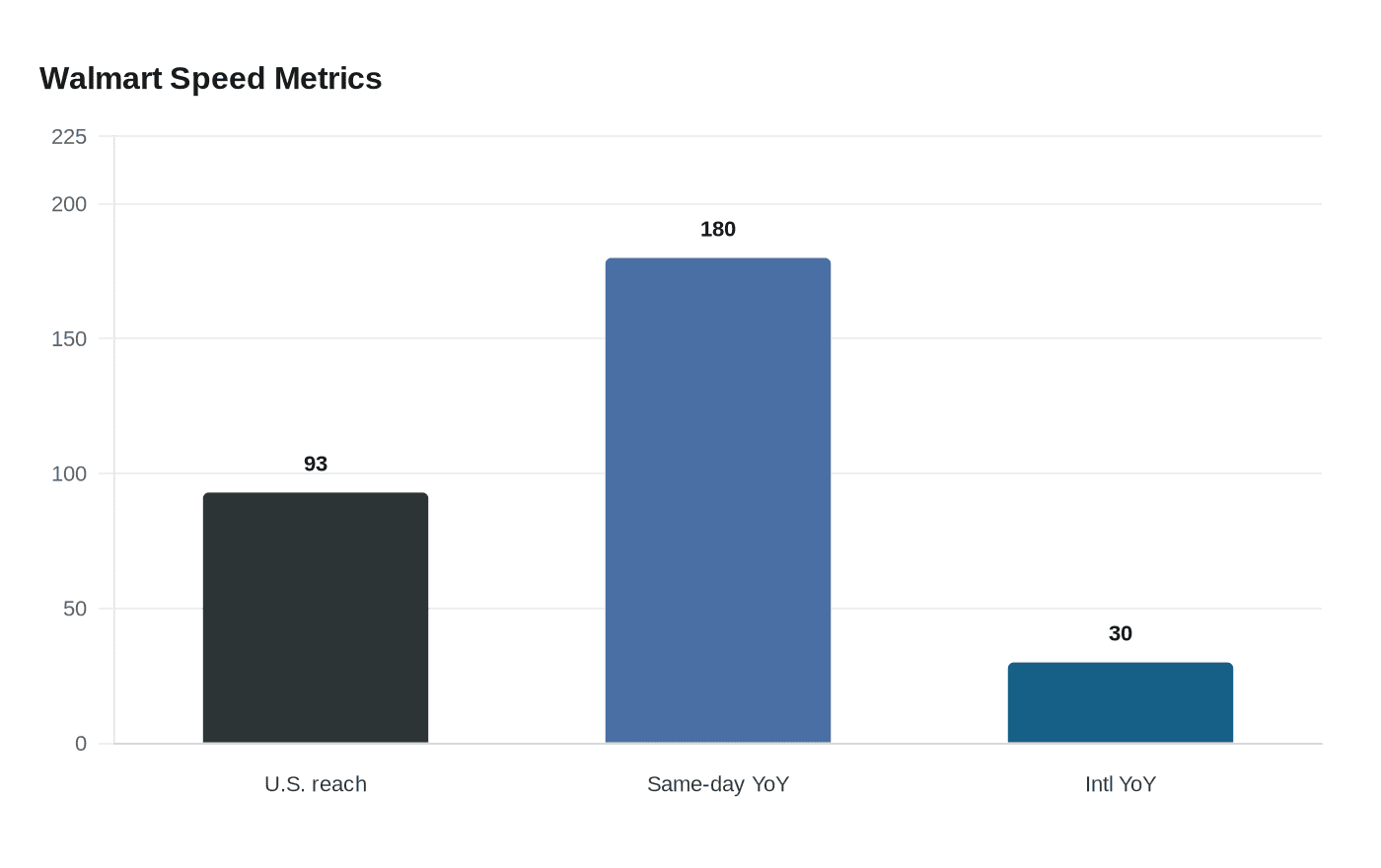
Walmart has plenty of speed of its own to defend. The company said it can reach 93% of U.S. households with same-day delivery, and that same-day delivery, including orders fulfilled within three hours or less, grew 180% year over year and helped drive more than 5 billion units delivered last year. In its most recent quarterly materials, Walmart said same-day and next-day items delivered in Walmart International rose about 30% year over year. In June 2025, Walmart said it was deploying AI-powered tools across its 1.5 million U.S. associates, including shift-planning tools that cut planning time from 90 minutes to 30 minutes.
For associates on the floor, the operational signs to watch are concrete. More aggressive batching means larger waves hitting the backroom at once. Tighter staging means less room for error in pickup areas. Faster promises can also mean more pressure on substitutions, because an order that waits on approval can blow up the clock. If Walmart responds, the biggest clues will show up in staffing schedules, task pacing, wait-time targets and how hard managers push accuracy in departments that feed pickup and delivery. The delivery race is really a store-operations race.
This article was produced by Prism’s automated news system from verified source data, official records, and press releases, then run through automated quality and moderation checks before publishing. The system is built and supervised by the people who set the standards it runs under. Read our full AI policy.
Did this article answer your question?