Autonomous Trucking Expands North, Reshaping Retail Supply Chain Workflows
Driverless trucks just ran on I-70 through Ohio and Indiana. Walmart dock teams on those freight lanes should know what changes in the next two years.

The dock floor question is straightforward: when the truck pulling in has no driver, who manages the handoff?
Kodiak AI ran its first autonomous trucking demonstration outside the Sunbelt on Interstate 70 through Ohio and Indiana on April 7, operating Level 4 driverless rigs in partnership with DriveOhio, Ohio's centralized hub for connected and autonomous vehicle testing, and the Indiana Department of Transportation. I-70 is one of North America's most commercially dense freight corridors, threading directly through the distribution geography that feeds Walmart's Midwest store network. "Our work with DriveOhio marks an important step toward scaling autonomous trucking nationwide," said Don Burnette, Kodiak's founder and CEO.
The milestone matters because it isn't theoretical anymore. Gatik, the autonomous middle-mile specialist, has been running fully driverless commercial deliveries for Walmart in Arkansas since August 2021, covering a 7.1-mile route between a dark store and a Bentonville Neighborhood Market. Gatik's reference to serving "Fortune 50 customers" in its public materials points directly to that Walmart relationship. Kodiak's expansion into Ohio and Indiana now extends that proving ground north, into terrain where weather, road conditions and freight density look very different from the Texas and Arizona routes where autonomous trucking has logged most of its commercial miles to date.
For associates managing inbound freight over the next 12 to 24 months, the most immediate change is unlikely to be a driver seat going empty. It will be arrival windows. Autonomous trucks run on highly predictable schedules because they don't log fatigue, don't stop for meals and don't vary based on a driver's day. Dock supervisors and freight teams who currently buffer inbound time estimates should start expecting tighter delivery slots and plan staffing to match.
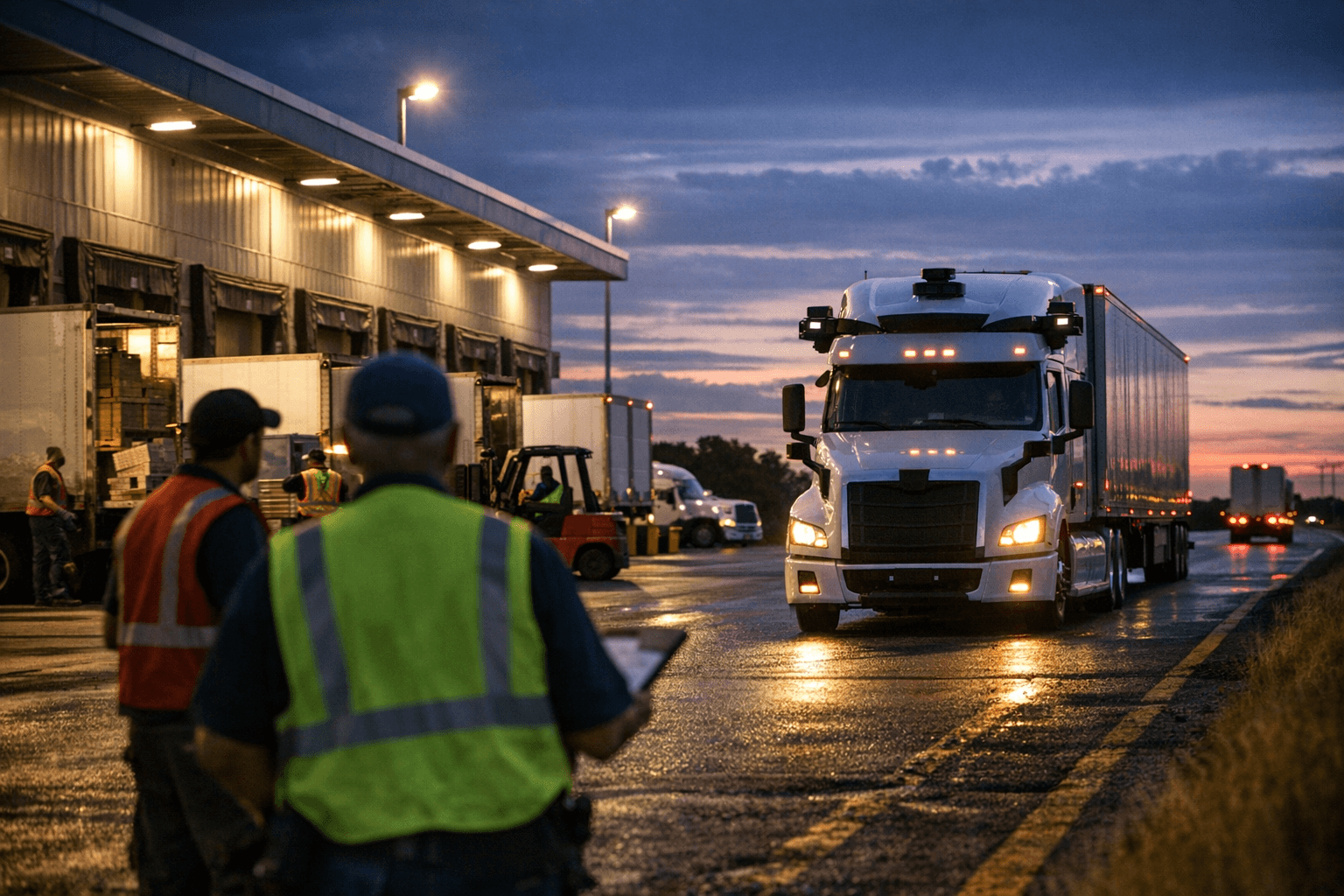
Job composition shifts more gradually. Long-haul highway driving on specific lanes is the most automatable piece of the logistics chain; coupling, uncoupling, loading, unloading and exception handling are not. Associates working those functions are in the more durable part of the equation. What grows is demand for people who can operate alongside autonomous systems: remote vehicle monitors, maintenance technicians and dock-level personnel trained on the communication protocols for driverless rigs.
Building those skills before a pilot arrives at your facility is the practical move. Cross-training on loading technology and robotics interfaces gives associates an advantage when automation reshapes the labor mix at a DC or store backroom. Walmart's Live Better U program covers tuition for degree and certificate programs in logistics and supply chain, a benefit that gains real value as the technology layer in freight operations expands. Drivers currently running middle-mile highway routes should specifically ask their managers how autonomous lane expansion will affect route assignments and pay structure: middle-mile is where automation scales first, while last-mile delivery, with its neighborhood streets, customer addresses and unpredictable conditions, lags considerably behind.
The commercial math is accelerating the timeline. Sixty-five percent of all freight routes are now under 500 miles, and routes under 100 miles have grown 37 percent over the past decade. That range is precisely where autonomous middle-mile companies like Kodiak and Gatik are building their business case, and Ohio and Indiana sit squarely within it for Walmart's regional distribution hubs. The question for associates at those facilities isn't whether autonomous trucks will eventually arrive; it's whether they'll know what to do when they do.
This article was produced by Prism’s automated news system from verified source data, official records, and press releases, then run through automated quality and moderation checks before publishing. The system is built and supervised by the people who set the standards it runs under. Read our full AI policy.
Did this article answer your question?