Consumers Sue Walmart, Pepsi Over Alleged Scheme to Inflate Rivals' Prices
A federal lawsuit accuses Walmart and PepsiCo of running a decade-long scheme that inflated Pepsi prices at every retailer except Walmart through secret price-gap monitoring.
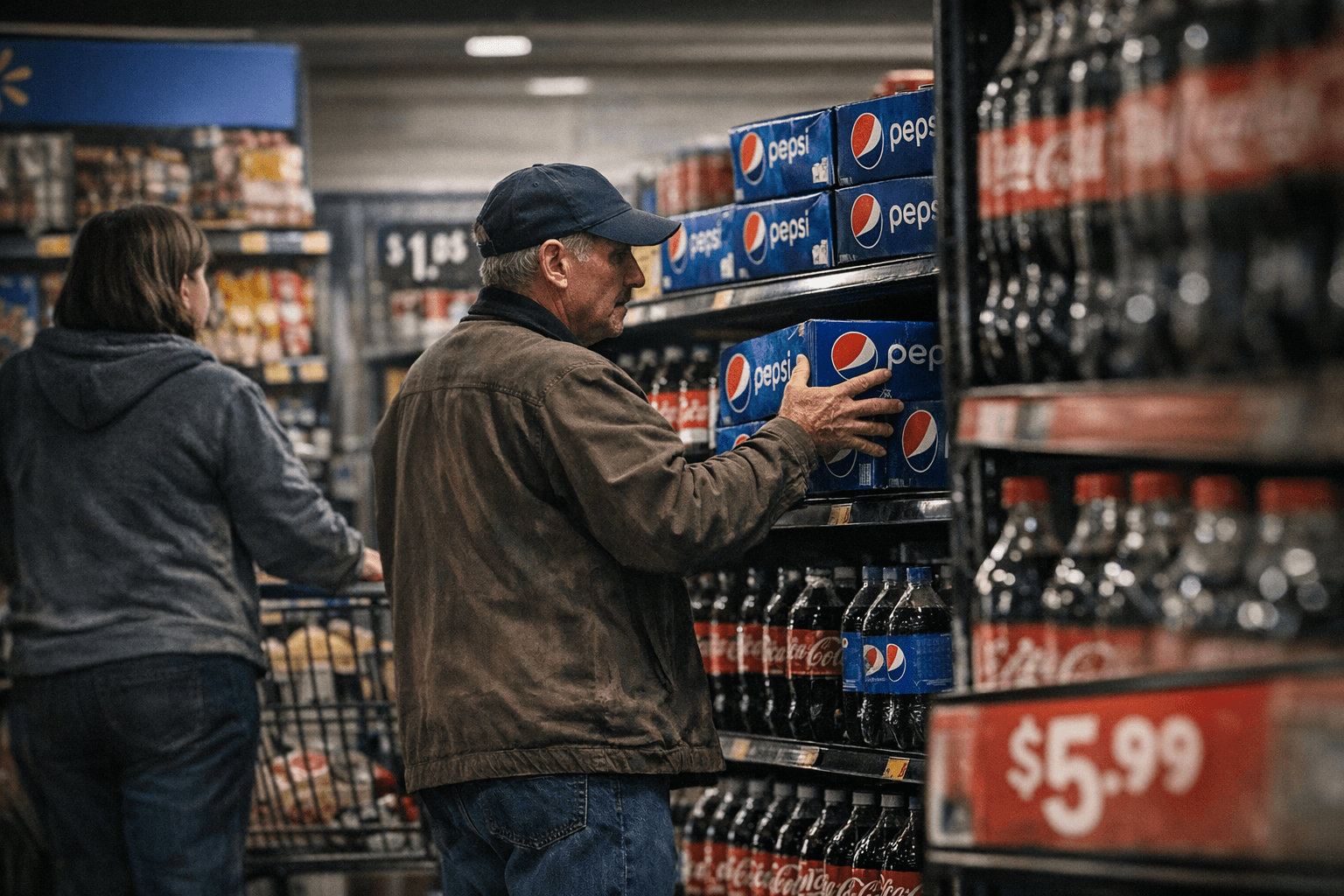
A proposed class-action lawsuit filed in the U.S. District Court for the Southern District of New York accuses PepsiCo and Walmart of operating a coordinated pricing scheme that allegedly kept Pepsi products artificially cheap at Walmart while inflating costs for consumers who shopped anywhere else — including the grocery stores where many Walmart associates also spend their paychecks.
The 77-page antitrust complaint, filed December 15 by plaintiffs Martin Gelbspan, Aaron Hinds, and Alexander Govea, alleges that PepsiCo sold its soft drink products to Walmart at lower effective wholesale prices than it offered competing retailers, while simultaneously providing Walmart with promotional payments, discounts, and marketing support not equally available to rivals. The proposed class covers buyers nationwide who purchased Pepsi products outside Walmart stores from 2015 to the present.
The mechanics alleged in the complaint are specific and documented. According to the filing, PepsiCo "continually monitors Walmart's retail price gap on Pepsi soft drinks as compared with the rest of the market and shares that information with Walmart" through regular internal "Price Gap reports." One internal Pepsi email cited in the complaint warns that Walmart will "pressure [Pepsi] for actions" whenever that gap gets too small.
The complaint describes a two-pronged enforcement system. When a competing retailer priced Pepsi products below Walmart's level, PepsiCo allegedly hit that retailer with "a series of escalating, targeting wholesale price increases" until matching Walmart's price became economically infeasible. In exchange, Walmart accepted PepsiCo's higher wholesale prices — but when PepsiCo failed to force a competitor's prices back up, Walmart demanded PepsiCo fund forced "rollback" price cuts so Walmart could match the lower price without sacrificing its own margins. The complaint summarizes the arrangement directly: "If Pepsi did take action to inflate competing retailers to Walmart's preferred price, Walmart agreed to accept Pepsi's preferred wholesale prices; and if Pepsi failed to do so, Walmart would force a wholesale price cut leading to lower wholesale and retail prices for Pepsi soft drinks."
The practical result, plaintiffs argue, was a set of price floors at non-Walmart retailers. The complaint includes price comparisons for identical products, including twelve-packs of soda, sports drinks, and bottled beverages, showing higher costs at competing stores. Plaintiffs allege the scheme allowed PepsiCo to raise prices broadly across the market in a way that "would not have been possible absent the [pricing] scheme." Internal communications cited in the filing describe the Walmart pricing arrangement as a "foundational commitment" within PepsiCo.
The lawsuit asserts violations of the Sherman Antitrust Act, covering both price-fixing and the exchange of competitively sensitive information, and also relies on state consumer protection laws. Federal antitrust law generally limits damage recovery by indirect purchasers — consumers who buy from retailers rather than directly from manufacturers — but many states permit recovery under their own statutes, which is why the complaint layers in state-law theories alongside the federal claims.
The case follows a related federal enforcement effort. The Federal Trade Commission previously pursued PepsiCo under the Robinson-Patman Act, a 1936 discriminatory pricing statute, alleging similar preferential treatment for Walmart. The FTC dropped that lawsuit in May 2025. The private complaint incorporates several factual allegations from the FTC's earlier case, including claims that PepsiCo provided Walmart with "promotional payments and allowances without making these equally available to that customer's competitors."
Grocery retailers have complained for years that suppliers charge them more than they charge Walmart. Walmart's defenders have long attributed its low prices to operational efficiency. The unsealed complaint offers a detailed counter-narrative: that some portion of that price advantage was built not through efficiency but through a monitored, enforced arrangement in which PepsiCo's largest customer used its leverage to reshape pricing across the entire soft drink market. Neither PepsiCo nor Walmart had provided public comment as of the filing date.
Know something we missed? Have a correction or additional information?
Submit a Tip