Kodiak Man Charged With Impersonating ICE, Demanding Workers' Papers
A Kodiak man was charged after allegedly posing as ICE and demanding workers' papers at a Walmart and a Safeway, highlighting safety and enforcement anxieties for retail staff.
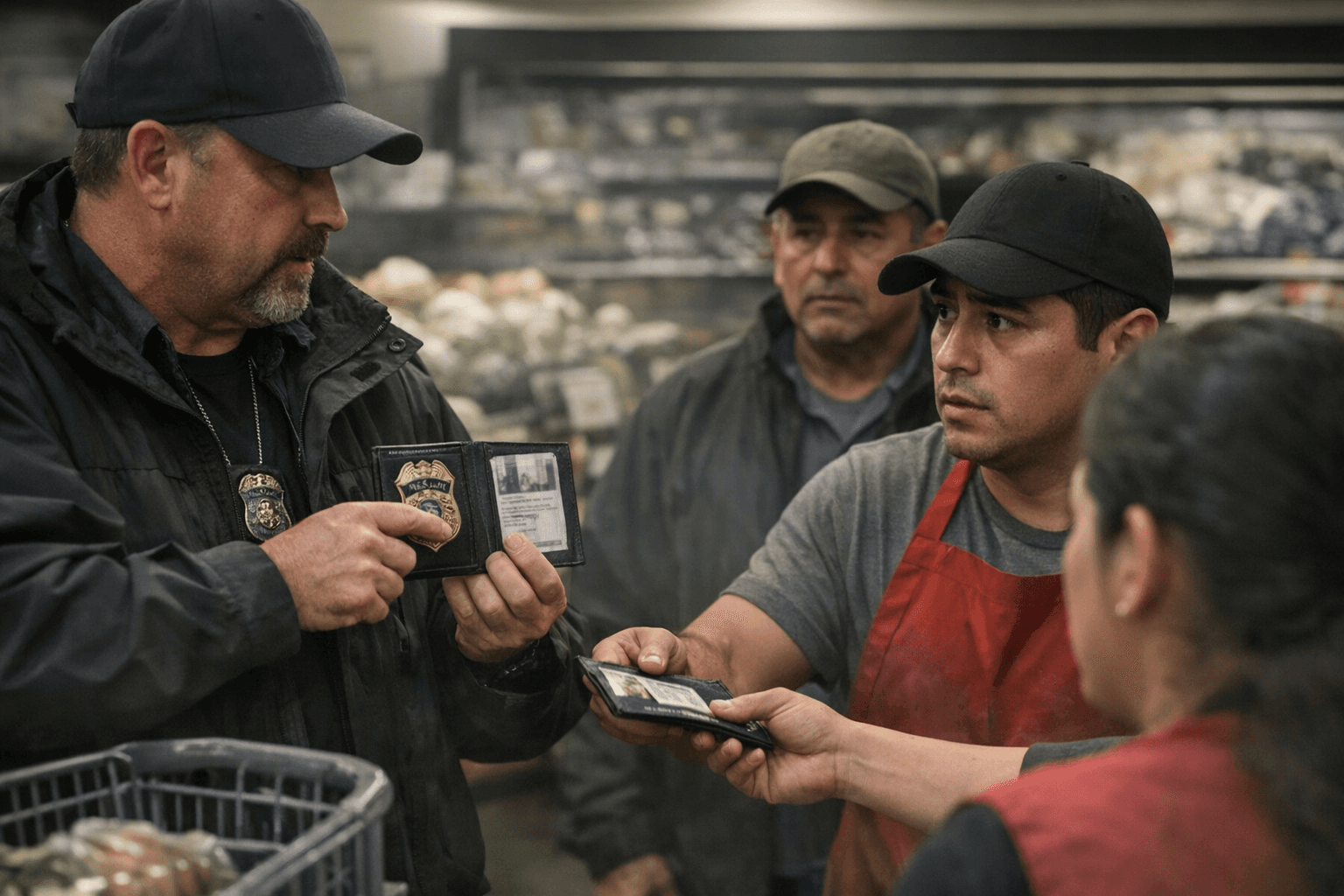
A Kodiak man faces a felony charge after police say he entered a Walmart and a Safeway, identified himself as with ICE, and demanded employees produce their "papers." The incidents left cashiers and customers shaken and underscore the vulnerability of front-line retail staff to confrontations tied to immigration enforcement and public impersonation.
Police charged Maximillian I. Kaplan with impersonating a public servant, a Class C felony in Alaska that can carry up to five years in prison and a significant fine. Authorities say a Walmart employee reported the man yelling at cashiers and customers and asking for papers, while a Safeway manager reported a similar disruptive incident. An affidavit quoted Kaplan saying, "God told him to ask the employees for their papers." Investigators also reported that Kaplan was dressed in black and carrying a backpack.
Kaplan was arraigned in Kodiak and a judge appointed an attorney from the public defender's office to represent him. Prosecutors scheduled a preliminary hearing for February 11 to determine whether the case will proceed to trial.
For retail workers, the episode highlights familiar, uncomfortable dynamics. Cashiers and front-end staff are often the first to face unpredictable behavior from shoppers and intruders. Incidents framed as law-enforcement actions can escalate fear among employees, particularly those who are immigrants or who work with immigrant communities. Managers and loss-prevention teams routinely balance service with immediate safety decisions, calling police when a situation grows volatile and documenting events for potential prosecution.
Employers such as Walmart and other grocery and retail chains typically instruct employees not to confront people claiming to be law enforcement, to ask for identification if safe to do so, and to summon store security or local police. Even so, the emotional and operational burden falls on hourly workers to manage customers while maintaining checkout flow and de-escalating conflicts. Repeated episodes can increase turnover, trigger additional training needs, and strain relations between staff and management over safety protocols.
The legal stakes for Kaplan are significant, and the case will test how local courts treat impersonation tied to immigration claims. For employees, the immediate concern is workplace safety and clarity on procedures when someone asserts they represent a federal agency. Retail supervisors should review incident reporting, reinforce training on verifying identities only when safe, and ensure staff know how to contact security and law enforcement.
As the case moves toward the February 11 preliminary hearing, workers and managers in Kodiak and beyond will be watching whether the charge deters similar incidents and whether employers bolster protections for customer-facing staff.
This article was produced by Prism’s automated news system from verified source data, official records, and press releases, then run through automated quality and moderation checks before publishing. The system is built and supervised by the people who set the standards it runs under. Read our full AI policy.
Did this article answer your question?