Report: Walmart Warehouse Workers Cite Constant Surveillance, Quota Pressure, Injuries
A new study found Walmart warehouse workers report constant tech monitoring, intense quota pressure and injuries tied to work pace, raising safety and economic concerns for staff.
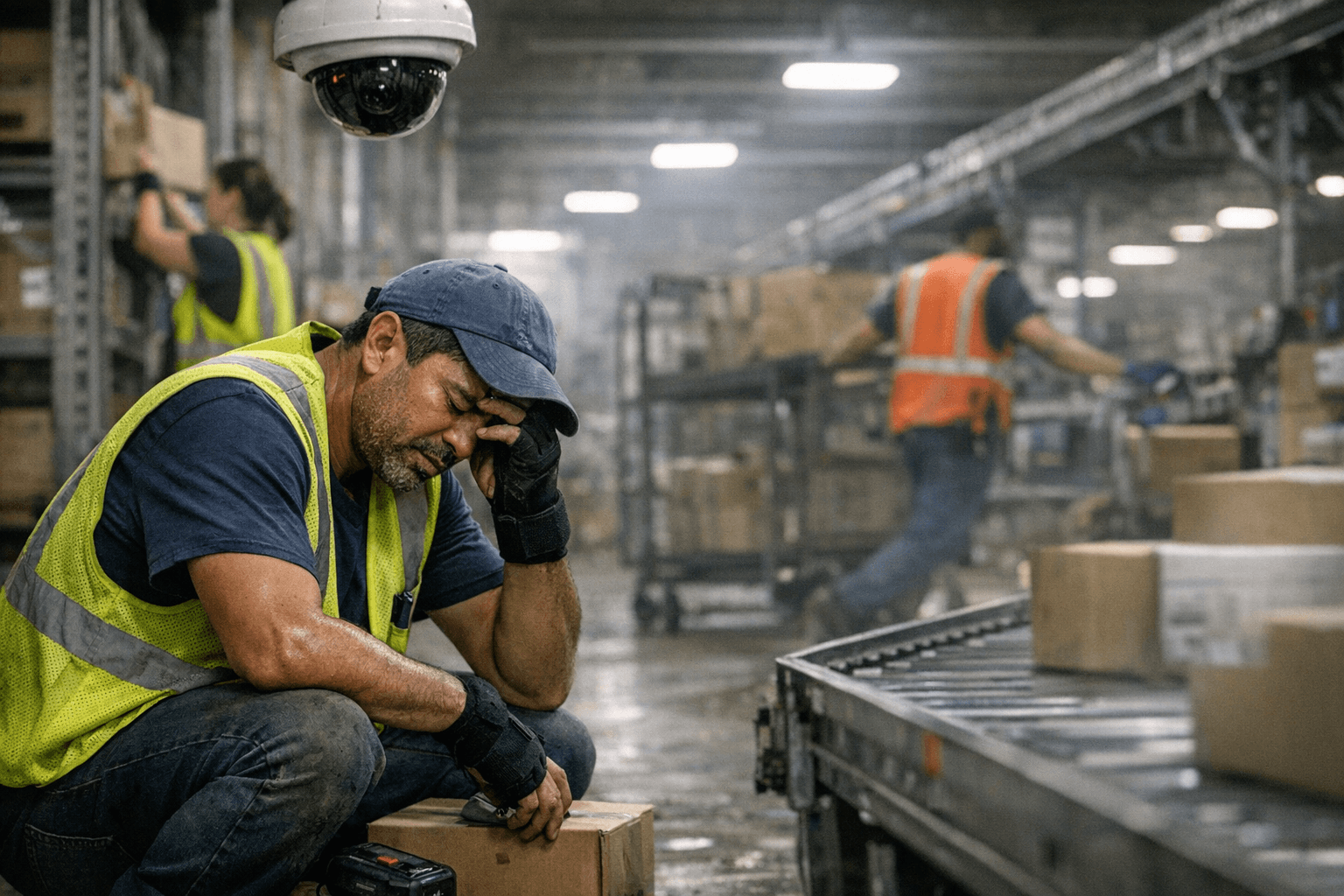
A new research release found pervasive surveillance and quota pressure in Walmart’s warehouse network, and workers say those pressures are contributing to anxiety, injuries and financial strain.
The study, released Jan. 23, 2026, reported that roughly two-thirds of warehouse employees sometimes feel anxious when thinking about meeting quotas. About 67% said their work is measured in detail by technology "always or most of the time." Nearly 30% of respondents reported experiencing an injury during their time at Walmart, and about 40% of those workers linked injuries to the pace of work. The survey also documented sizable shares of employees facing economic insecurity, including difficulty paying bills and food and housing instability.
Those findings underscore how measurement systems and productivity targets shape day-to-day life on the warehouse floor. Workers described constant tracking of scan rates, pick times and task completion, tools that supervisors and algorithms use to set expectations and identify lagging performance. The research connects that constant monitoring to heightened stress and to a work environment where speed can compromise safety.
United for Respect organizers have cited the results as evidence that warehouses need stronger protections. The report coincides with renewed momentum behind the Warehouse Worker Protection Act, legislation aimed at limiting quota-driven practices and improving safety standards in large distribution centers. Proponents of the bill argue that clearer limits on quotas and greater transparency around monitoring tools would reduce on-the-job injuries and the pressure that contributes to mental health strain.
For Walmart workers, the immediate impacts are practical and personal: persistent back pain and repetitive-strain injuries for some employees, anxiety about meeting shifting daily rates for others, and broader financial instability that makes recovery harder. Those conditions affect retention and morale in facilities that rely on steady throughput to meet retail demand. The combination of high measurement and economic precarity can also complicate workplace organizing and advocacy, as employees weigh the risks of speaking out against potential scheduling or performance penalties tied to monitored metrics.
Walmart did not provide a comment for the research release. As lawmakers and labor advocates press for legislative and regulatory changes, the report adds data to ongoing debates about how far employers can go in using technology to monitor and shape hourly work. For readers who work in logistics or manage warehouses, the findings signal a likely continued focus on how monitoring systems are designed and enforced, and whether policy or corporate changes will follow to address safety and wellbeing on the floor.
This article was produced by Prism’s automated news system from verified source data, official records, and press releases, then run through automated quality and moderation checks before publishing. The system is built and supervised by the people who set the standards it runs under. Read our full AI policy.
Did this article answer your question?