Sam’s Club repositions MAP as retail network blending media and in-club experiences
Sam’s Club is turning MAP into a club-floor system, which could mean more displays, more member questions and tighter execution for associates.

What MAP’s new direction means on the floor
Sam’s Club is no longer describing MAP as just a media product. It is positioning the platform as the first Retail Experience Network, a setup meant to connect brands with current and prospective members through on-site, in-club and offsite touchpoints that are tied back to measurable business results. For club teams, that is not an abstract branding shift. It is a signal that promotions, signage, demos and merchandising will be judged less as isolated tasks and more as part of one connected system.
That matters because the club floor is where the company’s measurement story meets reality. If a brand activation is promoted through MAP, associates may be the ones answering the questions when members show up looking for a featured item, a limited offer or a product they saw in the app. The more Sam’s Club links advertising to the in-club path to purchase, the more pressure falls on front-line teams to keep execution clean and consistent.
What associates are likely to notice first
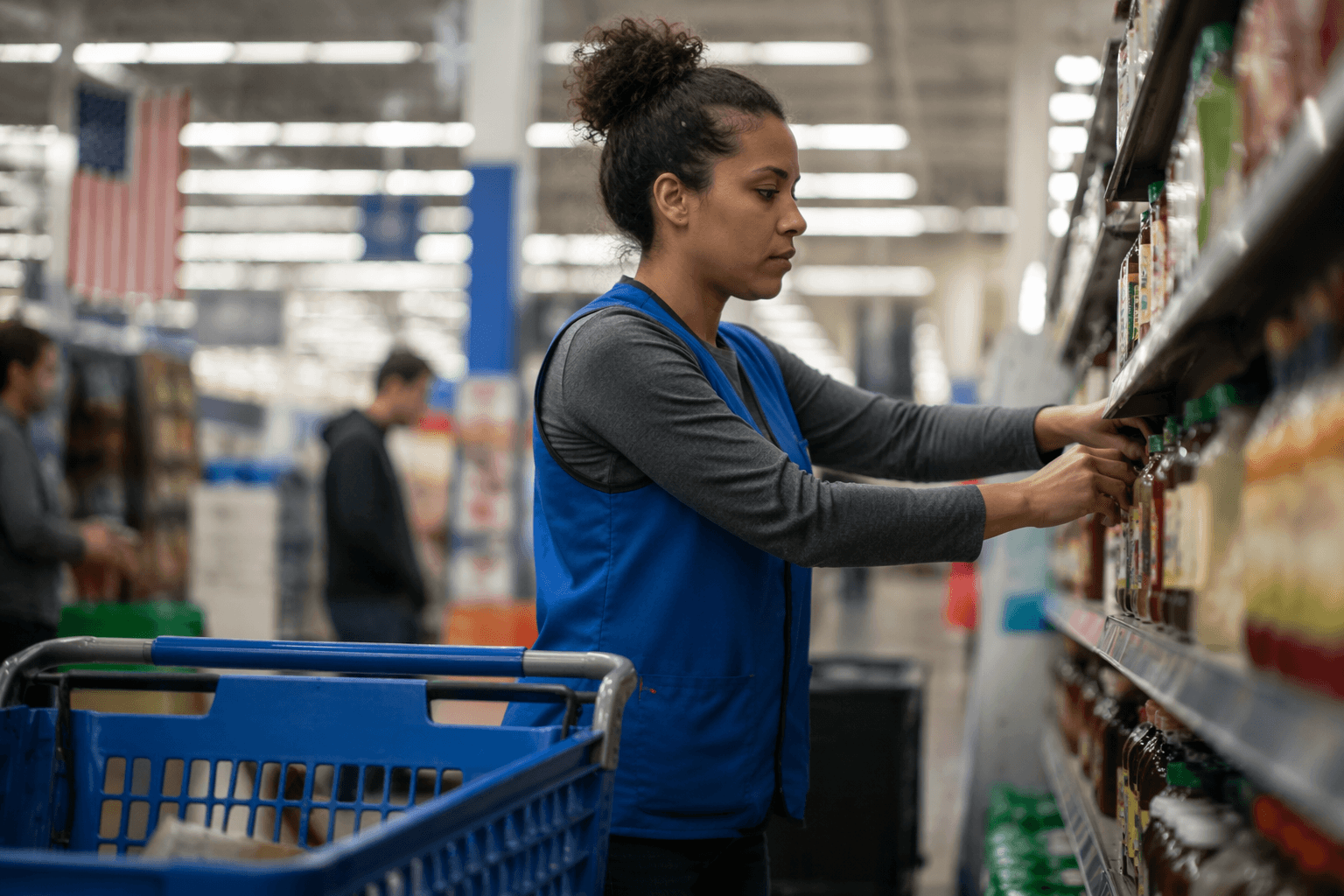
The easiest place to see MAP’s impact is in the daily workload. More in-club activations usually mean more temporary displays, more branded signage, more demo setups and more resets when a campaign changes. It also means more member questions about why an item is featured, where a promotion starts and whether an offer they saw online is available in the building.
That kind of work can improve the clarity of the sales floor when it is done well, but it can also create friction if teams are not given enough time or detail. Managers may be asked to watch traffic flow more closely, because Sam’s Club is now tying measurement to how merchandise placement and execution affect outcomes. In practical terms, that can mean tighter expectations around where displays sit, how long they stay up and whether the club is following the playbook exactly.
For hourly associates, the real shift is that execution is no longer just about looking neat. It becomes part of a data story. When a member engagement is supposed to be measurable, the display, the signage and the follow-through all matter more than they used to.
The measurement piece is what raises the stakes
Sam’s Club says MAP is built around closed-loop measurement, third-party-verified results and advanced technology. The company’s measurement pages say it can report total ad-attributed sales, incremental ROAS, sales lift, new buyers, basket analysis, household reach and in-club attribution from search. That is a dense list, but the floor-level meaning is simple: the company wants to know whether an ad or promotion actually changes behavior inside the club.
MAP also leans on more than 40 years of first-party data on purchases, searches and club visits. That gives Sam’s Club a large base for connecting what members do before they arrive with what happens after they walk in the door. The company’s broader message is that promotions should not live only on a screen or in a print insert. They should help move a member through discovery, shopping and checkout in a way the company can measure.
That is where the pressure comes in for clubs. When a platform can track results this closely, managers are likely to feel more scrutiny on execution, and associates may hear more about why a certain pallet goes in one aisle instead of another. The display is no longer just a display. It is part of a business case.
Why this also affects wages, remodeling and staffing expectations
Sam’s Club says advertising revenue is reinvested back into club operations, including associate wages, club remodeling and new growth opportunities. That is an important line for workers because it links a growing media business to store-level resources, not just corporate profit. The company also said in its 2024 compensation overhaul that hourly wages would progress faster within pay ranges, with increases of 3% to 6% based on years of service.
The timing matters because Sam’s Club is also expanding its physical footprint. In April 2025, the company said it planned to open 30 new locations and remodel all 600 existing clubs. If MAP is supposed to help fund and support that growth, then the platform is not happening in a vacuum. It is part of a larger rebuild of the club experience, one that could bring more traffic, more execution layers and more expectations for front-line consistency.
There is another piece here that associates will feel directly: Scan & Go. Sam’s Club said adoption had surged 50% over three years, and that one in three members is now a regular user. That means more shopping decisions are happening before a member reaches the register, and more ad placement is being woven into the app and the trip itself. If a member has already seen a promotion in Scan & Go, they may expect the floor team to know exactly where that product is and whether the club is honoring the offer.
How MAP got here, and why the timeline matters
MAP has been evolving for several years. Sam’s Club first rebranded its ad business as MAP in 2022. On December 12, 2023, it added full-funnel video advertising across onsite, in-app and offsite channels. On July 24, 2024, it launched display ads inside the Scan & Go feature. In April 2025, Sam’s Club said MAP was evolving into the first Retail Experience Network, and in June 2025 it introduced Omni-Impact, an AI-powered measurement tool with a 12-month cross-channel view of member engagement.
By April 23, 2026, the company was saying MAP had moved from vision to execution. It was not talking only about impressions or placements anymore. It was talking about a network that blends engaging experiences, closed-loop measurement and in-club execution into one system. Harvey Ma has been the public face of that strategy, pushing the idea that MAP should deliver clear business outcomes while still being useful to members.
That long runway matters for club teams because it shows this is not a one-off campaign or a temporary test. It is a multi-year operating shift. The more Sam’s Club builds its media business into the shopping trip, the more front-line workers will be asked to support, explain and execute it in real time.
What to watch for next in clubs
The most useful way to read MAP now is not as an advertising story but as an operating playbook. Clubs should expect more of the following:
- More promotional displays tied to specific brand campaigns
- More signage changes and merchandising resets with shorter turnaround time
- More member questions about offers seen in the app or in club
- More attention from managers on traffic flow, basket lift and execution accuracy
- More pressure to keep in-club experiences aligned with what was advertised offsite
That is the real floor-level effect of Sam’s Club’s new MAP pitch. It changes the job from simply setting the club to making sure every display, demo and promotion can stand up to measurement. For associates and managers, that means the club is becoming not just a place to shop, but a place where every execution choice can be counted.
This article was produced by Prism’s automated news system from verified source data, official records, and press releases, then run through automated quality and moderation checks before publishing. The system is built and supervised by the people who set the standards it runs under. Read our full AI policy.
Did this article answer your question?