Walmart, Amazon and CPS Top Illinois Employers With Workers on SNAP
A state data release shows thousands of Illinois workers at Walmart, Amazon and CPS still rely on SNAP food benefits, highlighting low pay and unstable schedules for many employed people.

Thousands of Illinois workers employed at major companies and institutions remain enrolled in SNAP food assistance, a Chicago Sun‑Times analysis of Illinois Department of Human Services SNAP enrollment data found. The dataset, released under the state’s public records law, identified large numbers of SNAP recipients who listed employers including Walmart, Amazon and Chicago Public Schools among the top workplaces represented.
Home care agencies supplied the largest raw counts of workers receiving benefits. Help At Home had about 5,700 workers who received food assistance, while Addus employed more than 3,700 people who needed SNAP benefits, making it the third-largest employer on the list. Amazon was listed by roughly 3,400 SNAP recipients reporting employment in Illinois; the company says it employs 39,500 full-time and part-time workers across the state. Chicago Public Schools, which employs about 60,000 workers, appeared as the lone public body among mostly private, profitable corporations also named, including Walmart, McDonald’s, FedEx, Jewel-Osco, Casey’s and Walgreens.
The data underscore a tension between employer size and worker need. The analysis noted that Amazon is offering delivery drivers in Chicago between $22 and $24 an hour in listings on Indeed.com, even as Amazon founder Jeff Bezos is ranked by Forbes magazine as the fourth-richest person in the world. Workers at poorly paid or irregular-hour jobs often rely on SNAP to cover basic groceries despite being on the payroll.
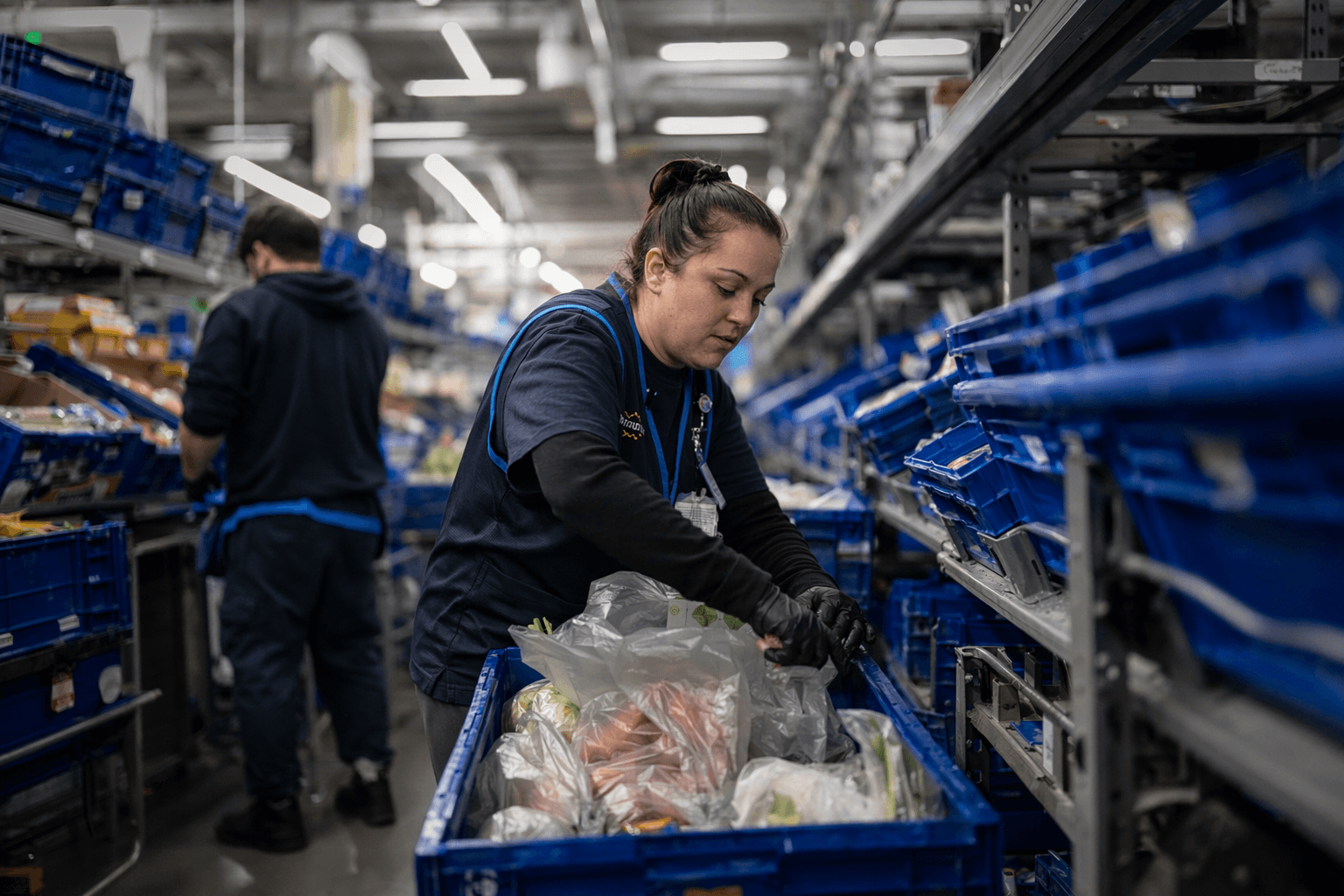
The Sun‑Times narrative includes a firsthand account that illustrates scheduling instability. Brooks applied to work for Amazon in Skokie because she thought it would provide her a set amount of hours. But once she started working, her scheduling was often irregular. She needed to hold onto her SNAP benefits to provide enough food for herself and her son. "That contradiction is exactly why I’m organizing," Brooks said. "So, like this movement, it isn’t about laziness or a lack of effort, it’s really about dignity, fairness and making sure the people who do the work can actually survive off the work that we do."
The Illinois Department of Human Services dataset carries key limitations that temper interpretation. IDHS officials say the agency "does not track whether a recipient is employed full time or part time," and "does not track ... how many hours they work per week," and that "Officials also do not edit the employer names as submitted." Those caveats mean the counts reflect employers reported by recipients at enrollment and may include part-time, seasonal or multiple employers for a single person.
For workers and labor organizers, the list offers concrete evidence of how low pay and unpredictable scheduling push employed people to rely on public assistance. For employers and policymakers, the findings raise questions about scheduling practices, wages, and how public benefit reliance fits into workforce planning. Next steps for reporting include obtaining the full top-10 dataset and confirming counts and context with IDHS and the named employers to clarify the scope and the possible solutions for affected workers.
Know something we missed? Have a correction or additional information?
Submit a Tip