Walmart associate’s path from sales floor to licensed optician
A front-end associate in Elko became a licensed optician, and Walmart is now turning that route into a funded career path with training, clinical work and higher pay.
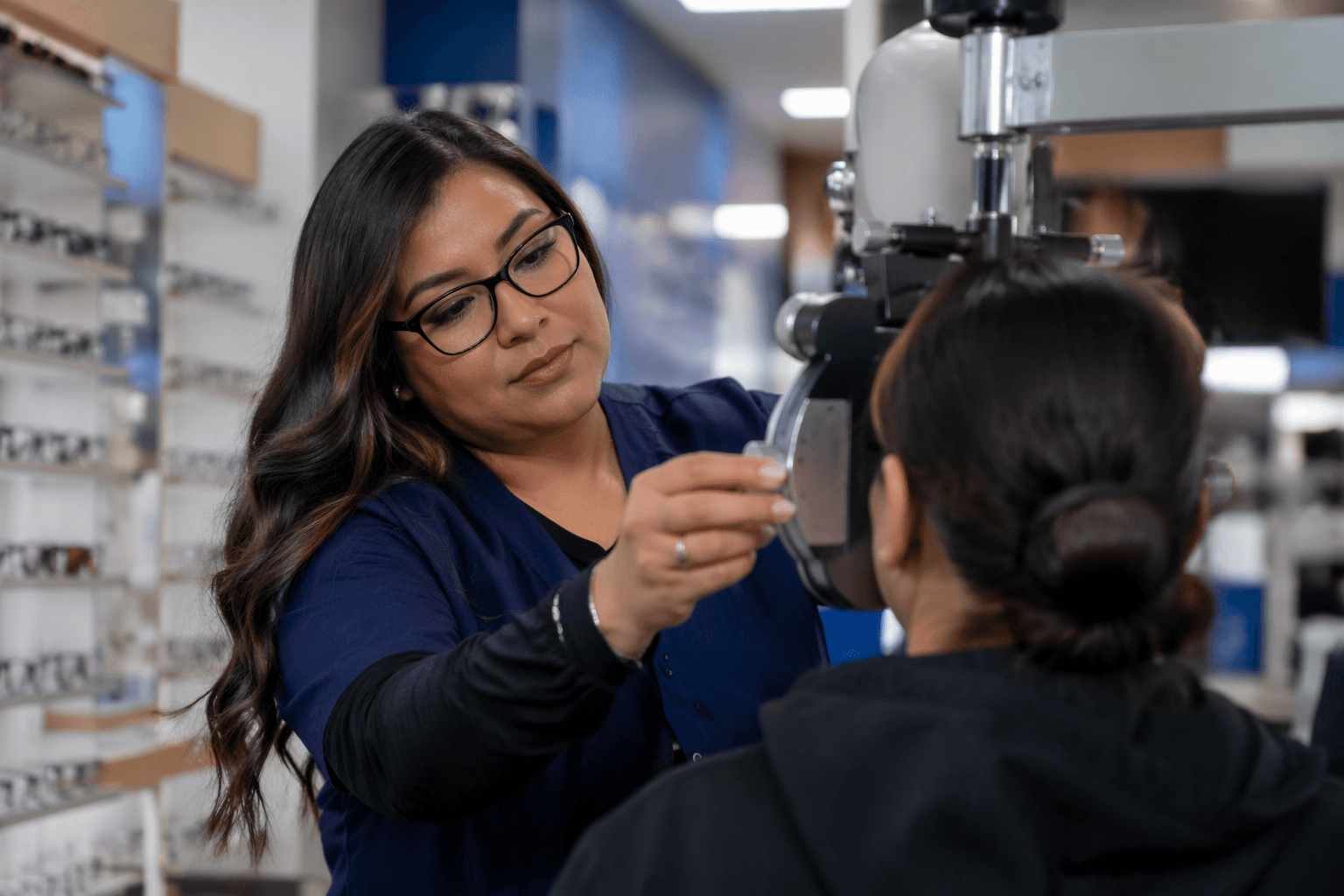
Sheena Thompson spent six years on the front end at Walmart store 2402 in Elko, Nevada, handling customers, cart pushing and college classes before moving into a licensed optician role. Walmart is using that path to build a new Associate to Optician program, and for hourly associates the important part is not the feel-good arc. It is the mechanics: how to move from store work into a licensed job, what training pays for the leap, and what the job can mean for wages and advancement.
How the path starts on the sales floor
Thompson’s story is a concrete example of internal mobility at Walmart. She did not begin in a specialty health role, and she did not start with a license. She started in a front-end position, learned the rhythm of a busy store, and built the kind of customer trust that matters when a shopper needs help making a decision in the Vision Center.
That matters because Walmart’s optical work is not just technical. Thompson’s moment with a hesitant shopper, where she gave a personalized tour and won trust, shows the job depends on service, patience and confidence as much as on fittings or frames. For associates watching for a next step, the message is simple: front-line work does not disappear into the background. At Walmart, it can become the resume for a higher-skill role.
The new Associate to Optician route
Walmart says Thompson’s journey helped inspire its Associate to Optician pilot program. The company is offering the pathway through Live Better U, its no-cost education benefit, and it is aimed at associates who are not already working in Walmart Vision Centers or Sam’s Club Optical Centers.
The new route lets associates earn a fully funded associate degree in Optical Science while completing hands-on clinical training. Walmart says that combination can save more than $20,000 in education costs compared with pursuing the credential outside the program. In plain terms, this is not a side course or a loose promise of development. It is a structured path that moves an associate from general retail work into a licensed optical career.
The first cohort also shows how broad the opportunity is. Walmart says those associates have tenure ranging from one year to 30 years, which signals that the program is not aimed only at new hires or recent grads. If you have already spent time in the building, the company is still treating you as a candidate for a licensed path.
What kind of schedule flexibility the move requires
The best clue about timing comes from Thompson herself. She spent six years balancing her Walmart job with college classes before becoming a licensed optician, so the path clearly depends on an associate’s ability to manage work and school at the same time.
Walmart has not framed the Associate to Optician route as a fixed-length program in the material it has shared. Instead, the structure points to a pace built around the degree and the clinical training. That means the practical question for associates is less “How fast can I do this?” and more “Can I keep steady availability for shifts while making room for coursework and hands-on training?” For hourly workers, that is the real scheduling test.
Pay, licensing and the value of the credential
Licensed opticians at Walmart and Sam’s Club earn an average starting wage of about $33.75 per hour, depending on market and licensing requirements. That number matters because it shows the move is not just a title change. It is a jump into a different pay band tied to a licensed skill set.
Walmart has also been investing in its existing optical workforce for years. In 2023, the company launched its Optician Development Program to help vision-center associates earn ABO and NCLE certification and licensure at no cost. The program was paid for 100 percent by Walmart and was designed to create a consistent baseline for optical training across states, including places where certification is not always required.
At the time, Walmart said about 4,000 opticians would receive raises and more than 13,000 Vision Center associates were eligible. That is the clearest sign yet that optical work inside the company is being treated as a career ladder, not just a service counter.
Why Walmart is pushing optical careers now
The scale is already there. Walmart says it has more than 3,000 Vision Centers nationwide, and it says 11% of optometrists in the United States practice in and adjacent to its stores. That footprint makes optical care a meaningful part of its health-and-wellness business, not a niche benefit tucked away in a few markets.
It also explains why the company is investing in pipelines instead of relying only on outside hiring. A licensed optician is not just a retail associate with a different badge. The role carries more responsibility, more formal training and more importance to the customer experience, especially when a store is trying to keep optical service consistent across different states and licensing rules.
For associates, the roadmap is now clearer than it was a few years ago. Start by doing the base job well. Build trust with customers. Use Live Better U if you are eligible for the Associate to Optician track. Complete the Optical Science degree and clinical training. Then move into the licensed role with a stronger wage and a real specialty attached to your name.
Walmart’s optical push shows how a sales-floor job can become a healthcare career when the company is willing to pay for the training, cover the education and keep the door open long enough for workers to walk through it.
This article was produced by Prism’s automated news system from verified source data, official records, and press releases, then run through automated quality and moderation checks before publishing. The system is built and supervised by the people who set the standards it runs under. Read our full AI policy.
Did this article answer your question?