Walmart Automation in DCs and APD Centers: What Associates Need to Know
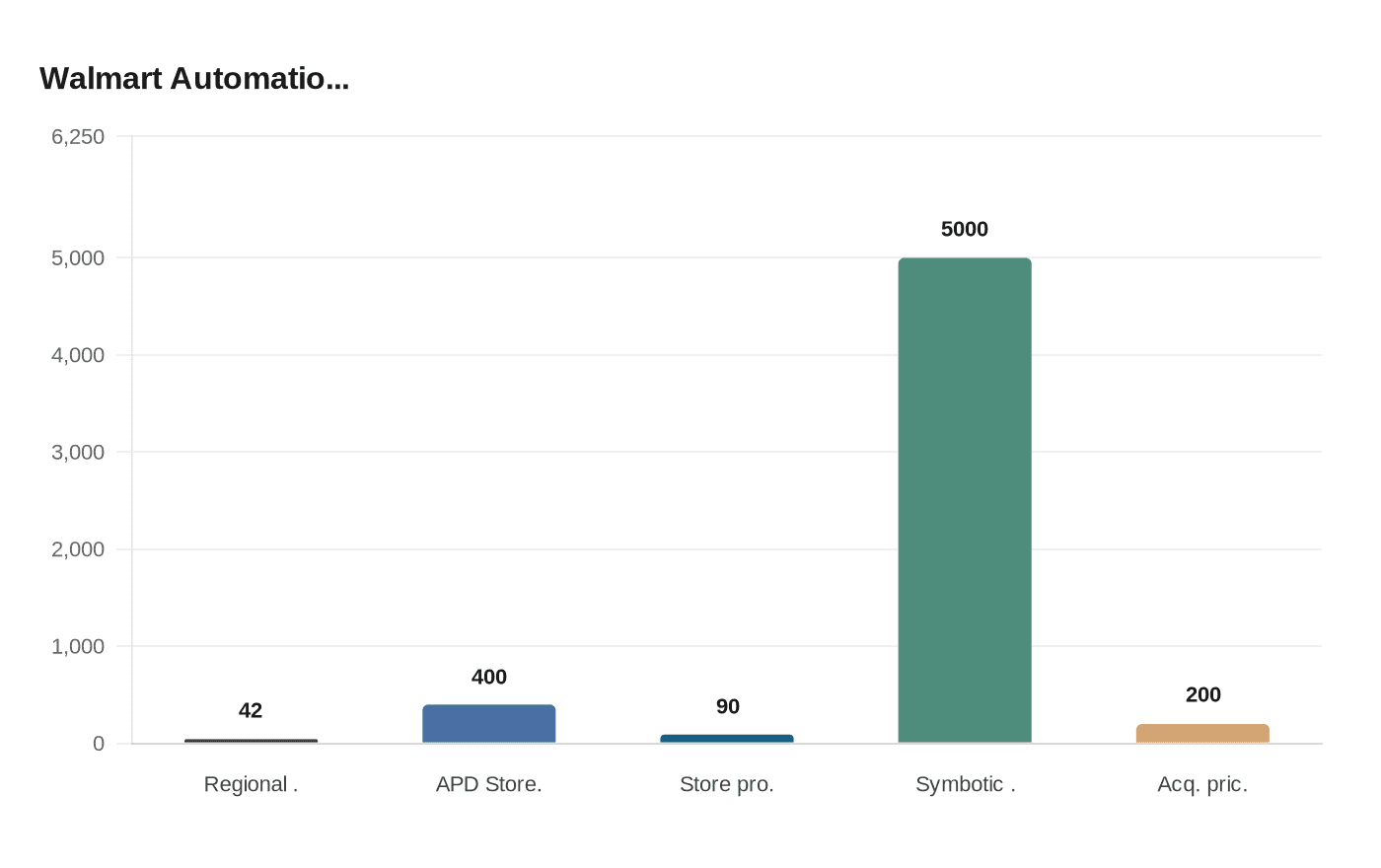
Walmart is wiring robots into all 42 of its regional DCs and up to 400 stores, and the changes are already reshaping what it means to work in one.
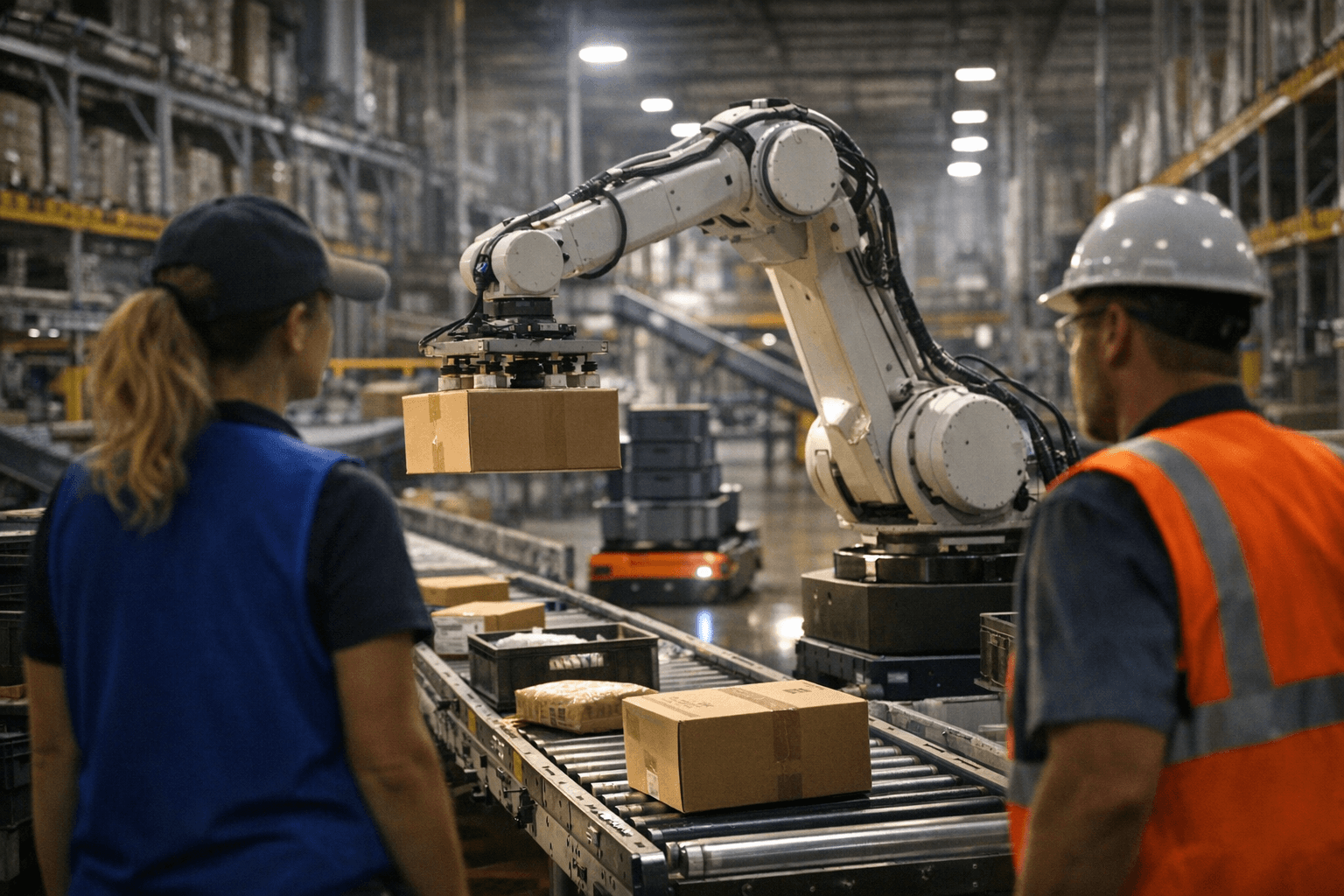
Walmart has spent the better part of a decade quietly rewiring how goods move through its supply chain, and the pace is accelerating. The company is deploying Symbotic robotics across all 42 of its U.S. regional distribution centers for general merchandise, and it has committed, conditionally, to automating up to 400 stores through Accelerated Pickup and Delivery centers. For anyone who clocks in at a Walmart DC or works a shift in a store with an APD footprint, that is not an abstract corporate announcement. It is a change to the floor you walk every day.
How Walmart Got Here
The automation push did not happen overnight. Walmart began working with Alert Innovation as far back as 2016 to customize technology for what it then called Market Fulfillment Centers, the micro-fulfillment units embedded inside stores to handle ecommerce orders. In October 2022, Senior Vice President of Innovation and Automation David Guggina announced that Walmart had agreed to acquire Alert Innovation outright, citing the company's store footprint as the strategic asset that made in-store fulfillment viable: 4,700 stores located within 10 miles of 90 percent of the U.S. population. The logic was direct. That kind of proximity to customers is something no rival warehouse network can replicate, and automation was the tool to make it economically useful for order fulfillment.
On the DC side, Walmart's relationship with Symbotic runs back even further. Joe Metzger, Executive Vice President of Supply Chain Operations at Walmart U.S., has noted that "since 2017, we've worked closely with Symbotic to optimize the system by testing it in our Brooksville, Florida, distribution center." After years of testing, Walmart announced in May 2022 that it planned to adopt Symbotic technology at all 42 of its regional DCs for general merchandise, a decision that came after positive results from those early deployments.
As of January 9, 2025, Walmart officially renamed its Market Fulfillment Centers to Accelerated Pickup and Delivery centers, or APDs. The rename reflects both the operational shift in how these facilities function and a broader rebranding of the company's ecommerce fulfillment strategy.
The Symbotic Deal and What It Adds
The clearest signal of where Walmart's automation is heading came in January 2025. Trade publication SCDigest reported that Symbotic announced it was acquiring Walmart's internal Advanced Systems and Robotics business unit, which had been developing microfulfillment capabilities for in-store ecommerce order fulfillment. The reported purchase price was $200 million, though SCDigest noted that figure came from outside reports rather than confirmed corporate statements.
The significance of the deal extends beyond the transaction itself. Symbotic, already Walmart's primary robotics partner for DC automation, said the acquisition would allow it to build a system to automate Walmart's APD centers for in-store ecommerce fulfillment. In practical terms, that means a single vendor now holds both the DC-level and store-level automation solutions for Walmart's supply chain. Symbotic said the deal would increase its robot order backlog by approximately $5 billion, a figure that reflects Walmart's scale as a customer.
That scale becomes clearer with the conditional deployment commitment: Walmart is committed to purchasing and deploying Symbotic's APD solution for 400 stores over a multi-year period, provided Symbotic meets specified performance criteria. That contingency matters. The 400-store figure represents a significant portion of Walmart's store base and would represent one of the largest retail automation rollouts in the country if it proceeds on schedule. But the performance gate means the timeline is not fixed, and associates should not expect a uniform rollout date.
What the Technology Actually Does
At the DC level, Symbotic's systems handle AI-enabled case handling and robotics, automating the movement and sorting of merchandise through facilities that, in some cases, dwarf most people's sense of what a warehouse looks like. Walmart's Import Center in Mobile, Alabama offers a useful reference point: 2.6 million square feet, spanning almost a mile and covering 60 acres, used for cross-dock and high-velocity distribution. The systems operating in environments like that include autonomous mobile robots (AMRs) and automated storage and retrieval systems (AS/RS), along with automated inventory management and demand forecasting tools that feed into Walmart's broader AI strategy.
At the store level, APD centers bring that same category of technology into a compressed footprint inside a retail location. Symbotic's post-acquisition plan is to integrate its robotics into these units so that ecommerce orders can be picked, sorted, and staged for pickup or delivery faster and with less manual intervention. For associates working in stores with APDs, the immediate physical reality is that automated systems and human workers will share the same floor space, moving around the same racking systems.
The Safety and Engineering Reality on the Floor
That last point deserves direct attention. Engineering and safety analysis from Damotech, which has tracked Walmart's automation rollout, uses pointed language to describe what happens when robotics get added to an existing facility: extending automation into APD centers at the store level is "multiplying mixed traffic interactions around racking in every Walmart warehouse." AMRs do not follow the same movement patterns as forklifts or associates pushing carts. They operate continuously, on programmed paths, and they share aisles.
Damotech's guidance for facilities integrating these systems includes what it frames as 10 engineering-backed lessons to "harden rack safety, reduce downtime, and keep throughput rising as AMRs and AS/RS become your 'new normal.'" The first of those lessons is instructive even on its own: design for dynamic loads, not static pallets. The structural assumptions baked into older racking configurations, built around pallets sitting still, are not adequate for environments where robots are in constant motion. That is a facility-management and engineering concern, but it is also a day-to-day safety reality for anyone working alongside those systems.
Associates should expect their facilities to flag updated safety protocols as automation is introduced or expanded. If your DC or store-level APD is in a deployment phase, the procedures for working around AMRs and AS/RS equipment will be different from what was in place before. Pay attention to updated training, floor markings, restricted zones, and any changes to how you're expected to move through the facility during automated operations.
What This Means for Jobs and Day-to-Day Tasks
Walmart's own corporate communications acknowledged that APD systems are designed to enhance the experience for associates, though the specifics of what that enhancement looks like in practice were not fully detailed in available public statements. What is clear from the company's overall direction is that automation changes the nature of tasks rather than eliminating the need for workers at the facility level. Order picking, inventory management, and staging functions are being partially or fully handed to robotic systems, which means the human role shifts toward oversight, exception handling, quality checks, and the kind of judgment calls machines still cannot reliably make.
Walmart and Symbotic have not released detailed public information about retraining programs, new role classifications, or specific headcount impacts tied to the automation rollout. That gap is real, and it is worth noting. Associates at DC facilities already live with Symbotic systems; those at stores in the APD rollout pipeline are in earlier stages. For either group, the practical steps are similar: stay current on any facility-level training your location offers, ask your manager directly about what new certifications or safety qualifications are being required as equipment changes, and pay attention to any role reclassifications that come through HR.
The scale of what Walmart has set in motion is not trivial. Forty-two regional distribution centers wired with Symbotic robotics, a potential 400-store APD network in progress, and a vendor that now controls both pieces of the automation stack. The question for associates is not whether this changes the job. It already has, at the facilities where it is deployed, and the footprint is expanding.
This article was produced by Prism’s automated news system from verified source data, official records, and press releases, then run through automated quality and moderation checks before publishing. The system is built and supervised by the people who set the standards it runs under. Read our full AI policy.
Did this article answer your question?