Walmart expands digital shelf labels to cut store busywork
Walmart says digital shelf labels now run in about 2,300 U.S. stores, cutting price-tag updates from two days to minutes while the chain pushes toward full rollout.
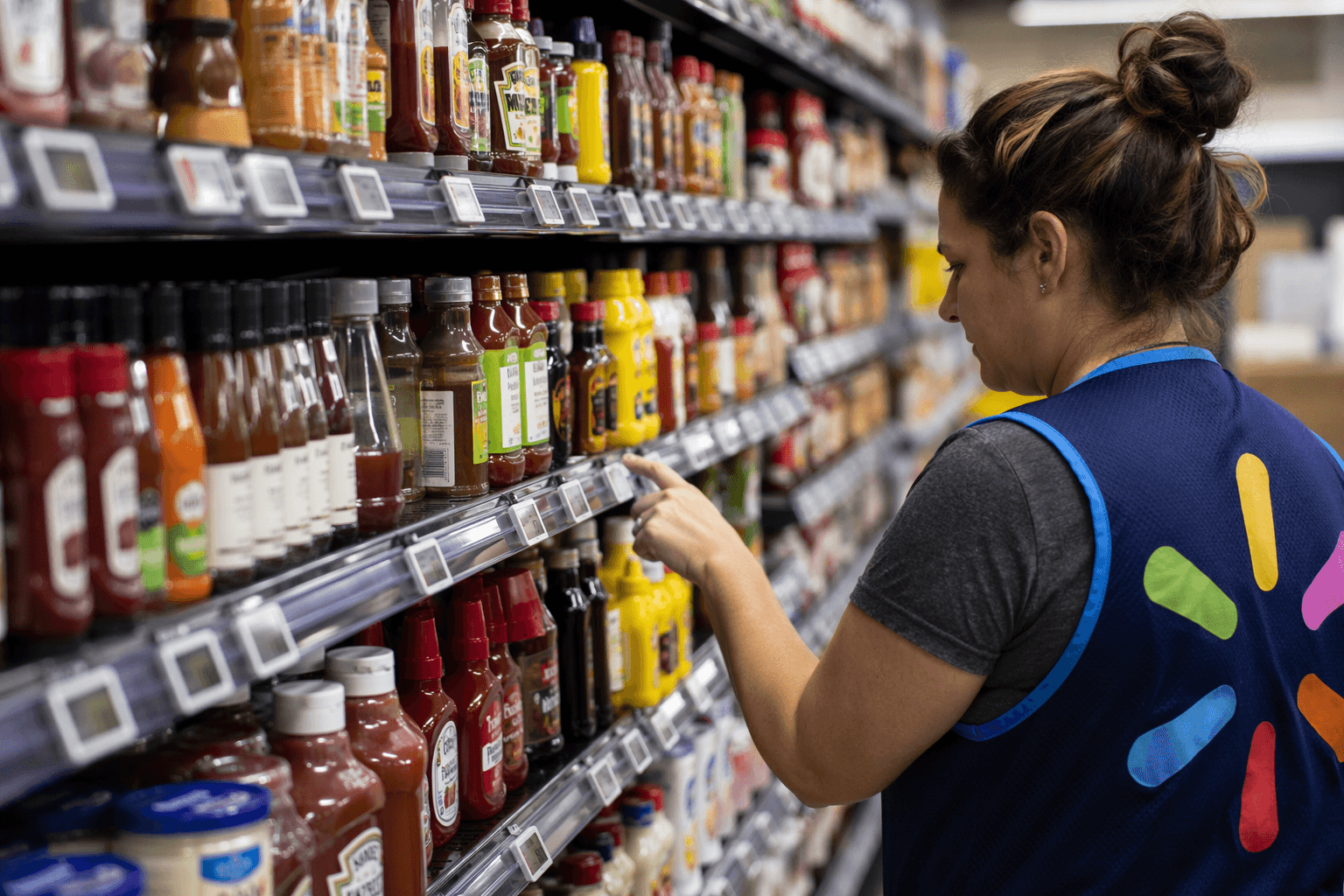
Walmart has put digital shelf labels into roughly 2,300 U.S. locations and says the technology will be chain-wide within the next year, a move aimed at stripping out some of the most repetitive work on the sales floor. The company says paper tag updates usually took about two days per store, while the digital system can update prices on more than 120,000 items within minutes.
That change matters in the aisles first. Instead of sending associates aisle by aisle to swap paper labels during planned price changes, Walmart is routing the work through a centralized system. The retailer says the labels also help with stock-to-light restocking, guiding associates to the right shelf location, and can support pricing, inventory, order fulfillment and customer interactions. In practice, that shifts labor away from manual tag replacement and toward finding product faster, keeping shelves filled and answering questions on the floor.
Walmart’s broader technology push goes beyond labels. The company says its AI task-management tools cut shift-planning time from 90 minutes to 30, and its real-time translation tool is available in 44 languages. For stores that juggle large overnight stocking crews, pickup orders and changing staffing levels, that can reduce time spent building schedules and covering language gaps, while also making managers more able to adjust labor around demand.
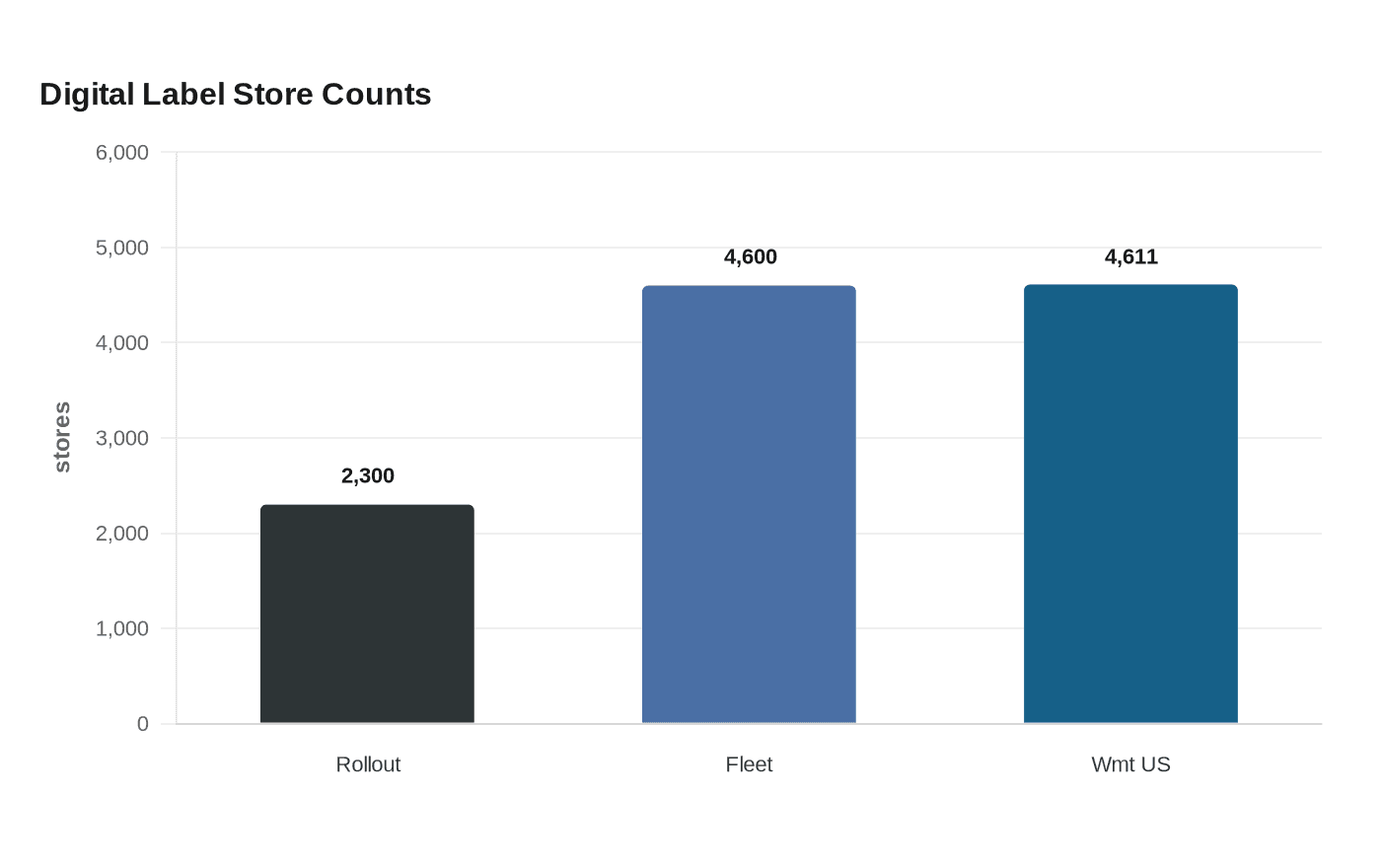
The company has been building toward this for years. Walmart first tested digital shelf labels in a single supercenter in Grapevine, Texas, and by June 2024 it said it would expand the technology to 2,300 U.S. stores by 2026. VusionGroup said in December 2024 that it had signed a contract extension to accelerate deployment across Walmart’s entire 4,600-store U.S. fleet. Walmart’s 2026 annual report says Walmart U.S. operates 4,611 stores, meaning the rollout now reaches nearly the whole domestic chain.

Walmart is also tying the hardware to other automation tools it says can catch problems earlier. Its Retail Rewired material says digital twins and predictive alerts can spot refrigeration issues up to two weeks ahead, which can reduce spoilage and emergency repairs. That kind of early warning can save time for maintenance crews and managers, but it also raises the bar on execution: fewer routine fixes and fewer label errors should mean more pressure to hit service, stocking and pickup targets with the time that gets freed up.
The reaction has been split. Walmart and VusionGroup frame digital shelf labels as a productivity tool that makes stores easier to operate and shop. The United Food and Commercial Workers union has warned that electronic labels could be used for surveillance pricing and could threaten grocery jobs, and lawmakers have started moving to scrutinize or restrict the technology.
This article was produced by Prism’s automated news system from verified source data, official records, and press releases, then run through automated quality and moderation checks before publishing. The system is built and supervised by the people who set the standards it runs under. Read our full AI policy.
Know something we missed? Have a correction or additional information?
Submit a Tip