Walmart faces tighter hiring as leisure and hospitality add jobs
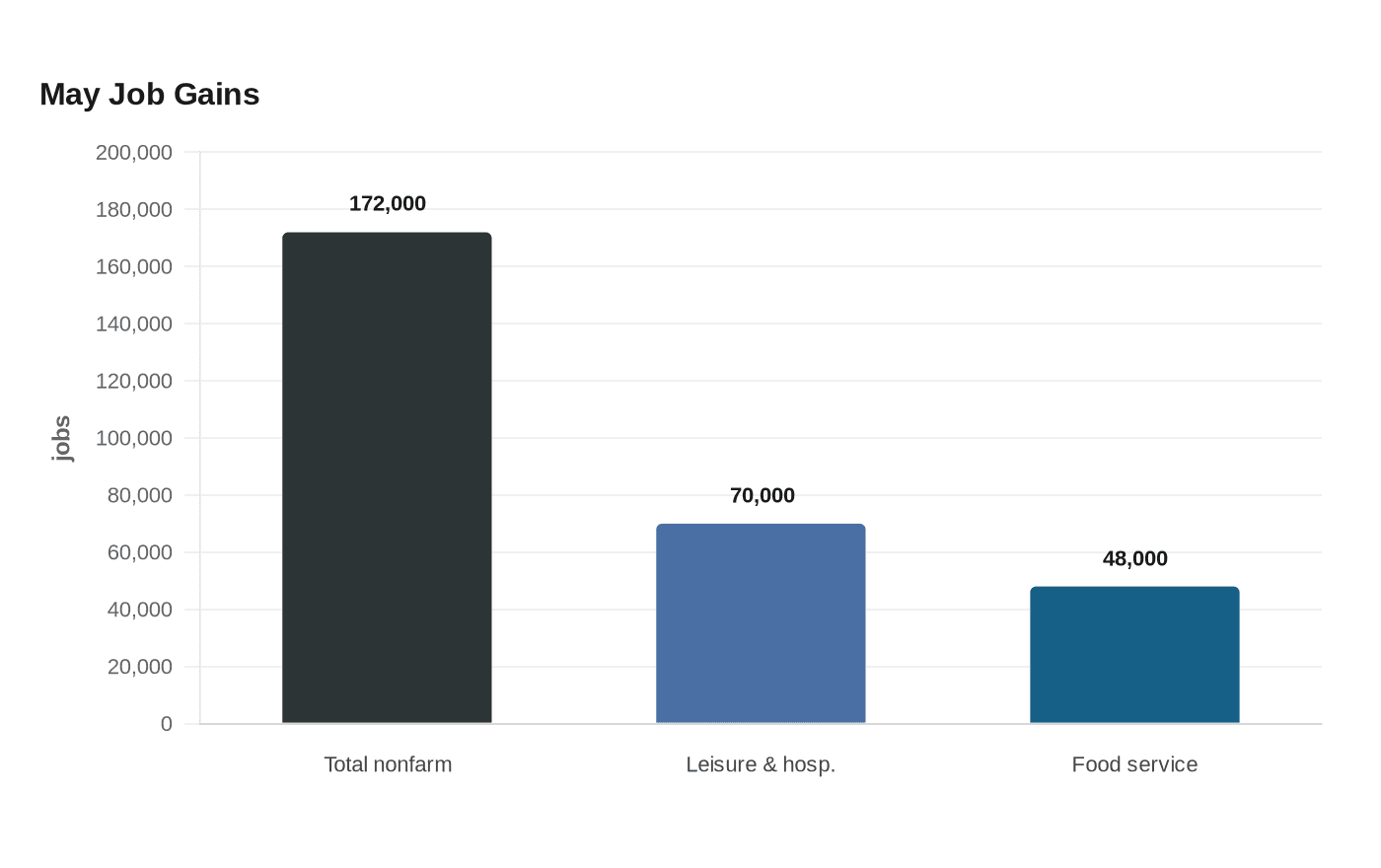
Leisure and hospitality added 70,000 jobs in May, a sign Walmart still faced competition for hourly workers on pay, hours and scheduling.

A stronger-than-average month for leisure and hospitality kept the hourly labor market tight, even as the national unemployment rate stayed at 4.3 percent. For Walmart and Sam’s Club associates, that means restaurants, hotels, healthcare employers and other local businesses were still competing for the same dependable workers who stock shelves, run registers, unload trailers and keep clubs moving.
The Bureau of Labor Statistics said total nonfarm payroll employment rose by 172,000 in May, with job gains concentrated in leisure and hospitality, local government and health care. Leisure and hospitality added 70,000 jobs, far above its average monthly gain of 14,000 over the prior 12 months, and food services and drinking places added 48,000. That is the kind of payroll growth that can make it harder for Walmart to hire and keep workers in stores, clubs and supply-chain sites, especially in markets where nearby employers are offering more shifts, faster hiring or easier schedules.
For associates, the practical effect is leverage. When other industries are hiring, workers do not compare pay alone. They also compare hours, schedule stability, promotion speed and benefits. That matters in a business like Walmart, which said it employed about 2.1 million associates worldwide as of fiscal 2026, including about 1.6 million in the United States, across more than 10,800 stores and clubs in 19 countries. In a workforce that large, even small shifts in local hiring pressure can change how many open shifts are covered, how quickly vacancies are filled and how much pressure managers feel to keep experienced workers from leaving.
Walmart has been leaning into that competition by emphasizing wages, opportunities and technology. In its FY2026 materials, John Furner said the company was investing in associate experience, wages, benefits, opportunities and AI-powered tools. Walmart’s pay materials say the average promotion comes within nine months of joining the company, and that 90 percent of U.S. roles do not require college degrees. The company also said that starting in 2025, the average hourly wage for a Walmart U.S. associate was $18.25, while its FY2025 ESG report said the average hourly frontline wage was more than $18 an hour and nearly 28 percent higher than five years earlier.
Walmart has also pushed new AI-powered tools for 1.5 million associates through the Me@Walmart app, a signal that retention is being managed through both pay and day-to-day work flow. With fiscal 2025 revenue of $681 billion and fiscal 2026 revenue of $713 billion, Walmart has the scale to keep investing. For hourly workers, the June jobs report suggests the labor market still gives them options, and that keeps pay, scheduling and advancement at the center of the conversation.
This article was produced by Prism’s automated news system from verified source data, official records, and press releases, then run through automated quality and moderation checks before publishing. The system is built and supervised by the people who set the standards it runs under. Read our full AI policy.
Know something we missed? Have a correction or additional information?
Submit a Tip