Walmart may spot consumer strain as June payrolls disappoint
June payrolls rose by just 57,000, and labor force participation fell to 62.3%, a warning Walmart could feel first in softer baskets and more cautious shoppers.
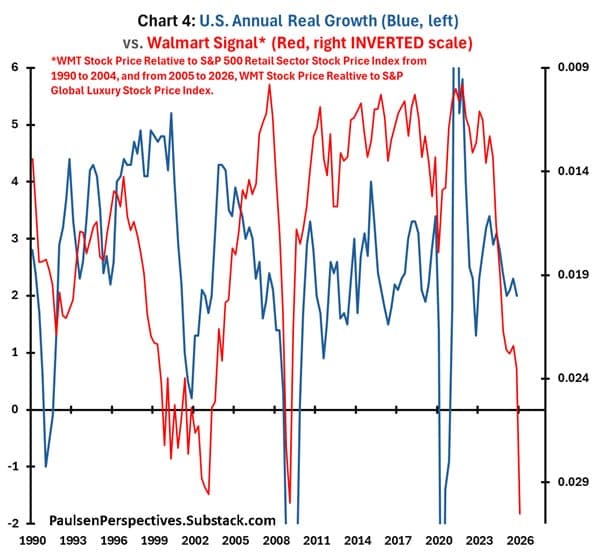
June payroll growth slowed to 57,000, the unemployment rate held at 4.2%, and labor force participation slipped to 62.3%, its lowest level since late 2022. The Bureau of Labor Statistics also showed a bigger drop in household employment, a split that suggests the labor market looked weaker under the surface even after three straight months from March through May that each topped 100,000 jobs.
That kind of slowdown matters most at Walmart because the company sees strain in shopping behavior before it shows up cleanly in the next round of government data. Reuters reported on June 30 that U.S. consumer confidence edged up in June even as labor market perceptions deteriorated, a sign that shoppers were feeling better about the economy in the abstract while becoming more uneasy about jobs and pay. On June 3, Reuters said U.S. retailers were bracing for a bigger consumer stress test as conflict and economic pressures persisted.
Walmart had already signaled caution. In February, the company forecast fiscal 2026 adjusted earnings per share of $2.50 to $2.60 and net sales growth of 3% to 4%, a muted outlook below some Wall Street expectations. Reuters said management was pointing to a conservative stance in a volatile economic environment. In May, the company stuck to its annual targets despite solid results, underscoring how closely investors now read Walmart’s sales trends for evidence of consumer pressure.

That scrutiny has sharpened as Walmart’s customer base has split. Higher-income shoppers have still been spending, while lower-income households have shown more pressure, a pattern that makes the chain’s registers an early warning system for consumer strain. For hourly associates and managers, the first signs of a weaker labor market often show up there: fewer big-ticket purchases, more value-driven baskets and a customer mix that turns cautious faster than the official data does.
The labor-market backdrop arrives as Walmart moves deeper into a leadership transition. The company announced in November 2025 that Doug McMillon would retire and John Furner would become chief executive, and Furner’s tenure has begun with investors watching whether Walmart can keep gaining share across income groups as conditions soften. The June jobs report gave that question a harder edge.
This article was produced by Prism’s automated news system from verified source data, official records, and press releases, then run through automated quality and moderation checks before publishing. The system is built and supervised by the people who set the standards it runs under. Read our full AI policy.
Did this article answer your question?