Walmart Recession Indicator Hits Highest Level Since 2008 Financial Crisis
A recession gauge tied to Walmart's stock hit its highest level since 2008, as the 28-point climb reflects consumers trading down from luxury to budget stores.

The Walmart Recession Signal climbed to its highest reading since the 2008 financial crisis this year, a milestone that economist Jim Paulsen said reflects a consumer shift with direct consequences for store-level operations across Walmart's U.S. network.
Paulsen, a longtime economist and former chief investment strategist of the Leuthold Group, maintains the WRS, which measures Walmart's stock price against a basket of luxury stocks. The gauge's rise signals that shoppers are trading down from higher-end retailers to budget chains like Walmart. A sharp increase in the WRS has preceded each of the last four U.S. recessions, according to Paulsen.
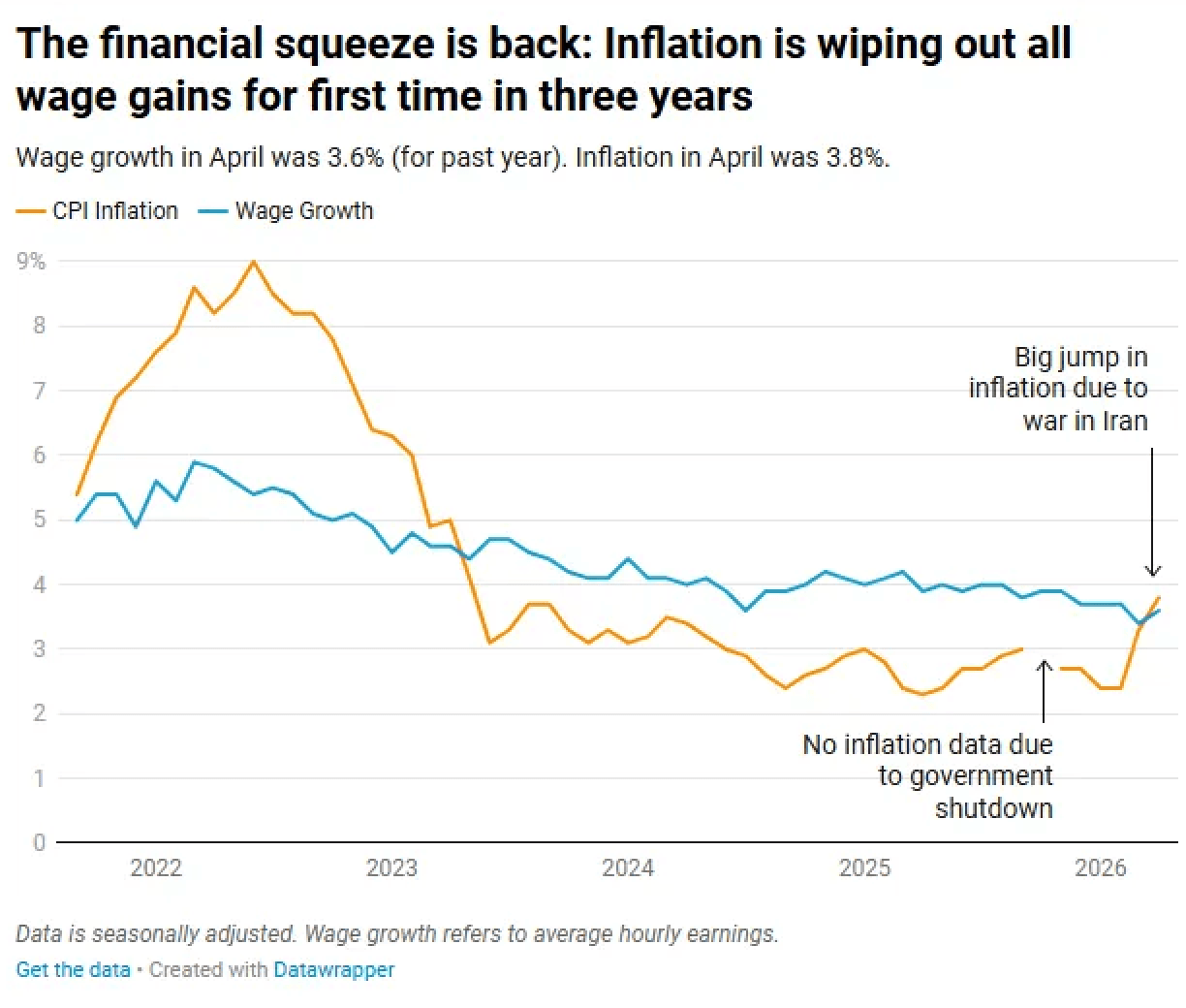
The indicator climbed about 28 basis points so far this year, a move Paulsen attributed largely to economic anxiety tied to the Iran war. Walmart's stock rose 40% over the last 12 months, boosted by consumers seeking to cut spending as inflation worries mounted.
"The WRS is increasingly advising caution about the US economy," Paulsen wrote. "My guess is the economy avoids a recession this year, but I am becoming more convinced that a significant US economic slowdown is unfolding," he added.
The signal maps directly onto floor conditions in stores, clubs, and distribution centers. When the WRS rises, it reflects more shoppers walking through Walmart's doors rather than competitors', but not shoppers who spend freely. Trade-down traffic tends to compress basket sizes, increase price-conscious transaction patterns, and raise the volume of markdown and clearance inquiries at service desks. That added workload does not automatically trigger staffing adjustments.
What the data supports: heavier foot traffic from the consumer trade-down is already embedded in Walmart's 40% stock gain over the past year. What remains unconfirmed: whether regional labor budgets will absorb the corresponding floor pressure through additional approved overtime or headcount, decisions that typically flow through store-level metrics before reaching scheduling.
Watch for lane congestion during off-peak hours, upticks in self-checkout assist calls, and tighter responses to time-off approvals. Those floor-level patterns tend to surface before any formal adjustment to scheduled hours.
Paulsen stopped short of predicting a full contraction. The U.S. economy likely avoids an outright recession this year, he said, but a significant slowdown is already underway. The distinction, in Paulsen's framing, may carry less weight on the floor than the foot-traffic numbers already visible at the registers.
Know something we missed? Have a correction or additional information?
Submit a Tip