Walmart signals continued associate investment, AI push in 2026 filing
Walmart is betting on more associates, more AI and more stores, a mix that could reshape shift planning, training and daily tasks for millions of workers.

The real signal in Walmart’s new filing
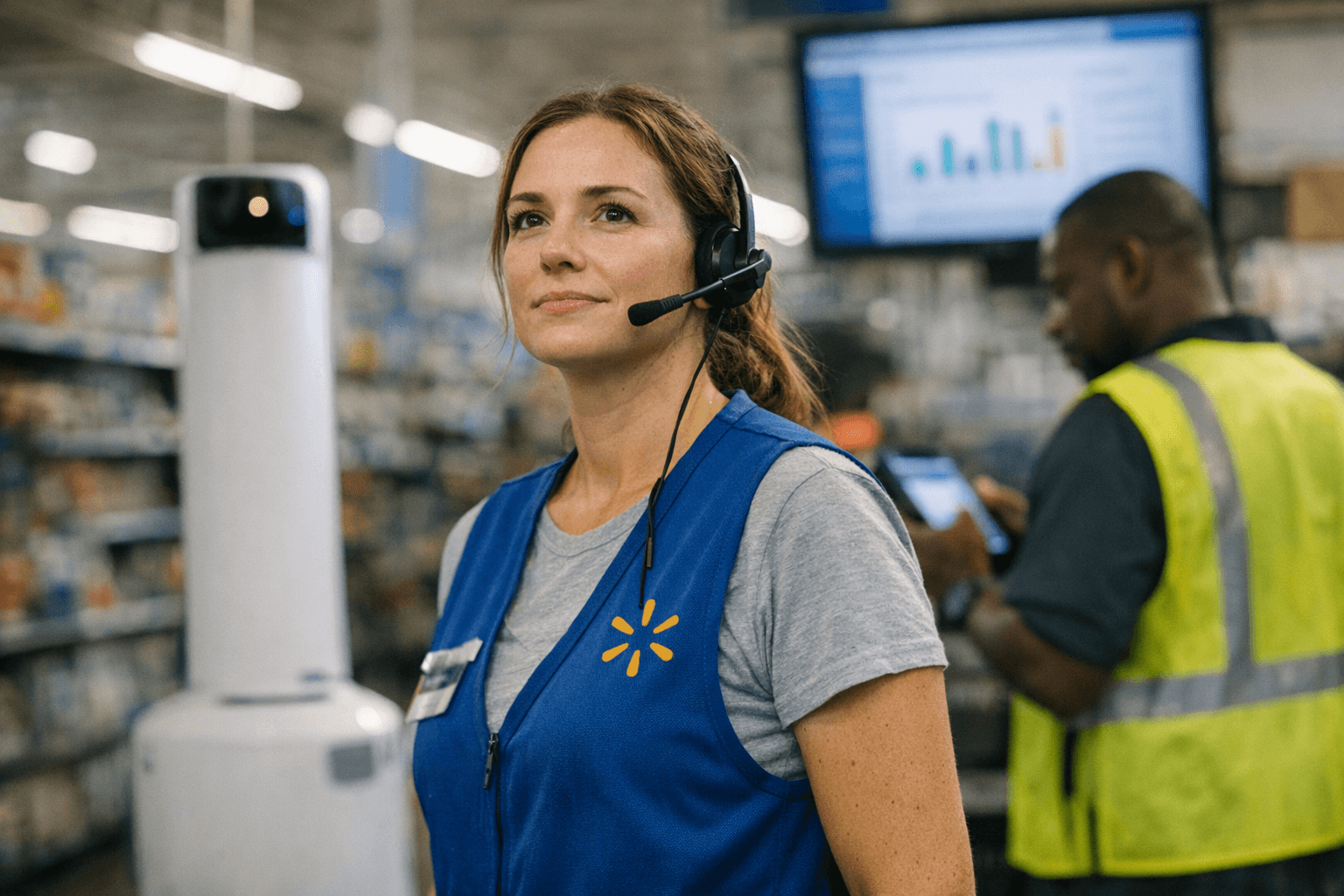
Walmart’s latest annual report reads like investor paperwork, but the worker takeaway is simpler: the company is still doubling down on labor, not backing away from it. John Furner’s first letter as president and CEO puts 2.1 million associates at the center of the story, alongside a “people-led, tech-powered” model that depends on store, club and fulfillment staff making new systems work in real time.
That matters because Walmart is not describing a pause-and-see moment. It is describing expansion, automation and digital growth all at once. FY2026 revenue rose 5.1 percent in constant currency, adjusted profit climbed 5.4 percent, and global eCommerce grew 24 percent. For hourly associates, department managers and assistant managers, that combination usually means more pressure on speed and accuracy, but also more investment in tools, training and career ladders that help the company keep people in place.
What the numbers say about the work ahead
The scale of the business is still rising. Walmart said it ended FY2026 with about 2.1 million associates worldwide, including roughly 1.6 million in the U.S., and operated more than 10,800 stores and clubs in 19 countries, plus eCommerce websites. That footprint tells you where the company expects work to happen: in stores, in clubs, in pickup and delivery, and in the systems that connect all three.
The practical front-line signal is that Walmart keeps needing labor in both physical and digital channels. When a retailer of this size keeps growing eCommerce at that pace while also leaning on its store base, it usually means more task splitting, tighter handoffs between departments, and more expectations that one worker can cover more than one kind of job. The filing does not spell out a new staffing model, but the direction is clear: the company is still building around associates, not replacing the workforce with software.
AI is moving from back-office promise to shift-level tool
Walmart’s AI rollout gives the clearest glimpse of how daily work may change. In June 2025, the company said it was deploying AI-powered tools across its U.S. associate base, including real-time translation and task management. It also said those tools cut shift-planning time from 90 minutes to 30 minutes.
That is not just a tech headline. It is a labor signal. If scheduling gets faster, managers may be expected to spend less time on administrative setup and more time on floor execution, labor deployment and coaching. If translation tools expand, the company is trying to make more shifts workable across languages, which can change how teams communicate in stores, clubs and fulfillment operations.
The deeper issue for workers is role redesign. Walmart’s “people-led, tech-powered” line suggests AI is being used to compress routine work, not eliminate the need for people. That can be helpful if it removes repetitive tasks and gives associates clearer direction. It can also raise the bar if management assumes the technology has solved enough of the workflow that fewer people can handle more volume. The workers most likely to feel that shift are the ones already juggling customer service, inventory handling, digital pickup and operational cleanup in the same day.
The company is still investing in stores, which usually means more change on the floor
Walmart’s April 2026 store investment update reinforces the same message. The company said it planned more than 650 scheduled remodels to Supercenters and Neighborhood Markets, plus about 20 new store openings in 2026 and early 2027. It also said it opened nine new stores in 2025 and framed the strategy as one built to drive speed, convenience and growth.
For workers, remodels are never just about new fixtures. They often mean temporary aisle resets, new merchandising routines, changed backroom flows and training on different equipment or layouts. New stores add hiring needs, but they also can pull experienced managers and trainers into launch mode, which affects internal transfers and promotion timelines across nearby markets.
The broader implication is that Walmart is betting on store productivity as much as store count. More remodels usually mean the company wants existing locations to move faster, hold better inventory, and support pickup and delivery with less friction. If that works, the associate experience can improve. If it is rushed, the result is usually more task burden and less slack in the day.
Internal mobility and training are becoming part of the operating model
Furner’s emphasis on associates should be read alongside the company’s earlier talk about wage increases, expanded upskilling and clearer career pathways. That combination suggests Walmart sees retention and development as operational necessities, not just benefits. A retailer that runs on millions of associates cannot keep growing eCommerce, store remodels and AI tools without a pipeline of workers who can move into new roles.
That is where internal mobility matters most. If AI cuts scheduling time and store systems become more standardized, the company can move managers and associates across locations and formats more easily. In practice, that usually means more expectations that workers learn adjacent tasks, step into new departments faster and adapt to new tools with less ramp-up time. It also means the strongest career opportunities may go to employees who can prove they are comfortable with digital tools, multi-tasking and cross-training.
For hourly associates, the upside is clearer pathways into more complex roles. For department managers and assistant managers, the challenge is that leadership now includes technology adoption, not just labor oversight. The managers who can translate new systems into smoother shifts are the ones most likely to move up.
The proxy filing is also a reminder that governance shapes the workplace
The proxy statement is full of board mechanics, but even that has labor implications because governance sets the pace for strategy. Walmart is asking shareholders to vote on 11 director nominees, three company proposals and four shareholder proposals. Tim Flynn is set to retire from the board after the annual meeting, and Bob Moritz is expected to become audit committee chair if elected.
The annual shareholders’ meeting will be virtual on June 4, 2026, at 8:30 a.m. Central Time, and shareholders of record as of April 10, 2026 may attend. That does not change a worker’s shift schedule, but it does mark the point where Walmart’s leadership agenda gets publicly ratified. If the board continues to back the current mix of growth, automation and store investment, associates should expect more of the same: tighter execution, more digital support, and continued pressure to keep pace with a company that is still scaling in every direction.
The filing’s bottom line is not that Walmart is choosing between people and technology. It is choosing both, and asking the workforce to carry the transition.
This article was produced by Prism’s automated news system from verified source data, official records, and press releases, then run through automated quality and moderation checks before publishing. The system is built and supervised by the people who set the standards it runs under. Read our full AI policy.
Know something we missed? Have a correction or additional information?
Submit a Tip