Walmart Sued Over Unpaid COVID 19 Screening Time
Current and former hourly Walmart workers filed a wage lawsuit on December 2, 2025, alleging the company required unpaid onsite COVID 19 screening time before shifts. The case could affect payroll practices for thousands of hourly associates and tests whether screening before clocking in is compensable time under federal and California law.
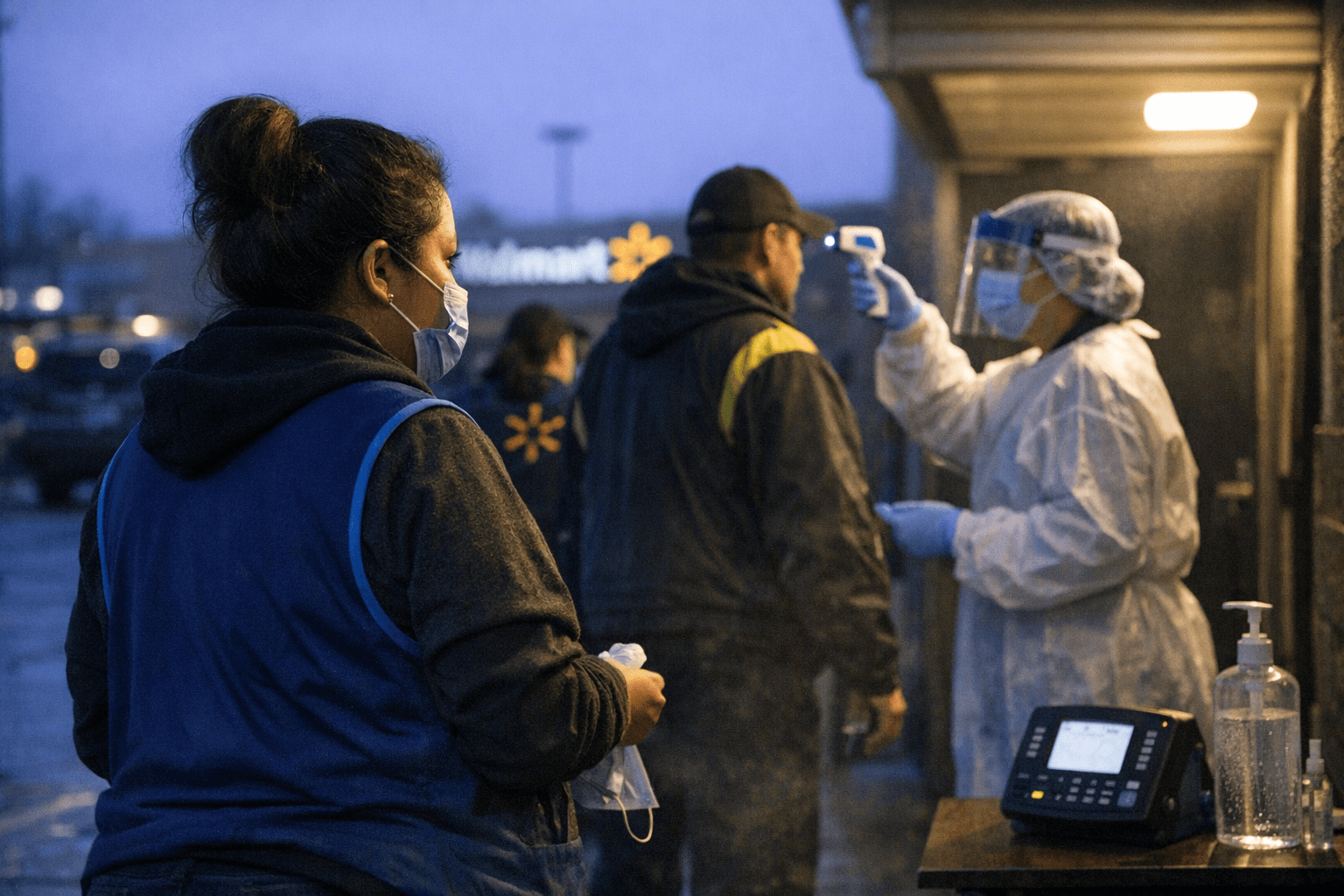
Two Walmart employees named Amado Haro and Rochelle Ortega filed a class and collective action on December 2, 2025, alleging the retailer required hourly, non exempt workers to arrive early for onsite health screenings that were not paid. The complaint says employees were subjected to temperature checks and symptom questions before they were allowed to clock in, and that the time spent on those screenings constituted compensable work that Walmart failed to pay.
The plaintiffs seek to represent an FLSA collective of current and former hourly Walmart employees who underwent such screenings during the statute of limitations period, and a California class for workers who performed the screenings in that state. The case caption is Haro et al v. Walmart Inc. in the United States District Court for the Eastern District of California.
Walmart provided a statement saying the company “systematically” adds extra COVID screening time to hourly associates’ shifts and paychecks and that it has a manual process to add time if needed. The company said it would respond appropriately once served. The lawsuit, however, alleges the company did not consistently or adequately compensate workers for screening time and that the unpaid minutes add up to significant wage losses for hourly staff.
If the plaintiffs prevail, the suit could lead to back pay for affected workers, changes to timekeeping and screening procedures, and broader scrutiny of how retailers handle pre shift health checks. The case also raises issues that have appeared in other pandemic era wage disputes, including when time spent on employer mandated health or safety checks becomes work under the Fair Labor Standards Act and under California wage laws.
For workers, the suit underscores the importance of tracking arrival times and any time spent on employer required screening before clocking in. For employers, the complaint highlights the payroll and compliance risk when health screenings take place outside recorded work time. The case remains at an early stage and will progress through the Eastern District of California as the parties exchange pleadings and evidence.
Know something we missed? Have a correction or additional information?
Submit a Tip