Walmart Testing Body Cameras on Associates; Workers Raise Privacy Questions
Walmart appears to be testing body cameras on associates at a Clearwater-Roosevelt store, prompting worker concerns about privacy and how footage will be used.
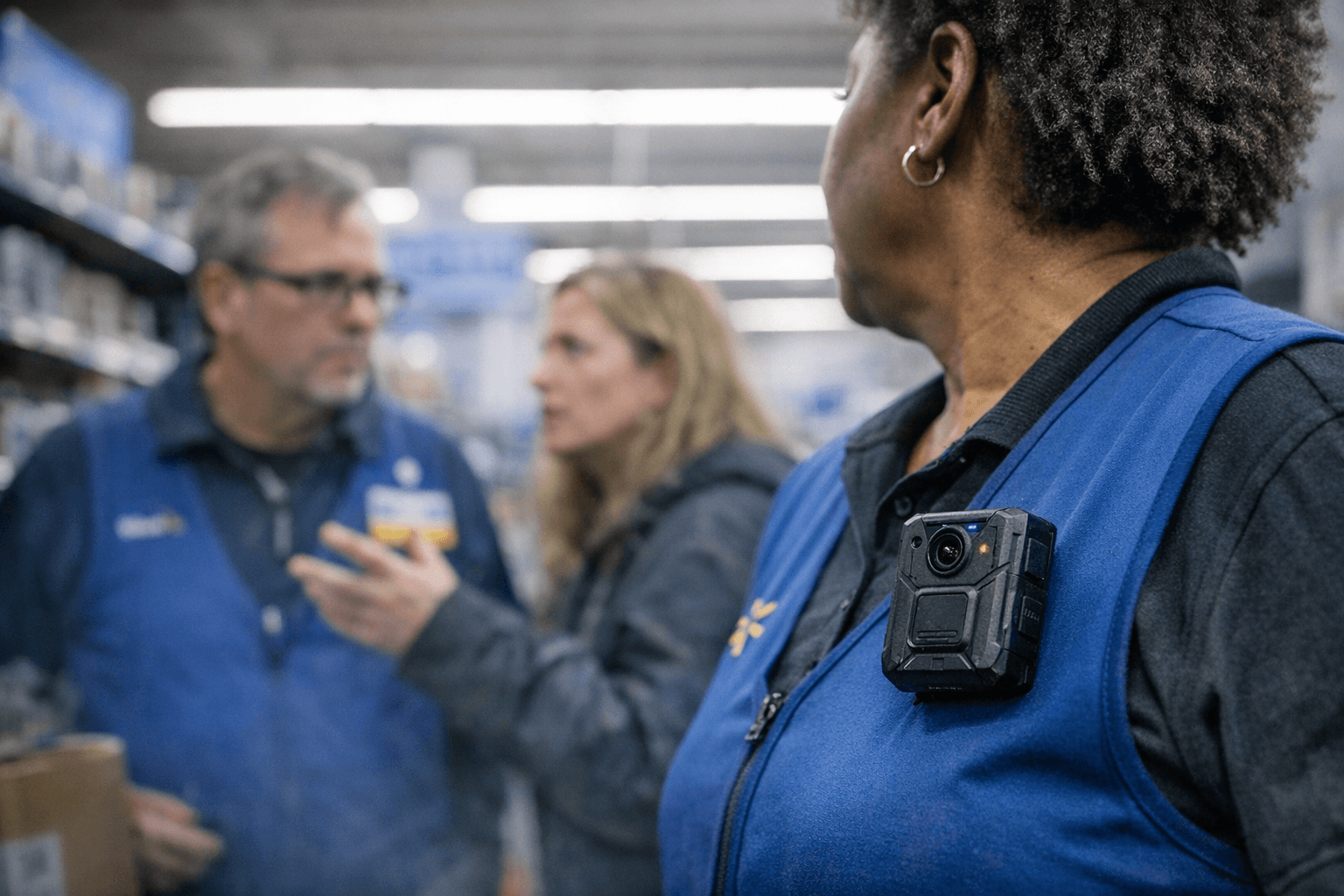
Associates at the Walmart on Clearwater-Roosevelt, off US-19, are being seen with body-worn cameras as part of a visible pilot that staff and customers have noticed. A photo of store signage accompanying a social media post shows language about the devices, and frontline workers reported seeing associates wearing the cameras today. Several employees who commented on the post described the devices as intended for use when staff feel unsafe or to document threatening customer interactions, with recordings activated manually.
The pilot reinforces a trend among retailers toward equipping frontline staff with wearable cameras to capture incidents in aisles, at registers and in parking areas. For workers, the immediate appeal is clear: a recorded account can corroborate reports of theft, threats or assaults and could reduce disputes over what happened during chaotic encounters. But the rollout is also raising sharp questions about privacy, data access and how recordings could affect discipline and day-to-day work.
Commenters who identified themselves as associates asked how footage, employee name, image and likeness will be handled, and whether recordings might be used for performance review or investigations beyond safety incidents. Those concerns reflect broader anxieties among retail employees about wearing tech that could be viewed as surveillance rather than protection. If employers can access wide-ranging footage, employees worry about being monitored for productivity, compliance with company policies, or customer interactions that do not involve threats.
Operationally, manual activation is a key detail for workers. Devices that require employees to press a button before recording may limit continuous surveillance, but they also place the onus on associates to judge when a situation warrants capturing. That judgment call can be difficult in fast-moving incidents, raising questions about when footage will exist and whether gaps could leave employees without evidence. Store signage and the social post do not detail who stores the recordings, how long they will be retained, or which managers or external parties can view them.
The presence of body cameras in a store on Clearwater-Roosevelt signals that testing is underway in some markets, and employees at other locations may start seeing similar pilots. For associates, the development forces a trade-off between a tool for documenting threats and a potential new layer of oversight. It also intersects with legal issues around name and image rights and data retention that employers will need to address clearly.
What comes next matters for workers: managers should provide written policies that spell out activation rules, retention periods, access controls and how footage will and will not be used. Associates should seek those details from local leadership or their representatives and track whether pilots expand to other stores. The outcome will shape not only how safe employees feel on the floor but also how much control they have over their own image and workplace privacy going forward.
Know something we missed? Have a correction or additional information?
Submit a Tip