Walmart Workers Guide to Reporting Injuries, Discrimination, and Safety Concerns
Walmart supercenter workers are 75% more likely to get injured than the retail average. Here's how to report it and protect yourself.
Walmart employs more people in the United States than any other private company, and the scale of its workforce makes the injury numbers staggering. A National Employment Law Project analysis of 2021 OSHA data found that associates working in Walmart supercenters were 75% more likely to experience work-related injuries and illness compared to the retail industry average. A study by the Strategic Organizing Center put the injury rate at three workers per 100 full-time equivalents in a given year, with one of those three likely to be seriously injured. Applied to Walmart's U.S. workforce, that translates to roughly 48,000 workers injured every year, with an additional 16,000 seriously injured.
Knowing those numbers matters. Knowing what to do next matters more.
What federal agencies protect you
Two federal agencies handle the bulk of workplace complaints for associates: the Occupational Safety and Health Administration (OSHA) and the Equal Employment Opportunity Commission (EEOC). OSHA covers physical safety, injury reporting, hazardous conditions, and retaliation against workers who raise safety concerns. The EEOC handles discrimination based on race, sex, religion, national origin, age, disability, and other protected characteristics. Both agencies have complaint processes that are free to use, and federal law prohibits employers from retaliating against workers who file in good faith.
To file an OSHA complaint, you can submit a report online through OSHA's website, call the agency's toll-free number at 1-800-321-OSHA (6742), or contact your regional OSHA office directly. OSHA whistleblower protections apply to associates who report safety violations, meaning Walmart cannot legally demote, discipline, or terminate you for making a complaint. If you experience retaliation, that itself is a separate reportable violation with its own filing process, and the deadline to file a whistleblower complaint is typically 30 days from the retaliatory act, though timelines vary by statute.
For discrimination complaints, the EEOC requires workers to file a charge before pursuing a lawsuit. You can submit a charge online through the EEOC public portal, visit a local EEOC office, or call 1-800-669-4000. There are strict time limits: in most states, you have 180 days from the date of the discriminatory act to file, extended to 300 days if a state or local agency also covers the claim. Missing that window can forfeit your right to pursue the matter, so acting promptly is critical.
The underreporting problem
Filing a complaint with federal agencies only works if the underlying injury or incident gets recorded in the first place. An investigative report published by The New Republic in January 2024 found that "several injury and illness cases that should have been reported to OSHA weren't, according to government data, court records, and interviews with associates." The finding raised a direct legal concern: employers are required by law to record and report qualifying injuries and illnesses to OSHA, and failing to do so is itself a violation.
The National Council for Occupational Safety and Health listed Walmart as one of the nation's "Dirty Dozen" employers in 2019, citing incidents of serious injury and fatalities, inadequate training, and insufficient staffing levels. The organization listed Walmart again in 2024, with that report specifically highlighting the high frequency of gun-related incidents and deaths at Walmart stores, along with what it described as failures to report serious illness and injury to OSHA. Since 2016, Walmart has paid hundreds of thousands of dollars in OSHA fines, and the company has been subject to multiple lawsuits related to safety violations.
The worker advocacy group United for Respect has called on Walmart to "conduct an independent, third-party assessment of existing company policies and protocols and commit to a plan of action that strengthens its approach to safety and security in the workplace." Associates should understand that the obligation to report rests on the employer, but workers can and should document injuries independently and file directly with OSHA if they believe an incident was not properly recorded.
The scope of workplace injury at Walmart
The raw data on injuries at Walmart is significant. Reported figures include 58,000 on-the-job injuries requiring more than 216,000 days away from work, along with more than 400 incidents of respiratory illness and more than 3,000 incidents categorized by OSHA as "other illness." That OSHA designation covers a wide range of conditions, including heatstroke, heat exhaustion, heat stress, frostbite, and bloodborne pathogenic diseases such as hepatitis B, hepatitis C, and HIV. Associates working in freezer sections, outdoor receiving areas, or high-traffic pharmacy environments face exposure to categories of risk that many workers may not immediately associate with a retail job.
If you are injured at work, document the incident in writing as soon as possible, including the date, time, location, what happened, who witnessed it, and what safety conditions were present or absent. Request a copy of any internal incident report that Walmart files. If you are told no report will be filed for an injury you believe qualifies under OSHA recordkeeping rules, that is something you can report directly to OSHA.
Workplace violence: a growing hazard
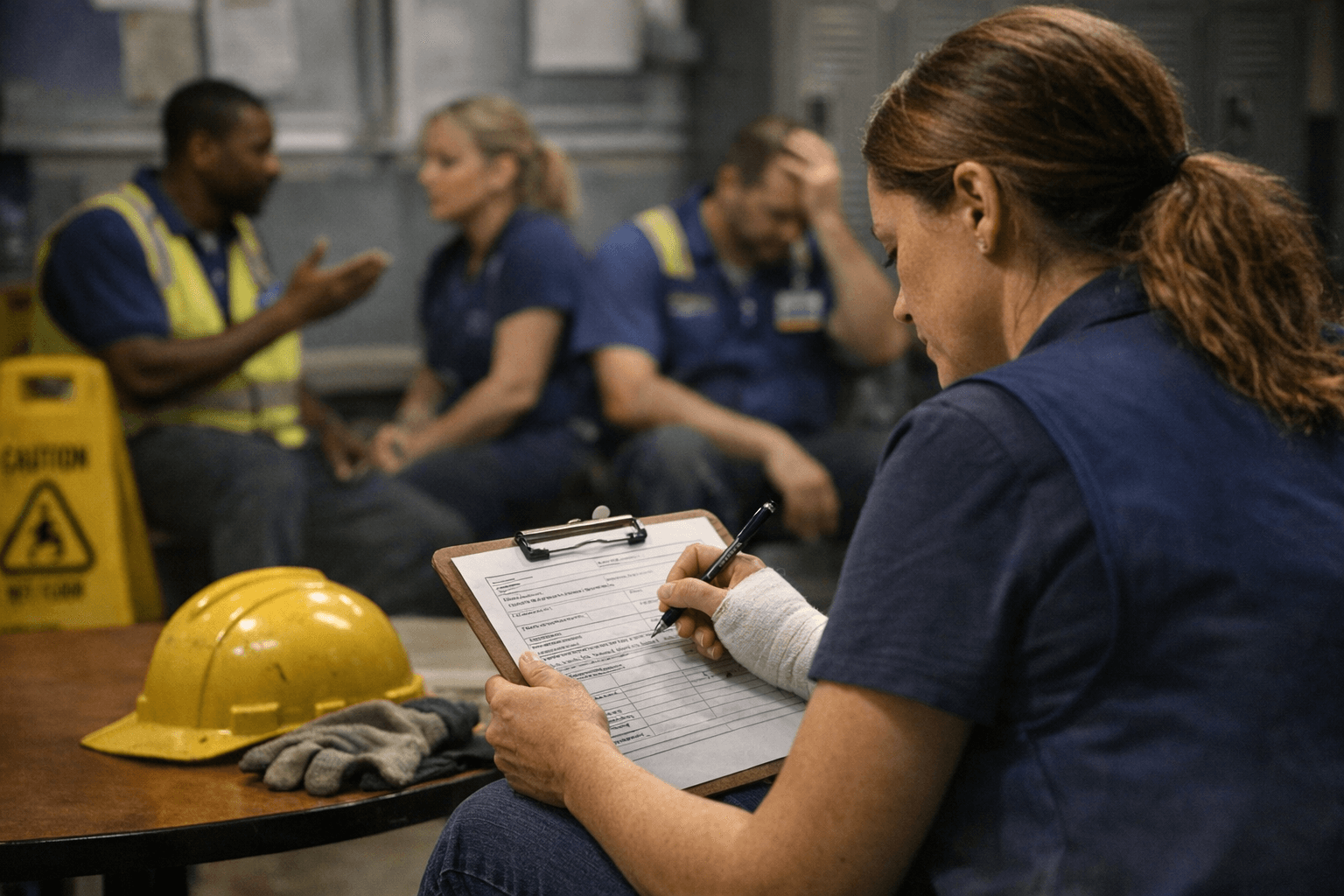
OSHA has identified workplace violence as the third leading cause of fatal occupational injury in the United States. For Walmart associates, this is not an abstract statistic. A review of local and national news coverage by United for Respect identified 211 distinct incidents of violence at Walmart stores between January 1, 2023, and December 31, 2023 alone. The incidents ranged from physical altercations with customers and co-workers to accidental firearm discharges, armed robbery, knife attacks, and mass shootings.
Gun violence in particular has become what researchers describe as a serious and common occupational hazard for Walmart associates, with incidents documented across a multi-year span from January 2020 onward. The 2024 National COSH "Dirty Dozen" report centered heavily on this pattern. If you witness or are involved in a violent incident at work, OSHA's general duty clause requires employers to provide a workplace free from recognized hazards likely to cause serious harm. Persistent or unaddressed violence concerns can be reported to OSHA as a safety hazard, separate from any criminal reporting you may pursue through local law enforcement.
What the pandemic revealed
The COVID-19 pandemic exposed longstanding gaps in Walmart's safety infrastructure in ways that carried measurable human cost. Researchers estimated that 125,000 Walmart workers in the United States likely contracted COVID-19 between February 2020 and February 2021. Research conducted by Human Impact Partners found that Walmart could have prevented more than 7,500 of those cases and saved 133 lives with better workplace protections and a more robust paid sick leave policy.
Associates reported inadequate safety measures, a shortage of personal protective equipment, and feeling pressured to come to work while sick. The pandemic was, as multiple research organizations noted, not the first time Walmart's internal safety protocols had been scrutinized. Walmart associates have been raising concerns about unsafe working conditions for more than a decade. The COVID experience is a reminder that associates have the right to report unsafe conditions to OSHA even when those conditions are systemic rather than the result of a single incident.
Practical steps before you file
Before contacting OSHA or the EEOC, gathering documentation strengthens your position:
- Write down a detailed account of the incident or ongoing condition while your memory is fresh, including dates, times, locations, and the names of anyone involved or present.
- If you sought medical treatment, keep all records, including emergency room visits, doctor's notes, and any prescription documentation.
- Save any internal communications, including texts, emails, or written warnings related to the issue you are reporting.
- Note whether you raised the concern internally first, when you did so, and what response you received.
- If coworkers witnessed the incident or share the same concern, their accounts can support your complaint, though they are not required.
Internal reporting through Walmart's Ethics Hotline or People team channels does not replace your right to file with a federal agency, and using internal channels does not restart or pause the filing deadlines that apply to EEOC charges.
The stakes of getting this right extend well beyond any single store. As United for Respect has argued, creating a safe workplace for Walmart associates would raise safety standards not just for the company's 1.6 million U.S. workers, but for the retail industry as a whole.
Know something we missed? Have a correction or additional information?
Submit a Tip