2026 engagement rings embrace vintage cuts and personal style
Engagement rings are turning less polished and more personal, with east-west settings, antique cuts, and warm stones replacing cookie-cutter sparkle.
The modern engagement ring is shedding its showroom polish. What feels most current now is not uniform luxury, but a ring that reads like a private code: vintage-inspired diamonds, east-west settings, honey-hued stones, and bold cluster silhouettes that look chosen, not prescribed.
The new bridal code
The real shift is aesthetic and emotional at once. Designers and retailers are seeing more demand for rings that feel distinctive, meaningful, and one-of-a-kind, rather than formulaic solitaires that could belong to anyone. National Jeweler even gathered a jewelry historian, a designer, a bridal director, and a wedding expert to weigh in, which tells you how seriously the trade is taking this change.
That matters because the strongest rings right now are not trying to perform tradition in the most obvious way. They are signaling taste, specificity, and a little bit of rebellion, without losing the sparkle that makes a proposal ring feel special. If the old bridal fantasy was all about a single perfect stone on a thin band, the new one is about shape, texture, color, and personality doing the work.
Why vintage cuts feel fresh again
Vintage-inspired diamonds are having a moment because they do not feel overly engineered. GIA notes that old mine cuts recall an era when stones were measured by eye and shaped entirely by hand, which gives them a softer, more human quality than the tightly standardized brilliance of a modern round solitaire. GIA also points out that antique and vintage engagement rings have stayed in fashion for years because of their romantic charm and individuality, and that is exactly why they are resonating again now.
This is the kind of ring for someone who wants the piece to look inherited, even when it is newly made. Old-cut references and elongated cushion shapes bring in that slightly softened geometry that feels old-world, but not fussy. They suit brides drawn to a more editorial, romantic look, especially if the wedding itself leans toward a garden setting, a historic venue, or any atmosphere where elegance should feel a little lived-in rather than pristine.
Celebrity attention has only sharpened that appetite. Forbes reported that Taylor Swift and Travis Kelce’s reported engagement reignited interest in vintage cuts, including old-cut diamonds and elongated cushion shapes. Other Forbes coverage described the ring as likely antique or old-mine style and estimated it at well over half a million dollars, the sort of headline that can push a style from insider fascination into mainstream aspiration.
Warm stones are replacing icy perfection
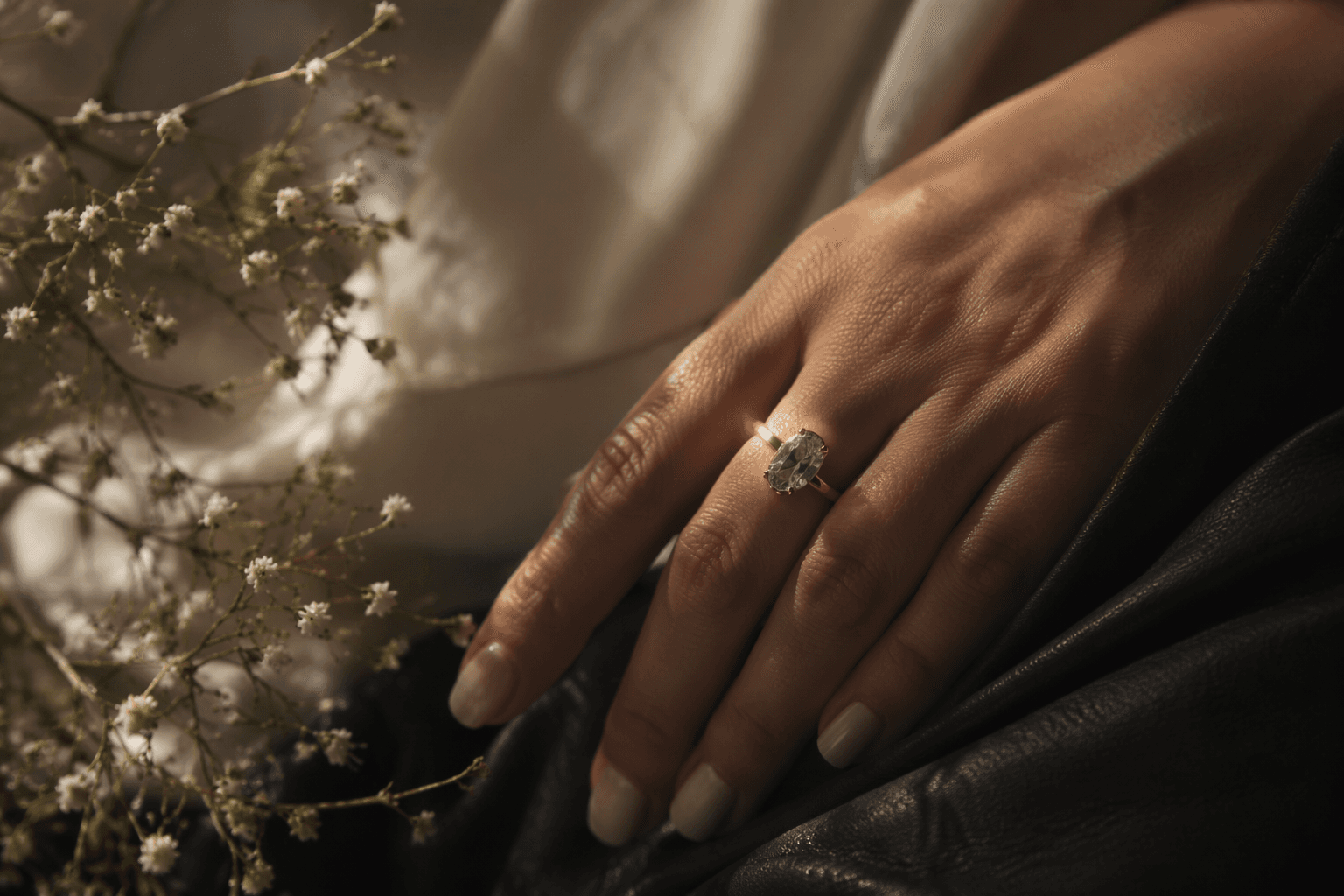
The color story is widening too. One of the clearest signals is the rise of Desert diamonds, a Natural Diamonds campaign that stretches from sunlit white through champagne and cognac and arrived with 200 new bridal designs from De Beers. The effect is less glacial brilliance and more candlelit glow, which gives the ring a richer, more atmospheric presence on the hand.
National Jeweler has also noted brown- and yellow-hued diamonds showing up in the natural-diamond conversation, which lines up neatly with the honey-toned stones now entering the bridal mix. These warmer center stones are a good fit for someone who wants a ring that feels slightly unexpected but still refined. They look especially compelling in yellow gold, and they suit brides who like their jewelry with depth, warmth, and a touch of softness rather than a hard white flash.
What to skip here is the idea that the diamond must be colorless to feel luxurious. That old rule is losing power. A stone with a little champagne, honey, or cognac character can feel more nuanced, more fashion-minded, and in some cases more wearable, because it sits beautifully against skin and metal instead of trying to disappear into a neutral ideal.
East-west settings make a familiar stone feel new
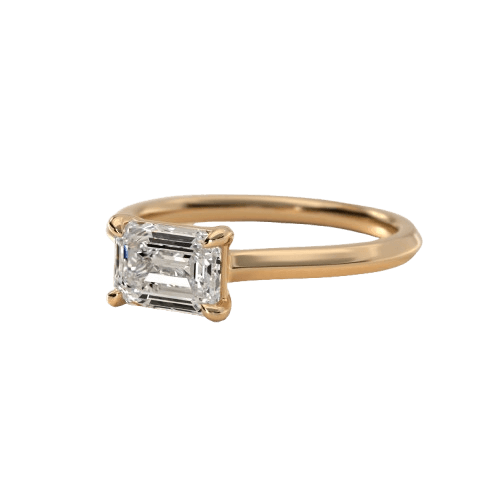
If vintage cuts are about memory, east-west settings are about attitude. The sideways mount continues to look like one of the biggest bridal directions of the year, especially for oval, marquise, and cushion stones. Turning the stone horizontally changes the entire mood of the ring: it looks more graphic, more modern, and a little less precious in the conventional sense.
That is why the east-west setting works so well for someone who wants a ring that reads like design, not default. It pairs naturally with bezel settings, chunkier bands, hidden halos, and even lab-grown diamonds, all of which push the ring toward a more customized, contemporary finish. Brides with clean wardrobes, architectural taste, or a city-hall-to-black-tie sensibility will find this direction especially strong.
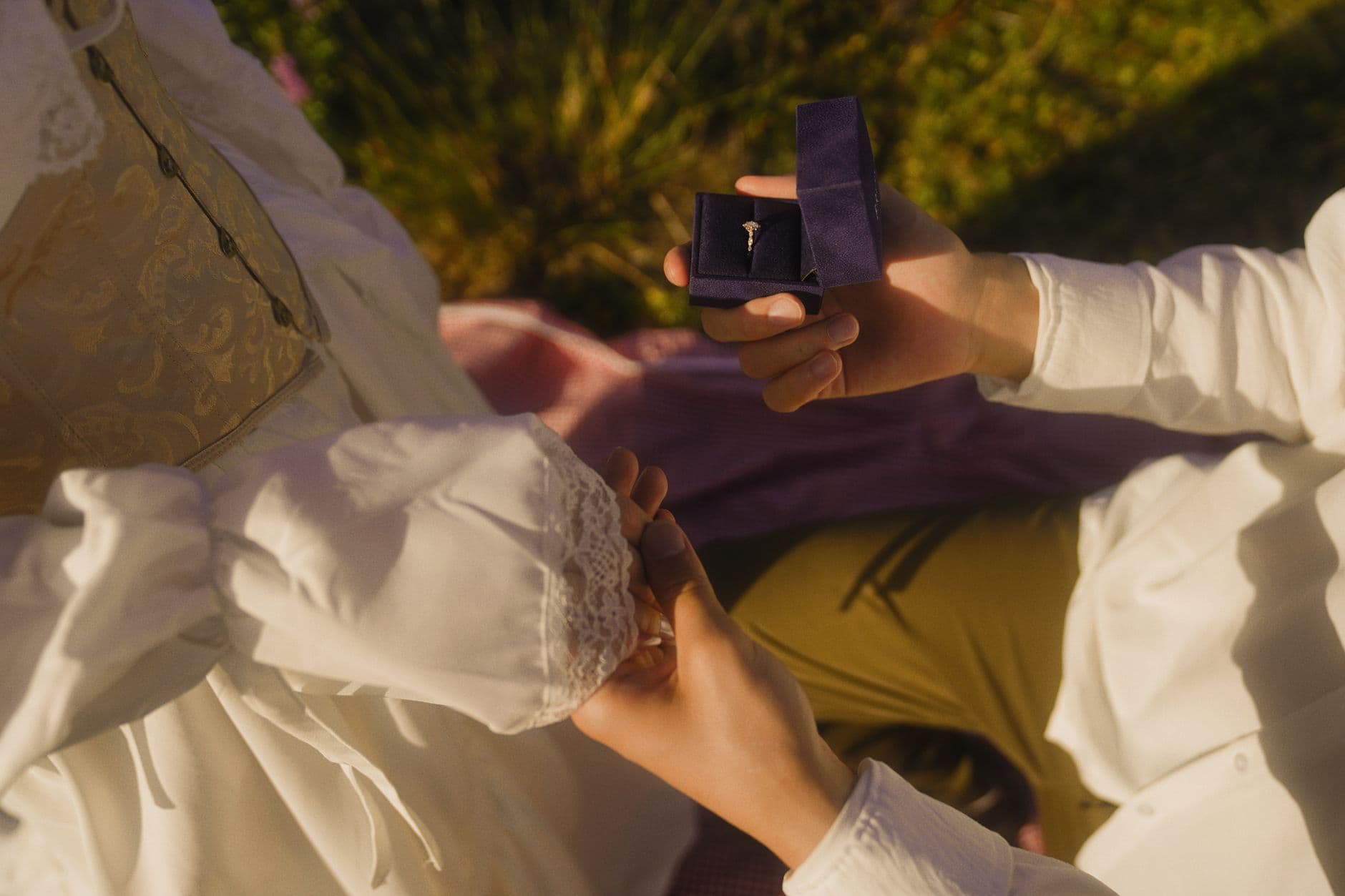
The beauty of this look is that it takes a familiar diamond shape and makes it feel edited. An oval suddenly becomes sleek and lateral. A marquise looks sharper and more fashion-forward. A cushion shape, set sideways, loses some sweetness and gains edge.
Clusters bring back the heirloom feeling
Bold cluster designs complete the picture. Instead of one singular center stone doing all the work, clusters create texture, dimension, and a little visual drama. They feel less like a stock bridal ring and more like a piece that might have been assembled over time, which is part of their appeal.
Cluster silhouettes suit the bride who likes jewelry with personality and movement. They also dovetail nicely with the larger vintage conversation, because clusters often evoke old-world glamour without copying any single era too literally. If a solitaire is about restraint, a cluster is about presence. It is the kind of ring that looks beautiful against a simple dress, a lace gown, or anything else that lets the setting do the talking.
The classic is still there, just no longer alone
None of this means the round diamond has disappeared. Natural Diamonds says classic round stones still lead in sales, even as search interest widens toward other styles. That split tells the real story of 2026: people still buy the safest version, but they are browsing, saving, and imagining something more personal.
The taste shift is moving bridal jewelry away from a single standard and toward a more expressive code. The rings worth paying attention to now are not trying to look like everyone else’s idea of luxury. They are trying to look like yours.
This article was produced by Prism’s automated news system from verified source data, official records, and press releases, then run through automated quality and moderation checks before publishing. The system is built and supervised by the people who set the standards it runs under. Read our full AI policy.
Did this article answer your question?