2026 Wedding Trends You Need to Know
From secondhand gowns to detachable skirts and jewel-toned bridesmaids, 2026 bridal fashion is shaped by intention, personality, and the full arc of a wedding day.

The bride who turns up to her 2026 wedding in the same ivory column gown she'd have chosen in 2022 is increasingly the exception. Something has shifted in how couples approach the entire day: less as a performance of tradition, more as a deeply considered expression of who they actually are. That recalibration is visible in every layer of bridal fashion right now, from the gown construction to the colour briefed to the bridal party to the accessories packed for the reception change.
Sustainability Is No Longer a Selling Point; It's a Starting Point
For a handful of seasons, "sustainable bridal" was a niche modifier, a descriptor that signalled a particular type of bride. That distinction has effectively collapsed. Eco-conscious choices have gone mainstream to the point where vintage and pre-loved gowns, rental platforms, and organic or recycled fabrics are simply part of the conversation rather than a subcategory within it. Designers are now working with organic silks, peace silk, and recycled polyester as standard fabric options, not special-order alternatives. Some labels are experimenting with closed-loop design processes, creating gowns with the intention that they can be returned after the wedding and repurposed.
For the bride navigating this practically, the calculus has changed. Brides in 2026 are increasingly seeking transformative pieces: gowns with removable sleeves, convertible skirts that transition from ceremony to reception, or veils that double as dramatic overskirts. Buying a gown that functions across multiple moments of a single day, rather than a static piece worn once, is itself a form of intentional consumption. The heirloom quality question matters too. Gowns designed to last and be worn again, whether passed down or resold, are a sharper proposition than something worn for six hours and archived.
The Colour Conversation Has Moved On
Neutrals have not disappeared from bridal, but the stranglehold they once held over the entire aesthetic conversation has loosened considerably. Jewel tones, terracotta, and unexpected pops of colour are stealing the show in 2026, and colourful weddings photograph beautifully, adding energy and vibrancy to every shot. This is most dramatically expressed in bridesmaids' looks, where the safe instinct to reach for dusty rose or sage is being replaced by more decisive choices.
Brides are mixing colours in bridal parties with real confidence, combining bold cobalt paired with lavender, or fuchsia with sage, to create visually dynamic groups. Textures like silk and velvet are being combined alongside these colour pairings, adding further dimension. Deep Bordeaux for a dark romance aesthetic, terracotta and warm mustard for earthy outdoor ceremonies, and citrus-bright pops of orange for summer celebrations are all gaining traction. Wedding planner Xin Huang of Le Petite Privé notes of orange: "I'm seeing a lot of orange, and it's such a happy colour that also occurs so much in nature. The key is to use it sparingly because it can overwhelm, but it's such a joyful hue."
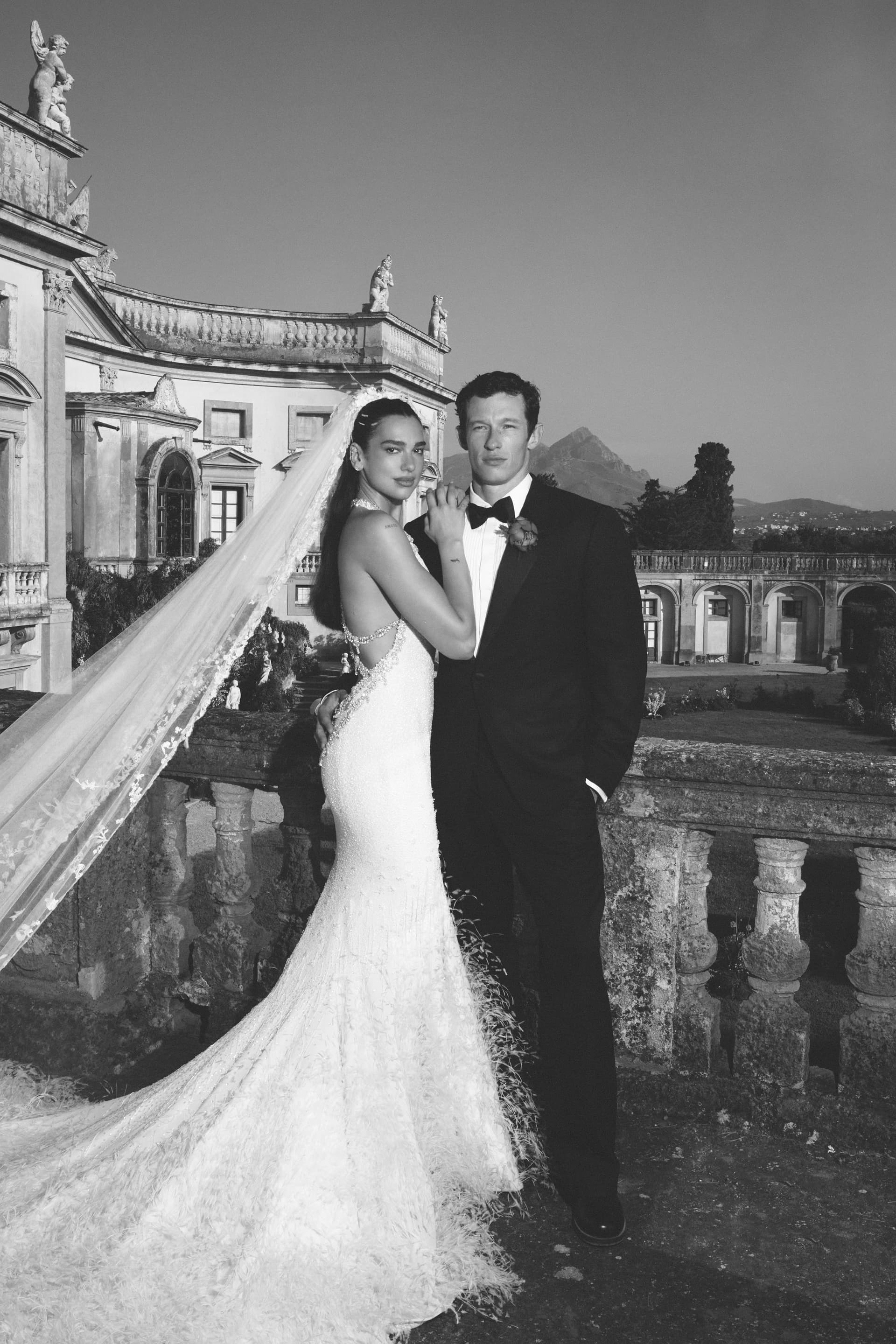
For the bride herself, the shift in the bridal party palette has a direct impact on her own look. A gown that reads clean and crisp against blush bridesmaids needs to do something quite different against a row of cobalt or deep bordeaux. White remains non-negotiable for many brides, and Pantone's 2026 Colour of the Year, Cloud Dancer, a luminous white, has inspired a renewed interest in cathedral-length veils that create an ethereal, floating effect, alongside pearl-encrusted headpieces that add vintage glamour without competing with the dress. The context around the bride, in other words, is shaping what the bride herself wears.
Convertible Gowns for the Full Arc of the Day
The experiential reception is one of the defining characteristics of 2026 wedding planning. Guest experience has become a top priority, with couples incorporating interactive and memorable elements that invite guests to engage with the celebration. Live painters capturing the wedding in real time, curated cigar or whiskey bars, and experiential food moments are becoming signature highlights of the day. Immersive food stations, unlimited gelato carts, and late-night snacks create shared moments that get people moving, exploring, and generating photographs and videos naturally.
None of this is incidental to fashion. An interactive reception puts pressure on a gown in a way that a seated dinner simply does not. The gown worn for a solemn ceremony processional is often the wrong gown for dancing until midnight beside a live painter. The industry's answer has been the convertible silhouette. Removable puff sleeves or capes, and convertible trains that shorten into sleek party looks, reflect modern brides' desire for comfort, versatility, and fun without compromising on beauty.
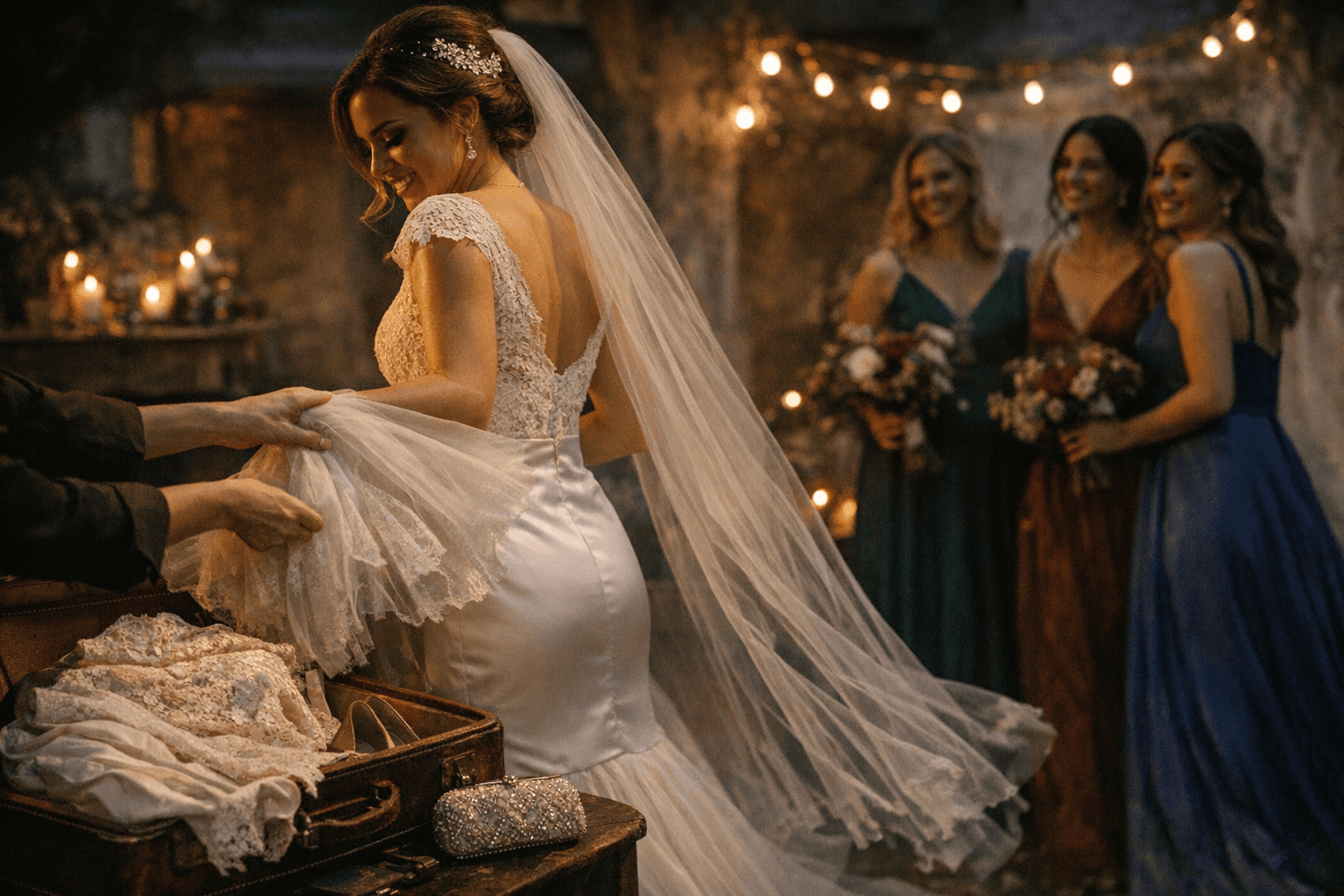
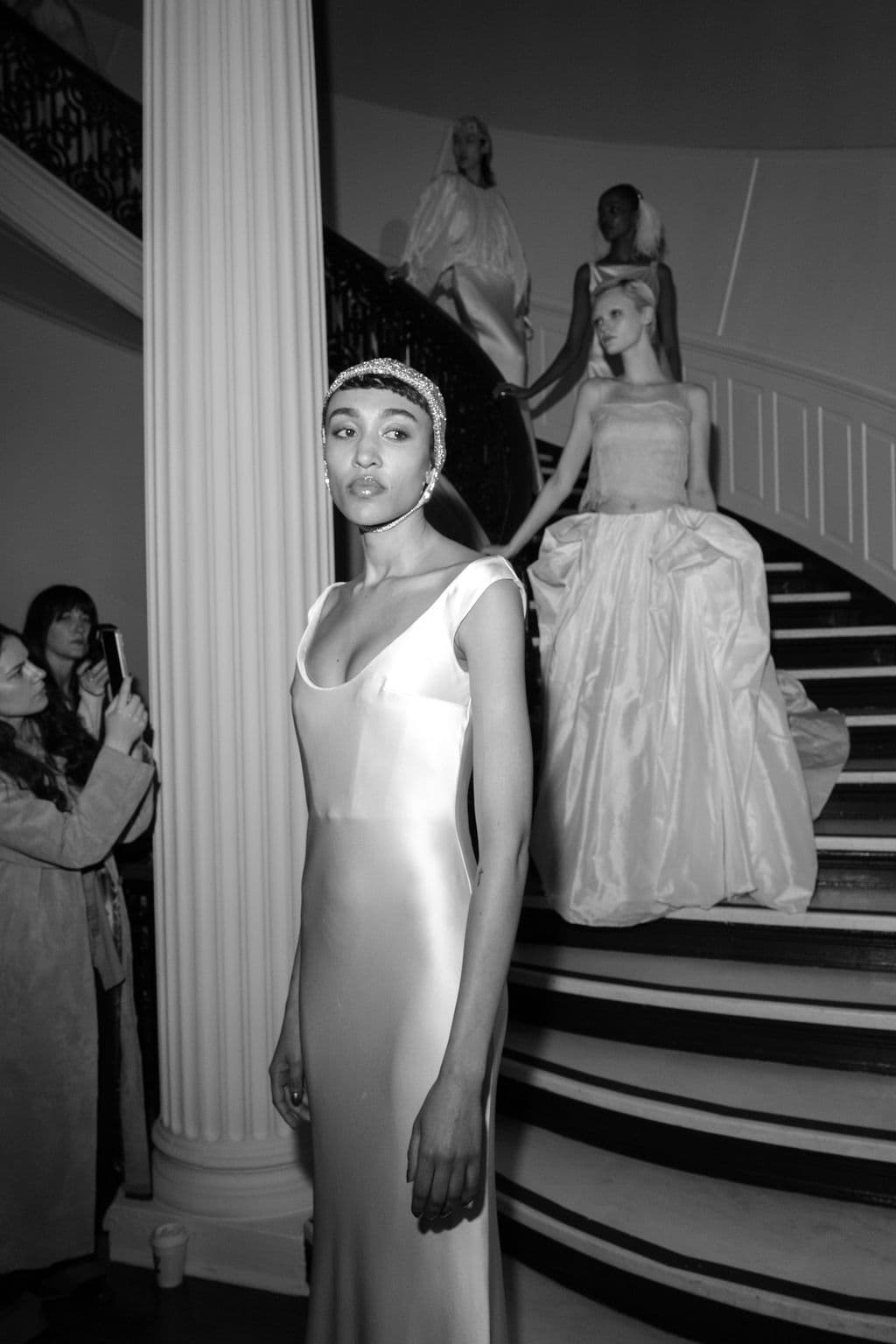
Monique Lhuillier's Spring 2026 collection understood this acutely. Opera-length gloves, detachable overskirts, and jackets offer brides multiple looks within a single collection, balancing drama and delicacy. Statement veils with oversized bows and bold embroideries add feminine touches that can be removed as the day moves from ceremony into celebration. Bridal separates, coordinated tops and skirts that can be mixed through the day, are also rising sharply. The logic is the same: one wedding, multiple distinct fashion moments.
Statement Accessories and the Photography-First Mindset
The shift toward more personalised, visually distinctive bridal looks is inseparable from a photography-first sensibility. Couples investing in editorial-style wedding photography want their looks to hold up to that treatment: structured, textured, layered, specific. Generic does not photograph interestingly.
Silver beadwork is emerging as a contemporary alternative to traditional pearls and warm golds in bridal embellishment, bringing a cool-toned precision to gowns while still offering shine and dimension. It pairs particularly well with soft white, ivory, and champagne fabrics, and it photographs beautifully in both natural and evening light.
Texture is doing more work than heavy embellishment in 2026 collections. Dimensional florals, crinkled silks, and layered lace that photograph beautifully without overwhelming the gown are replacing densely beaded construction. Tactile fabrics enhance perceived depth, which is central to the current direction in luxury bridalwear. Elie Saab's Spring 2026 collection illustrated this range: from statement-making ballgowns featuring cascades of tulle and organza floral appliqués to strapless column bodices that jetted out into billowing silk-chiffon skirts, the playful yet refined details created a collection suited to distinct aesthetic moods.
The accessory conversation has expanded well beyond the veil. Chunky gold jewellery, vintage-style drops, and layered pearl pieces are being styled with the same editorial rigour as the gown itself. A wave of vintage-inspired gowns with chic drop waists is being paired with statement accessories like pearls and chunky gold, and even colourful engagement rings that let personality continue to read through the look.
The Dress as a Wardrobe, Not a Single Garment
What unites all of these threads is a shift in how brides are conceptualising the dress itself. Rather than a single, singular choice, the 2026 approach treats bridal dressing as a sequence of looks across the day, each suited to a distinct moment: the ceremony, the cocktail hour, the reception, the dance floor. This changes the shopping process entirely, asking brides to think not just about how a gown looks in a fitting room mirror but how it performs over twelve hours of photography, movement, and feeling.
Designers who understand this are building the wardrobe logic into the construction itself: detachable trains, secondary skirts, removable structure, accessories that transform rather than merely decorate. The result is bridal fashion that is more demanding creatively, more interesting to look at, and finally, more honest about what a wedding day actually requires.
This article was produced by Prism’s automated news system from verified source data, official records, and press releases, then run through automated quality and moderation checks before publishing. The system is built and supervised by the people who set the standards it runs under. Read our full AI policy.
Did this article answer your question?