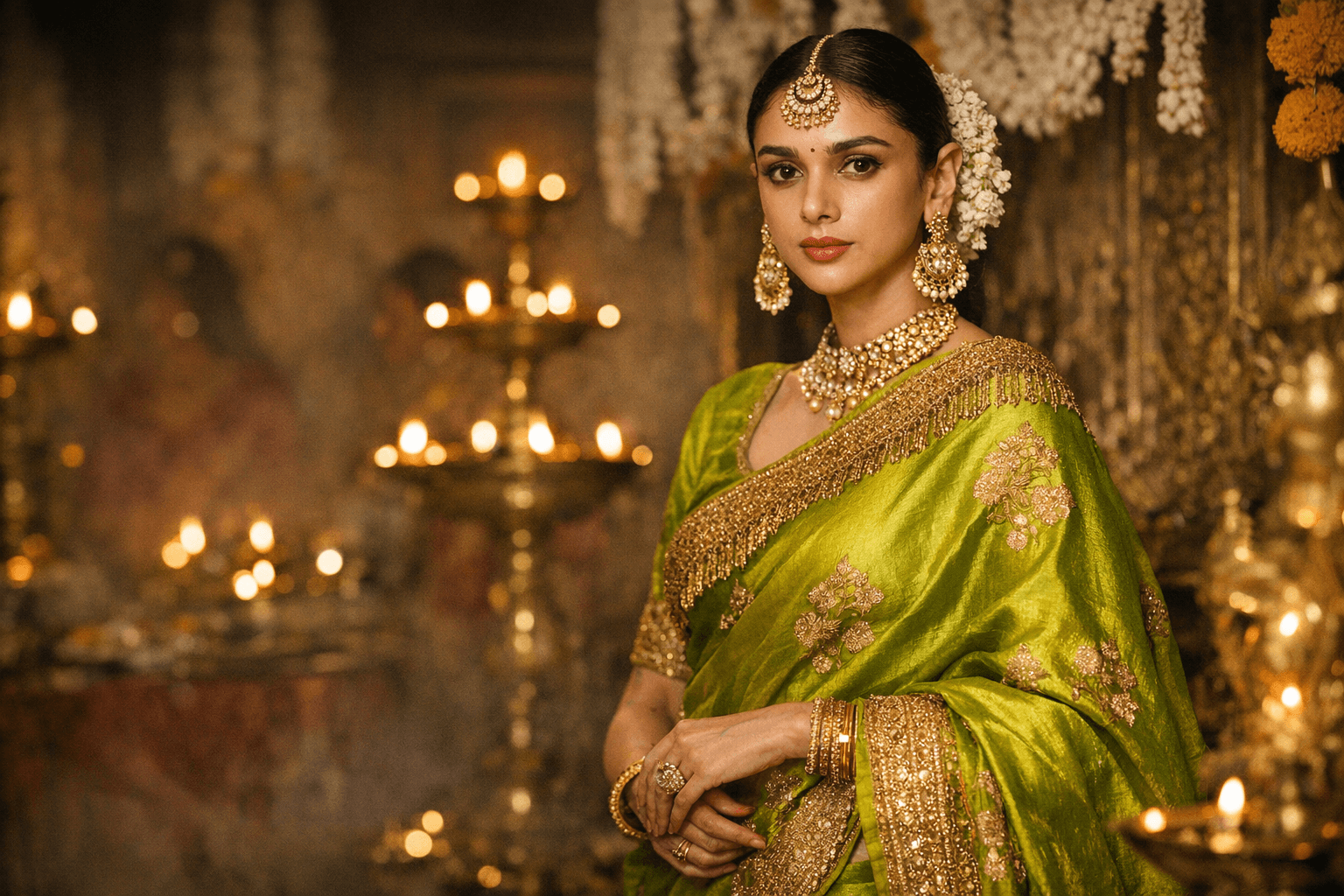
Aditi Rao Hydari’s lime-green Raw Mango sari redefines bridal heritage style
Aditi Rao Hydari’s lime-green Raw Mango sari is the bridal shortcut between heirloom craft and easy elegance, with zardozi florals and a kiran border doing the heavy lifting.
The bridal look that proves less can feel more
Aditi Rao Hydari’s lime-green Raw Mango sari makes a strong case for brides who want ceremony without weight. The Hirnoda sari in mulberry silk, priced at INR 54,800, delivers visible craft through zardozi florals and a kiran-edged border, then stops before the look turns overloaded. It is the rare bridal piece that feels dressed-up, not buried under decoration.
Why this sari feels so current
The appeal is in the balance. Hydari’s sari reads as heritage, but not the kind that asks a bride to wear acres of embroidery, a heavy red palette, and the usual full-volume bridal drama. Lime green feels fresh against the usual wedding spectrum, while the silk keeps the drape fluid and elegant. The result is the kind of sari that works beautifully for a day wedding, an intimate ceremony, or a trousseau event where you want polish without the visual fatigue of maximalism.
That restraint is exactly why the look lands now. Brides are increasingly drawn to pieces that show craftsmanship up close and still move easily in real life, from the mandap to the dinner that follows. Hydari’s sari does that with confidence. It looks special in photographs, but it also looks like something a woman could actually wear for hours.
The craft details that matter
Raw Mango identifies the sari as Hirnoda, and the details are what make it bridal-worthy without becoming heavy-handed. The floral motifs are embroidered with zardozi, a technique that gives the sari a rich, tactile surface. Instead of flooding the fabric with dense embellishment, the design uses the embroidery to create focus, which makes the eye travel and the texture register.
The kiran along the border is just as important. It frames the sari with a fine gleam, so the edge feels finished and ceremonial without becoming stiff or overbuilt. Brides looking for a smarter kind of ornamentation should study that move closely. A sharply defined border can do what a much heavier all-over design often tries, which is to make the sari feel complete and expensive.
Why zardozi still looks bridal
Zardozi carries centuries of history. It began as a Persian textile craft introduced to India in the 12th century, flourished under Mughal rulers, and became closely associated with royal costume. That heritage still gives it power in bridal dressing today, because it signals luxury through skill rather than volume.
What makes it especially relevant now is its return to weddings and fashion-forward occasionwear. Zardozi is no longer confined to museum-like references or heavily traditional outfits. It has re-entered the conversation as a detail brides can wear in a modern way, whether on a sari, a lehenga, or a carefully chosen blouse. Hydari’s look shows exactly how it works when the handwork is allowed to breathe.
How the styling keeps it light
The styling is doing real work here. Hydari wore the sari with a matching puff-sleeved blouse, which adds shape and a hint of romance without competing with the fabric. The sleeve gives the upper half of the look enough structure to feel bridal, while the overall silhouette remains soft and easy.
Soft makeup keeps the focus where it belongs, on the sari’s color and craft. Statement earrings add just enough lift to complete the look, but they do not overpower the ensemble. That is the lesson for brides: when the sari already brings detail through zardozi and border work, the rest of the styling should support, not shout.
Why the palace setting matters
Hydari wore the sari during a visit to Jai Vilas Palace in Gwalior, and the setting sharpened the look’s regal mood. A heritage backdrop like that naturally amplifies silk, embroidery, and metallic thread, but it also reveals whether an outfit has real presence. This sari does.
Jai Vilas Palace has also become part of a broader fashion conversation, with events such as Palace Prive unfolding there in association with Priyadarshini Raje Scindia and her son Mahaaryaman Scindia. Against that kind of backdrop, Hydari’s sari feels less like an occasion piece borrowed from the past and more like a modern answer to the palace itself. It belongs in the frame, but it is not dependent on it.
How to wear the idea yourself
If you are building a bridal wardrobe around this mood, take the idea rather than copying the outfit exactly. The smartest part of Hydari’s sari is the editing.
- Choose one standout craft, such as zardozi florals, instead of layering on every embellishment at once.
- Use a clean border, like kiran, to give the sari definition and finish.
- Pick a blouse with shape, such as a puff sleeve, if you want softness with structure.
- Keep the makeup fresh so the fabric and embroidery stay visible.
- Let the sari carry the drama, then add jewelry that complements rather than crowds it.
That is what makes this look so persuasive for bridal readers right now. It proves that heritage does not have to mean heaviness, and that a sari can feel ceremonial, modern, and deeply wearable all at once.
This article was produced by Prism’s automated news system from verified source data, official records, and press releases, then run through automated quality and moderation checks before publishing. The system is built and supervised by the people who set the standards it runs under. Read our full AI policy.
Did this article answer your question?