JJ Valaya Crafts Hoorvi’s Wedding Wardrobe in Black and Red
JJ Valaya turned his daughter Hoorvi’s wedding into a deeply personal couture narrative, using black and red to make legacy feel vivid, modern, and unmistakably intimate.
The black-and-red bridal wardrobe that rewrites the usual wedding script
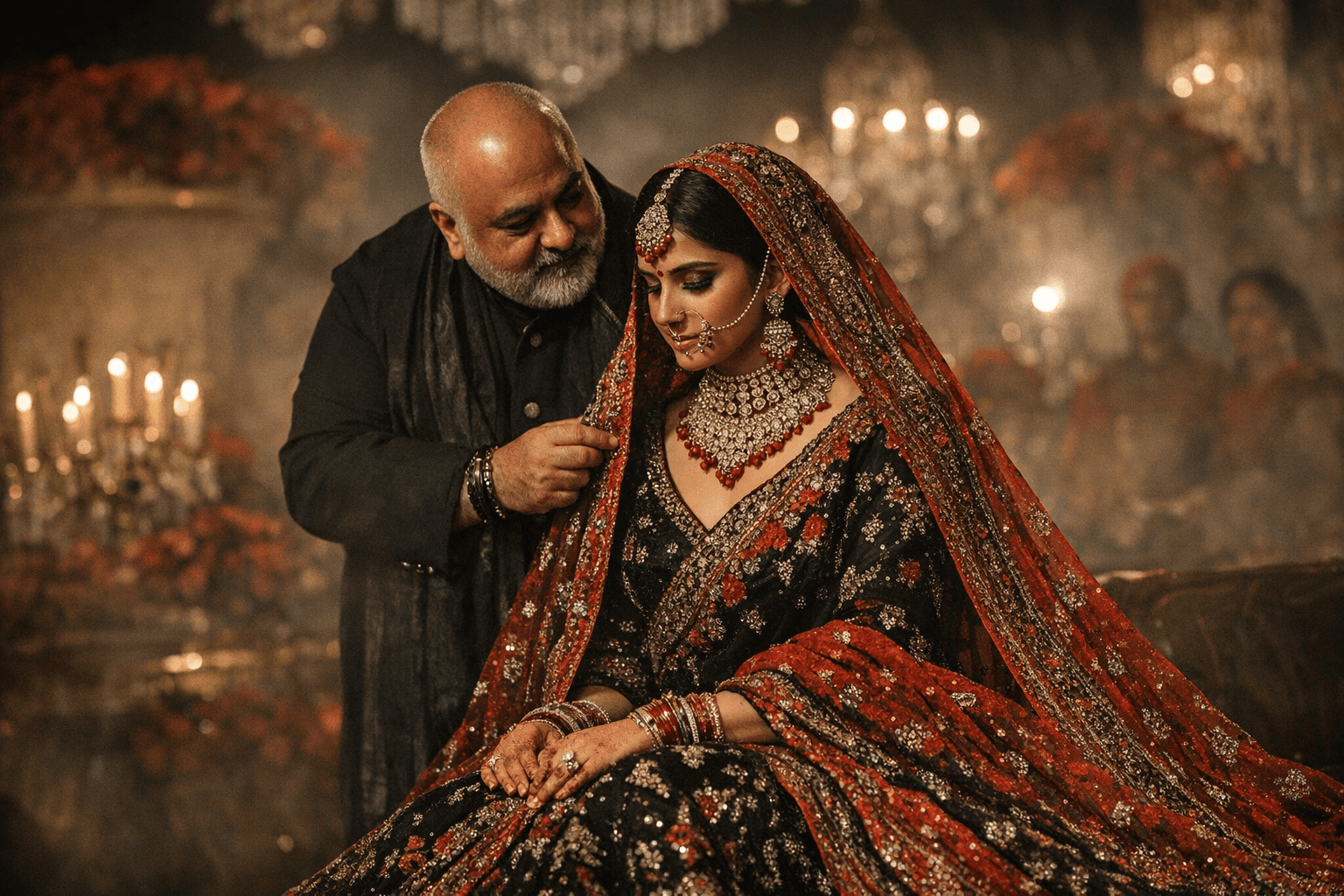
JJ Valaya did not dress his daughter Hoorvi in the safe language of bridal predictability. He built her wedding wardrobe as a family story in cloth, letting black and red carry the emotional weight of both the sangeet and the wedding, and turning a bride’s trousseau into something far more specific: a couture archive of memory, craft, and inheritance.
That distinction matters because the most compelling bridal wardrobes today are not the ones that simply look expensive. They are the ones that feel authored. In Hoorvi’s case, the look was not a single statement outfit but a carefully considered world, one shaped by a designer father who has spent decades perfecting Indian occasion wear and a daughter who already lives inside that creative vocabulary.
A father-daughter commission with real stakes
This is the kind of assignment most couture houses would treat as a landmark, and rightly so. JJ Valaya founded the House of Valaya in 1992, which gives this wedding wardrobe a significance that goes beyond sentiment. It is not just a designer making clothes for his child. It is a veteran couturier dressing the next generation of his own family and brand, with all the symbolism that implies.
Hoorvi was born in 1998, which sharpens the story further. She is not simply a bride in a famous label. She is the daughter stepping into a visible, working legacy, and that makes the wardrobe feel less like a red-carpet spectacle and more like a chapter in the House of Valaya’s ongoing autobiography. The emotional charge comes from that overlap of family and business, where private memory and public craft sit in the same seam.
Why black and red feels so striking now
Black is not the first color most brides reach for, and that is exactly why it works here. In Indian bridal dressing, black often reads as a deliberate refusal of the expected, while red remains the enduring language of wedding authority, devotion, and ceremony. Put together, the two colors create tension: one grounded in drama and modernity, the other steeped in bridal symbolism.
Times Now described the result as a deeply personal bridal story rooted in craft, memory, and modern Indian tradition, and that is the right frame. Black and red are not being used as a shock tactic. They are being used as narrative tools. The palette lets the wardrobe feel sharper than a conventional gold-heavy bridal look, while still remaining unmistakably ceremonial.
The sangeet and wedding as one continuous style story
Hoorvi wore J.J. Valaya for both her sangeet and wedding, which is one of the most useful takeaways for anyone building a modern bridal wardrobe. Instead of treating each event as an isolated styling exercise, the strongest wedding dressing today often works like a sequence: each look should converse with the next.
That continuity does two things. First, it creates visual coherence across the celebrations, so the bride does not feel like she is inhabiting a different personality every night. Second, it lets the clothes build atmosphere, especially when a palette as vivid as black and red is repeated with variation rather than redundancy. The effect is more cinematic than matchy. The bride becomes the center of a designed narrative, not a parade of unrelated outfits.
- Choose one emotional anchor, such as a color family, motif, or textile idea.
- Let each outfit shift the mood, not the identity.
- Build from ceremony to celebration so the wardrobe feels intentional, not overworked.
For brides planning multiple events, the lesson is clear:
What Hoorvi’s role inside the house changes about the story
Hoorvi J Valaya is not only the designer’s daughter. Grazia India described her as an integral part of JJ Valaya’s team, styling campaigns and shows, and other coverage identifies her as a stylist and creative director. That detail changes the reading of the wedding wardrobe completely.
Because she already works inside the House of Valaya ecosystem, the clothing is not a father imposing his vision on an outsider bride. It is a collaboration between two people who speak the same fashion language. The result should not be mistaken for sentimentality alone. It is also a professional exchange, with the bride bringing her own eye to the house codes her father built. That gives the wardrobe a rare kind of credibility: it is intimate, but it is also informed.
Legacy dressing is becoming the new luxury signal
The deeper appeal of this story is not just that a designer created clothes for his daughter. It is that the clothes were conceived as something that could outlast the wedding itself. Khush Mag quoted Valaya as saying, “I try to create something that’s so special, it is intrinsically timeless and therefore stands the test of time, for generations in fact.”
That idea is where the real luxury sits. In an era when bridal dressing can tip into trend-chasing, the most persuasive wardrobe is often the one designed to live beyond the event. It can be remade, reinterpreted, handed down, or simply remembered as a family reference point. Valaya’s view also echoes a broader bridal reality: former brides often return with daughters who want to wear their wedding clothes, proving that true value in couture is not only in the first wear, but in the afterlife of the garment.
What brides can learn from this approach
Hoorvi’s wardrobe offers a sharper model than the usual “statement bride” narrative. It shows that personalization is not about adding more embellishment or forcing a gimmick. It is about building emotional specificity into the clothes themselves.
- Use family symbolism in a visible, wearable way.
- Treat the wedding as a series of connected looks rather than one hero moment.
- Favor a strong point of view over generic luxury codes.
The strongest bridal wardrobes today tend to do three things:
That is why the black-and-red palette feels so effective. It does not beg for attention. It holds it. And because the wardrobe was designed within a family business that Hoorvi already helps shape, it feels rooted rather than decorated.
The quiet power of a bride who is also part of the house
The Vogue India piece, filed under Weddings and Bridal Looks, captures a shift that matters far beyond this one celebration. The most interesting bridal couture now comes from personal ecosystems, not just ateliers. When the bride is also part of the creative world of the designer, the wardrobe becomes something denser than fashion. It becomes biography.
That is what makes Hoorvi Valaya’s wedding dressing memorable. It is not merely black and red, not merely custom, and not merely familial. It is the rare bridal look that understands luxury as authorship, and authorship as legacy.
This article was produced by Prism’s automated news system from verified source data, official records, and press releases, then run through automated quality and moderation checks before publishing. The system is built and supervised by the people who set the standards it runs under. Read our full AI policy.
Did this article answer your question?