Bold Yellow-Green Northern Bridal Look Brings Arewa Elegance to Ceremony
A yellow-green Arewa bridal look proves color can carry heritage, ceremony, and couture-level impact in one unforgettable frame.
Color as the headline
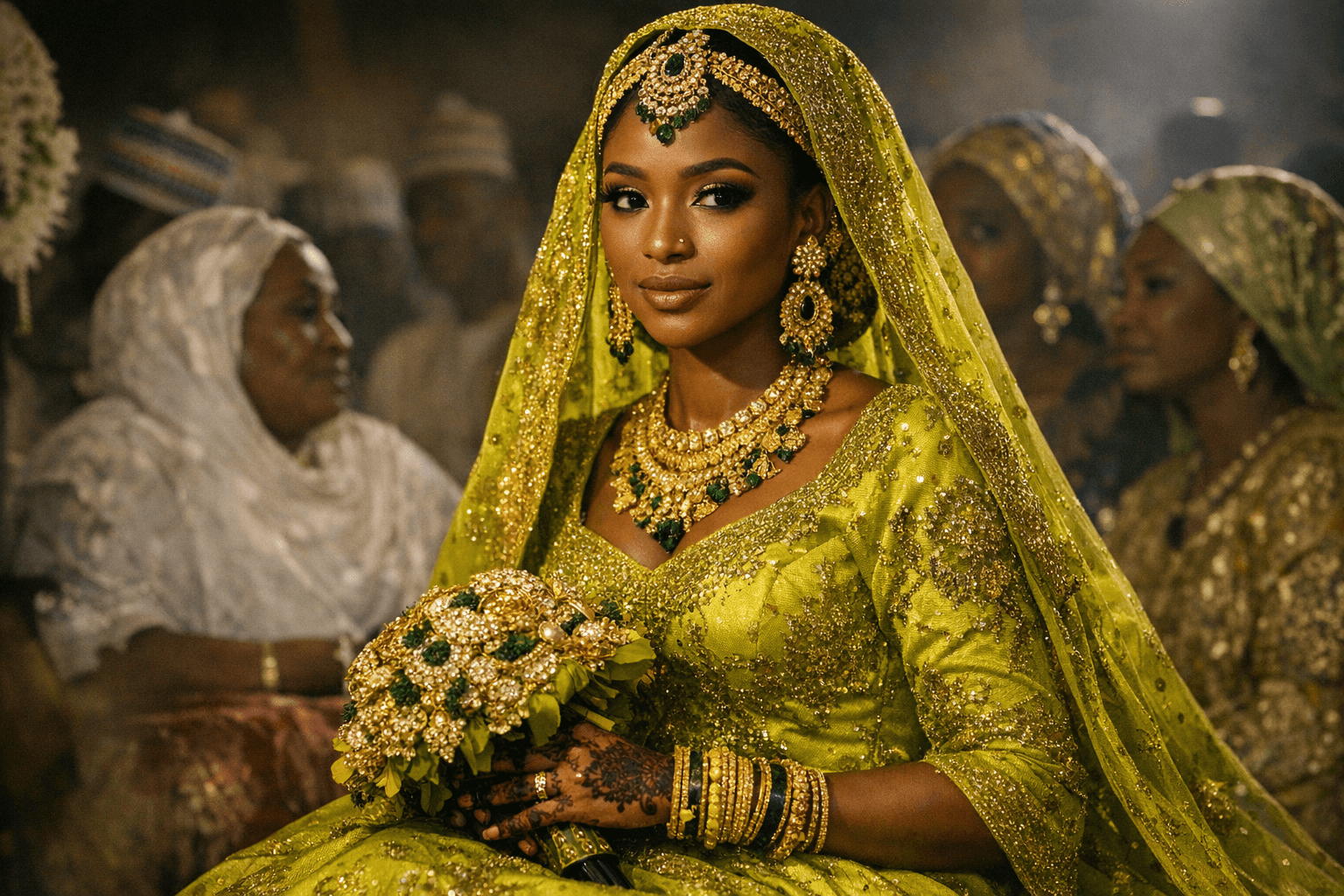
The most striking thing about Lex Culture’s Arewa bridal look is not that it is yellow-green, but that it treats color as ceremony. In a bridal landscape where white often gets all the authority, this dress insists that hue can do the emotional heavy lifting: it can signal joy, cultural memory, and fashion confidence all at once. BellaNaija Weddings describes it as a vibrant masterpiece, and that phrase makes sense because the palette does not sit politely in the background. It leads.
That is exactly why the look lands so powerfully for a Northern bride. Yellow-green reads festive without losing composure, bright without becoming chaotic. In a setting shaped by modest elegance, religious custom, and deeply rooted tradition, the color becomes a visual thesis statement: bridal style can be unmistakably modern and still belong fully to the culture that raised it.
Why this palette feels so distinctly Arewa
Northern Nigerian bridal fashion has always carried more than decoration. It sits at the intersection of tradition and Islamic values, and that gives every choice, from fabric to makeup to adornment, a greater sense of intention. BellaNaija Weddings has built a dedicated Northern bridal look stream around this exact visual language, which tells you the appetite for these looks is not fleeting. Brides want references that feel culturally specific and fashion-forward at the same time.
Yellow-green works in that world because it has presence. It does not disappear into the room, and it does not need to shout to be noticed. In bridal terms, that balance matters. A bride must command attention during the kamu ceremony, the pre-wedding ritual in which she is unveiled and the groom’s family formally catches her, so the outfit has to perform in front of family, cameras, and community all at once. This is not a color chosen for novelty. It is a color chosen to hold ceremony.
The cultural frame that gives the look its authority
The wider Hausa bridal landscape helps explain why this look feels so resonant. Britannica places Hausa people chiefly in northwestern Nigeria and adjacent southern Niger, where they are the largest ethnic group, alongside a substantial Fulani presence that has long shaped the region’s shared language and culture. That context matters because Northern bridal fashion is never just about aesthetics. It is a visual expression of an entire social world.
The scale of that world is enormous. The World Bank estimated Nigeria’s population at 232,679,478 in 2024, which gives Northern bridal style a national audience that is both large and highly attentive. When a look like this appears in a major bridal platform, it does more than inspire a single wedding mood board. It reinforces a style conversation that already carries serious cultural weight across Nigeria and beyond.
What gives the dress ceremony presence
BellaNaija Weddings frames the dress as expertly designed by Lex Culture, and that is the crucial part. A powerful bridal color only works when the execution can support it. A yellow-green gown needs clarity in line, discipline in finish, and enough visual control to keep the color looking luxurious rather than overwhelming. The appeal here is not only the shade itself, but the way it is presented as a complete bridal statement.
Recent coverage of Hausa weddings has shown how quickly the look of the Northern bride has evolved. Modesty and elegance remain central, but they are now paired with couture-level styling, accessories, and beauty choices that heighten the full effect. That evolution is visible in this kind of bridal reference: the dress is not isolated from the rest of the look. It belongs to a larger styling system in which fabric, adornment, and makeup all support one another.
How to adapt the idea without losing authenticity
The smartest way to borrow from this look is to treat the color as the anchor and build around it with restraint. The dress can be the loudest element in the room, but everything around it should feel deliberate. Northern bridal style has always been about dignity as much as drama, so the goal is not to dilute the color. The goal is to let it feel ceremonial.
A bride looking to translate this idea can keep these principles in view:
- Choose a yellow-green tone with depth, not neon brightness. The shade should feel rich enough for formal wear and strong enough to read in photographs.
- Keep the silhouette modest and refined. The cultural power of Northern bridal style often comes from grace, coverage, and proportion rather than excess skin or overworked detail.
- Let accessories support the dress, not compete with it. In today’s Northern bridal conversation, jewelry and beauty styling matter, but they work best when they frame the color instead of fighting it.
- Think about the kamu ceremony as the stress test. If the outfit can carry itself through an unveiling, family introduction, and layered rituals, it has the right level of presence.
- Preserve the regional signal. The look should still feel unmistakably Northern in spirit, even if you reinterpret the shade, fabric, or accessory balance.
Why this image is built to travel
Part of the reason this yellow-green bridal look is so shareable is that it solves a familiar problem: how do you wear color in a way that feels elevated, not costume-like? The answer here is specificity. The look is not simply colorful; it is culturally located, visually disciplined, and tied to a bridal tradition that already gives it meaning. That combination makes it easy to admire and even easier to remember.
It also speaks to a broader shift in Nigerian bridal style, where bold color choices are increasingly understood as expressive and symbolic rather than merely decorative. Brides are not only choosing a dress. They are choosing a visual identity for one of the most watched moments of the wedding. A yellow-green Northern look makes that decision feel fearless, but also grounded in lineage.
The result is a bridal reference with real staying power. It shows that when color is handled with confidence, craftsmanship, and cultural literacy, it does more than decorate the bride. It becomes the story.
This article was produced by Prism’s automated news system from verified source data, official records, and press releases, then run through automated quality and moderation checks before publishing. The system is built and supervised by the people who set the standards it runs under. Read our full AI policy.
Did this article answer your question?