Bride builds wedding wardrobe from the saris of her family
She turned the saris of the women who raised her into a wedding wardrobe, making inheritance the most intimate kind of bridal authorship.

The sharpest idea in this bridal story is not embellishment but inheritance. Sara Hussain’s Vogue India Wedding Diaries piece, published on 21 June 2026, follows a bride who built her wedding wardrobe from the saris of the women who raised her, turning memory into the very structure of the look. In a bridal landscape that often chases novelty, this kind of dressing feels more exacting, more personal, and far more persuasive.
The emotional architecture of heirloom bridal dressing
What makes this wardrobe distinctive is the way it treats the sari as both garment and archive. A family sari carries wear, touch, and time in a way no newly commissioned bridal set can imitate, and that intimacy changes the emotional register of the wedding look immediately. The bride is not borrowing sentiment for effect; she is wearing the women who formed her household as part of the ceremony itself.
That shift matters because it reframes “something old” from a token gesture into the foundation of bridal style. Instead of a small inherited detail tucked into a more conventional outfit, the heirloom becomes the whole vocabulary. The result is less about preservation in a museum sense and more about continuation, where the wedding wardrobe extends a family line rather than starting from scratch.
Why this feels different from trend-driven wedding fashion
Vogue India’s June 2026 wedding coverage makes clear that this is not an isolated mood but a recurring direction. On 24 June, the magazine published a feature on five brides who transformed heirloom saris into one-of-a-kind wedding looks, and on 14 June it highlighted a bride wearing her mother’s 30-year-old bridal sari. That sequence of stories signals a shift in taste: bridal fashion is increasingly making room for pieces that already carry history.
The appeal is obvious to anyone who has watched wedding style become more curated and less formulaic. Heirloom dressing offers intimacy where trend can sometimes feel thin. A sari passed through a family does not need to prove its modernity, because its force comes from continuity, from the visible fact that it has already lived more than one life.

What authorship looks like when the fabric is inherited
There is a subtle but important change in authorship here. The bride is still making a decisive style choice, but she is doing it through a textile vocabulary written by the women before her. That makes the wedding wardrobe feel collaborative in the deepest sense, because the final look carries multiple hands, multiple memories, and multiple eras inside it.
This is also why the story resonates beyond sentimentality. In bridal fashion, authorship is usually associated with creation from new cloth, bespoke embroidery, or a signature silhouette. Here, authorship is about interpretation. The bride selects, reimagines, and recomposes what already exists, and in doing so she turns family inheritance into a personal statement rather than a relic.
The sari as a more intimate bridal alternative
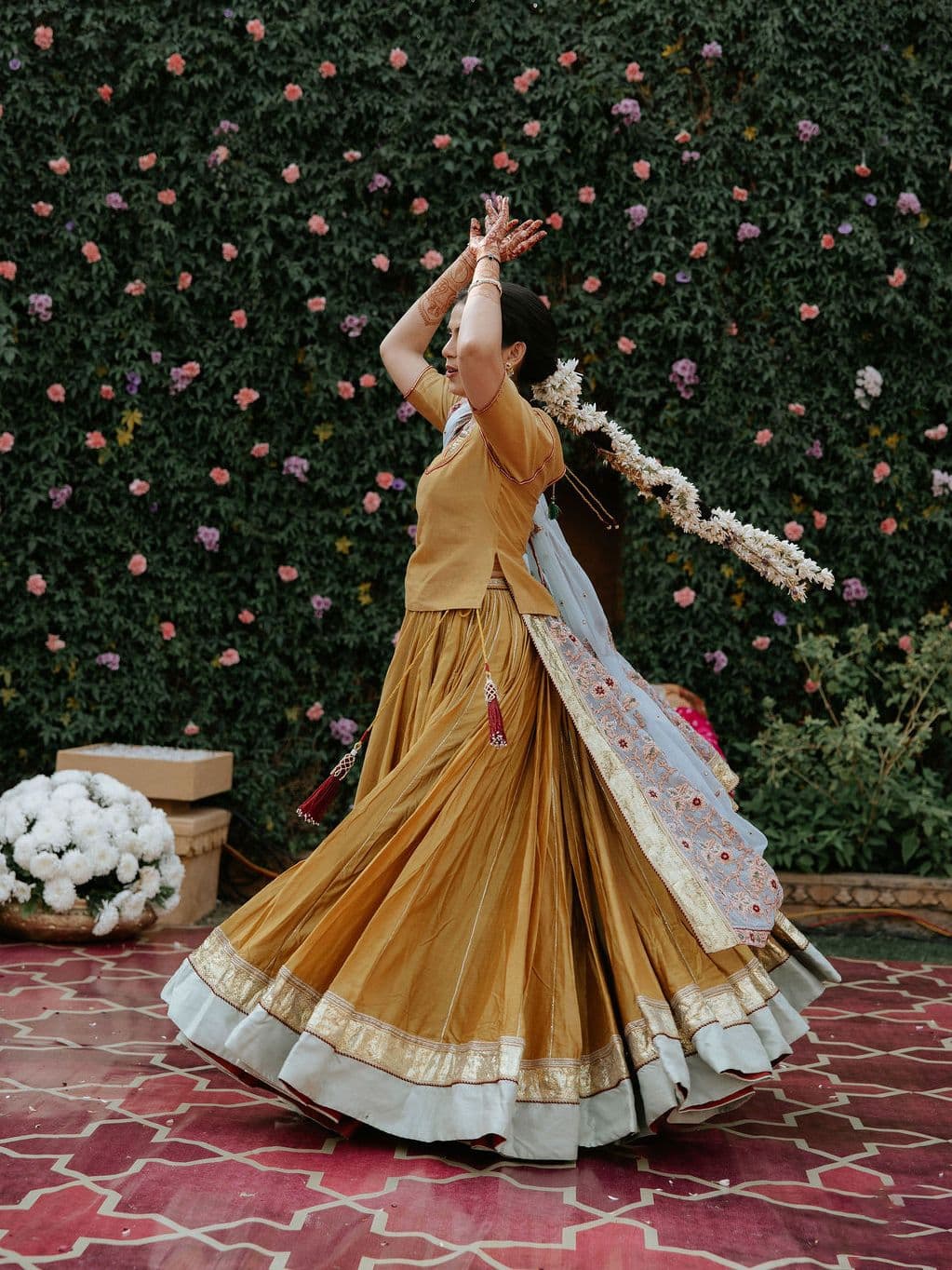
The sari has always had unusual range in bridal dressing because it can be ceremonial without feeling rigid. It can hold color, drape, and ornament with ease, but it also allows the wearer to keep a clear sense of self. When the sari comes from the women who raised the bride, that flexibility gains another layer: it becomes a way to carry family presence while remaining unmistakably individual.
That is part of why heirloom sari dressing reads as such a strong alternative to the trend-led bridal market. Instead of chasing a newly minted aesthetic, the bride works with a garment whose emotional charge is already established. The beauty lies not in perfect newness, but in the visible conversation between past and present.
A wider bridal pattern is taking shape
The June 2026 run of Vogue India wedding stories suggests that this aesthetic is gathering momentum across different kinds of ceremonies. On 19 June, the magazine featured grooms wearing reworked heirloom saris and antique jewellery for a wedding in Mexico, a reminder that this instinct is not limited to brides or to one region. Elsewhere in the same coverage stream, the focus kept returning to family textiles, antique pieces, and reworked garments that carry prior lives into the wedding day.
Taken together, those stories show a bridal culture leaning toward reuse without losing romance. In that frame, sustainability is not presented as austerity. It appears as abundance of a different kind, where the value of the garment comes from its history, its emotional charge, and the precision with which it is reworked for the present moment.
What ‘something old’ means now
The old bridal formula once separated sentiment from style, asking the bride to add a heirloom as a token rather than build the look around it. This story suggests a more sophisticated answer. Something old can be the main event, the silhouette, the texture, and the emotional core all at once.
That is what makes Sara Hussain’s June 21 piece feel so pointed within Vogue India’s Wedding Diaries coverage. It captures a bride who understands that family memory does not have to sit at the margins of fashion. It can be the whole design brief, and in bridal wear, that is where the most memorable clothes often begin.
This article was produced by Prism’s automated news system from verified source data, official records, and press releases, then run through automated quality and moderation checks before publishing. The system is built and supervised by the people who set the standards it runs under. Read our full AI policy.
Did this article answer your question?