Bride stacks replace the single-band bridal ring formula
The bridal ring is turning into a stackable system, with brides mixing metals, shapes, and milestone bands instead of buying one locked-in set.
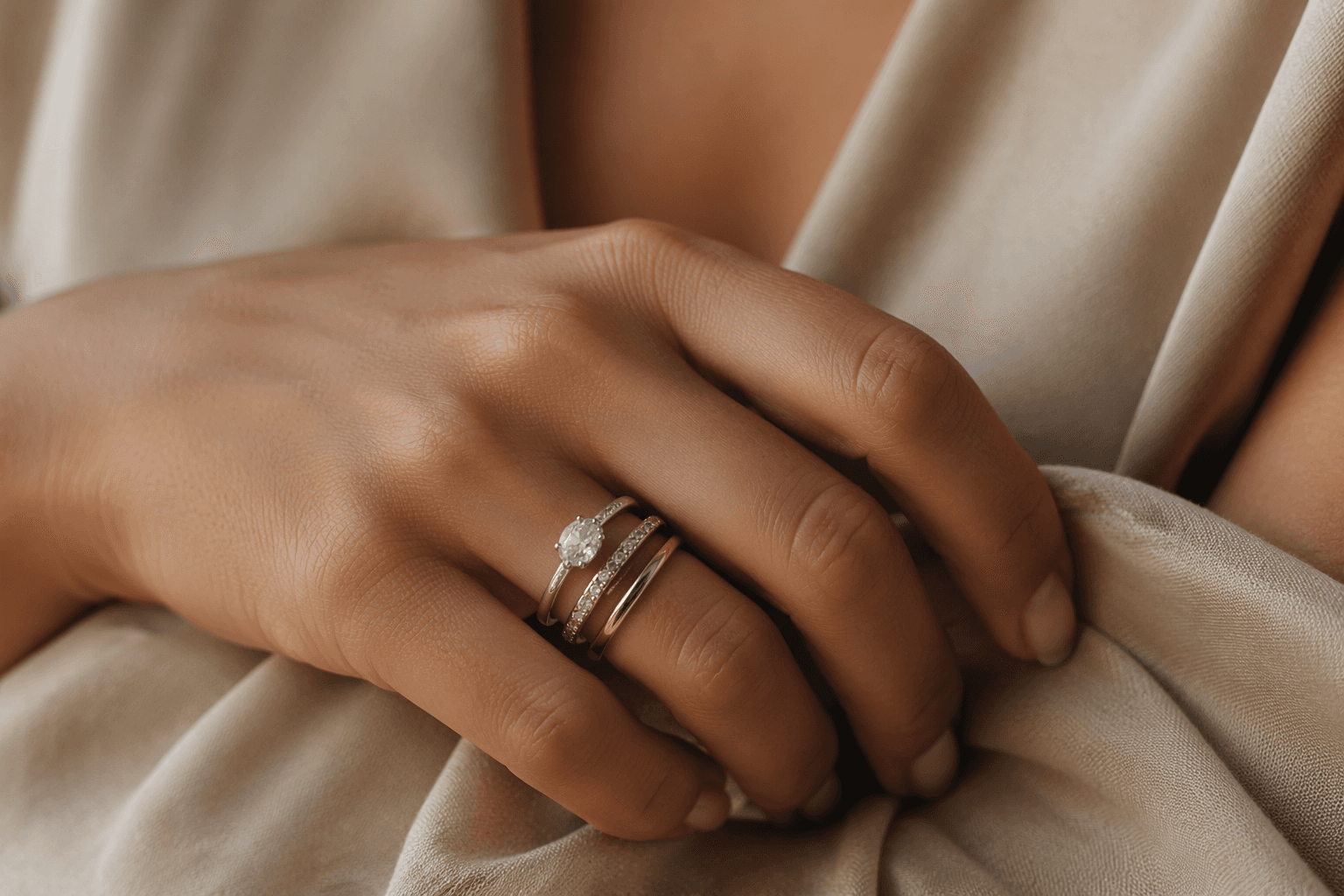
The ring finger is becoming a layered styling moment: an engagement ring, a wedding band, and then more pieces that can be added over time. Engagement rings are no longer carrying the whole bridal look by themselves. What used to be a fixed formula now looks more like a modular wardrobe: one base, then room to keep building.
The old two-ring rule is getting rewritten
The classic bridal stack still starts the same way, with an engagement ring and a wedding band. The difference is what happens after the ceremony. Stacks now grow into 2 to 3 rings or more, often adding anniversary bands, milestone bands, or commemorative pieces as the years go on.
That shift changes the business model as much as the styling. A wedding set is no longer a one-time purchase that ends at the aisle. It is turning into an expandable system that invites repeat buying, especially when each new band marks a date, a child, a move, or a private milestone that the wearer wants to keep on her hand.
Why the stack is catching fire now
Pinterest users make more than 3.8 billion wedding-related searches and pin 13.4 billion wedding ideas every year, according to its 2025 wedding trends report. Searches for “ring stack,” “unique wedding ring stack,” and “mixed metal ring stack wedding bands” are all rising. Pinterest says minimalism is taking a backseat to colorful modern aesthetics and hyperpersonal touches.
Brides are increasingly looking for bands that reflect their individual tastes, stories, and lifestyles, and many are treating wedding jewelry as an evolving collection rather than a single purchase.
What the new standard stack looks like
The most common version of the modern bridal stack is still anchored by an engagement ring, then built out with one or more slimmer bands. The cleanest shape is usually a 2-piece or 3-piece arrangement, but the point is not symmetry for its own sake. It is contrast, with different widths, metals, and stone settings working against one another instead of matching too neatly.
Mixed metals are rising because they make the stack feel collected rather than prescribed. A yellow-gold engagement ring can sit beside a platinum band, or a diamond ring can be flanked by a warm-toned anniversary band that looks intentionally mismatched. That layered look is especially strong when one piece is quiet and another has more texture, more sparkle, or a more sculptural edge.
Alternative engagement-ring shapes are feeding the same instinct. East-west settings, toi et moi rings, asymmetrical designs, chunky bands, vintage and antique-cut diamonds, and colored center stones are part of the broader bridal mood.
Social media is speeding up the taste cycle
Social platforms are accelerating demand for more unconventional bridal jewelry, and younger couples are discovering a wider range of ring designs faster than before. Courtney Sivard of BC Clark Jewelers put the consumer shift bluntly: younger couples want to feel understood, not sold to.
The old bridal script was built around one polished answer. The new customer wants options that feel personal from the start, then room to add more meaning later. Harris Botnick of Worthmore Jewelers says social platforms are exposing couples to far more ring designs, and that trends now spread much faster than they used to.
This is not a brand-new idea, just a sharper version of an old one
Stackable bridal jewelry has been around longer than the current hype cycle wants to admit. The stackable craze was already visible in the market in 2012, including in bridal assortments. What feels new now is how central the idea has become. It is no longer an add-on category at the edge of bridal retail. It is moving toward the center of the category.
First came the engagement ring, then the wedding band, then the realization that the hand could keep telling the story. Anniversary bands, commemorative bands, and fashion-forward layering extended the bridal set beyond the engagement ring and wedding band.
Why diamonds still sit at the center of it
Natural diamonds remain the most desired luxury jewelry product in De Beers Group’s June 2026 consumer research. It also found that average purchase prices increased 25 percent, while non-bridal occasions account for three-quarters of overall U.S. diamond demand.
Bridal jewelry is no longer operating in its own sealed lane. It is competing with fashion jewelry and self-purchase, where buyers expect more versatility and more wear after the wedding. A ring that can be worn alone, paired, or extended with future bands has more staying power than one that only makes sense as a single final object.
This article was produced by Prism’s automated news system from verified source data, official records, and press releases, then run through automated quality and moderation checks before publishing. The system is built and supervised by the people who set the standards it runs under. Read our full AI policy.
Did this article answer your question?