Celebrity rings steer bridal jewelry toward bolder, personalized styles
Zendaya’s east-west diamond and Dua Lipa’s bold gold ring are pushing bridal jewelry toward custom-feeling silhouettes, heavier metal presence, and less predictable stone layouts.

Celebrity engagement rings are starting to behave like runway signals, and bridal jewelry is paying attention. The question now is not whether Zendaya or Dua Lipa like distinctive rings, but whether their choices are resetting what shoppers expect from an engagement piece: a stronger silhouette, more visible metal, and settings that feel chosen rather than defaulted.
The new bridal brief is personalization, not convention
WWD’s jewelry coverage captures the shift neatly, framing celebrity engagement rings as a new bridal standard. Zendaya’s east-west diamond and Dua Lipa’s chunky gold design sit at the center of that conversation because both reject the old idea that the safest ring is the most desirable one. Instead, they point toward a market that is increasingly comfortable with rings that feel edited, directional, and unmistakably personal.
That change fits the broader behavior of ring buyers. The Knot’s 2024 Jewelry & Engagement Study found that 77% of proposees had some involvement in ring selection, which means the modern engagement ring is more often a collaborative purchase than a surprise reveal. Once the couple is part of the decision, the ring becomes less about inherited rules and more about taste, proportion, and how the piece looks on a hand in motion.
The classic center stone is still dominant, but the shape story is changing
Even with all the new energy, the center-stone hierarchy has not disappeared. The Knot found that 28% of engagement rings in 2024 featured round center stones, while 25% were oval, so the market still leans classic. But the direction of travel matters more than the margin: round diamond engagement rings have fallen 21% since 2015, while oval rings are up 23% since 2015, rising from just 2% of designs.
Celebrity wearers helped push that change into the mainstream. Blake Lively, Hailey Bieber, Ariana Grande, and Kourtney Kardashian have all kept oval shapes visible in the culture, making them feel less niche and more like a polished alternative to the round solitaire. That matters because bridal style often moves only after a shape has been seen enough times in high visibility to feel inevitable rather than experimental.
Zendaya made east-west feel fresh again
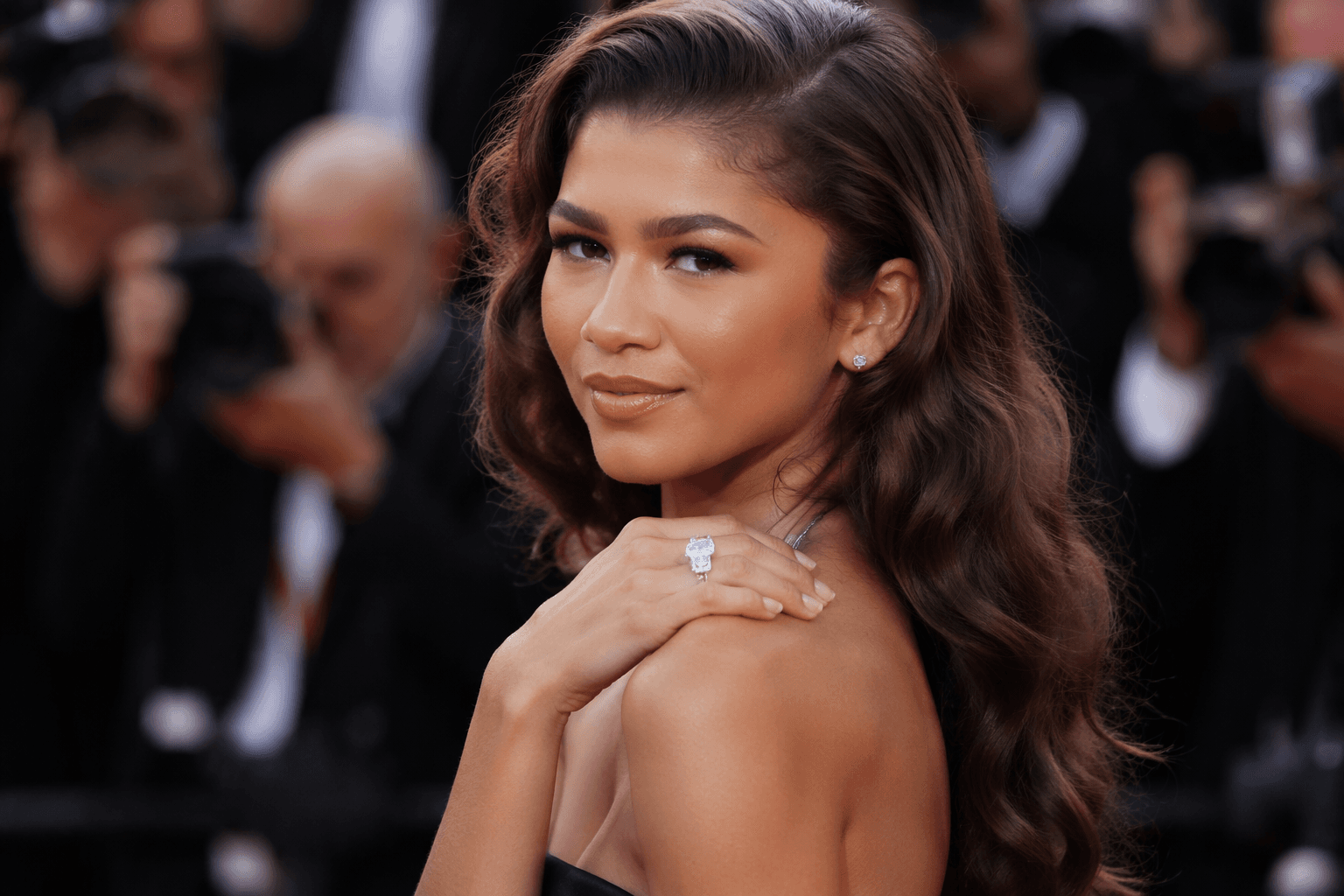
If one ring crystallized the current moment, it was the piece interpreted as Zendaya’s engagement ring at the Golden Globes on January 5, 2025. The Knot identified east-west settings as one of the top engagement ring trends for 2025, and Zendaya’s appearance effectively pushed the orientation back into the pop-culture spotlight. East-west rings are not a novelty invention; they date to the 1920s and the Art Deco movement, and The Knot notes they have been a significant trend since 2020, especially among late-millennial and early-Gen-Z clients who want something that reads as individual.
E! reported that Zendaya’s ring appears to be a 5.02-carat east-west cushion diamond button-back ring by British designer Jessica McCormack, set in 18k white gold and yellow gold. That combination is exactly why the piece landed so powerfully: the stone lies horizontally, the metal mix feels luxurious without being showy in a traditional way, and the button-back construction gives the ring a distinctly tailored profile. It is a ring with architecture, not just sparkle.
Dua Lipa sharpened the case for bolder metal and less symmetry
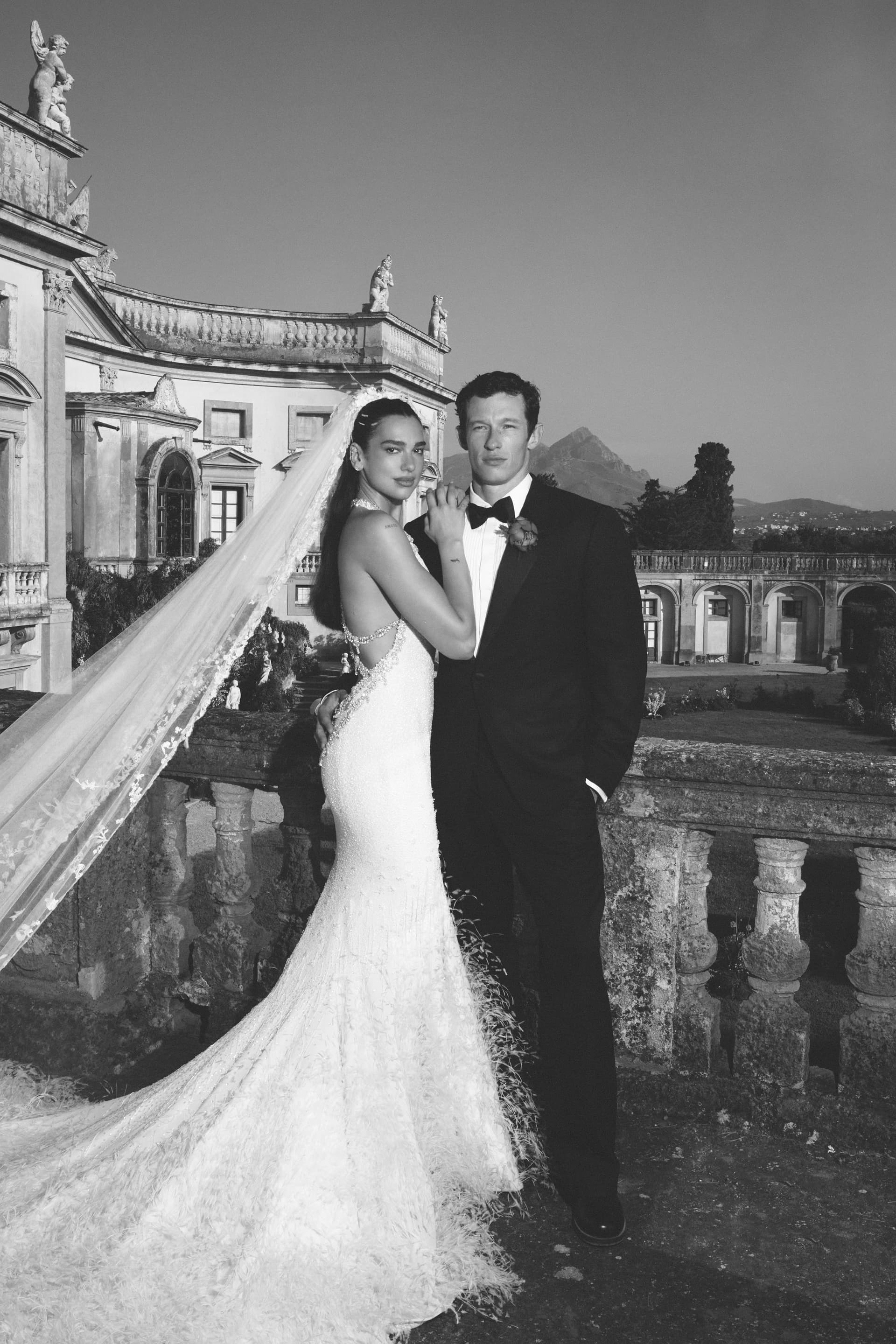
Dua Lipa’s engagement to Callum Turner, confirmed in June 2025, added a different kind of reference point. She told British Vogue she was “obsessed” with her ring and that it was “so me,” which is precisely the sort of language that keeps a ring from being read as generic glamour and instead frames it as an extension of personal style. Where Zendaya made orientation the headline, Dua Lipa made attitude the story: a ring can be substantial, expressive, and still feel intimate.
That distinction is important for the bridal market because it expands the definition of desirable. A chunky gold design changes the visual weight of a ring on the hand, and that weight is now part of the appeal. The ring is no longer only a single diamond on a band; it can be a sculptural object, a metal statement, and a style cue that sits somewhere between jewelry and ready-to-wear.
The commercial cues likely to move next
The Knot’s 2025 trend forecast suggests the market is moving away from rigid rules and toward more expressive forms. The styles most likely to grow include maximalist multi-stones, half bezels, marquise shapes, east-west settings, blackened gold, and architectural designs. Put together, those cues point to a bridal category that wants more line, more profile, and more visible structure.
- change the orientation of the stone, as east-west settings do
- increase the metal presence, as chunky gold and mixed-metal pieces do
- introduce an engineered silhouette, through half bezels, marquise cuts, or architectural mountings
For retailers and designers, the next commercial wave is likely to favor rings that do at least one of three things:
That is a meaningful shift from the old solitaire script. A ring no longer has to announce itself through size alone; it can signal taste through proportion, metal weight, and a more intentional profile. In other words, the bridal-jewelry market is not just getting bolder, it is getting more edited.
The clearest takeaway is that celebrity rings now operate as visual shorthand for where the category is headed. Zendaya made east-west settings feel newly current, Dua Lipa gave chunky gold emotional credibility, and together they helped move bridal jewelry toward a language of shape, substance, and personality that looks set to dominate the next buying cycle.
This article was produced by Prism’s automated news system from verified source data, official records, and press releases, then run through automated quality and moderation checks before publishing. The system is built and supervised by the people who set the standards it runs under. Read our full AI policy.
Did this article answer your question?