Dropped Waists Return, Bridal Brides Embrace 1920s Glamour Again
The dropped waist is back because it lengthens the body and turns 1920s glamour into something cleaner, sleeker, and less costume-like.
Why the dropped waist is back now
The dropped waist solves a familiar bridal tension: you want shape, but not the stiff, cinched certainty of a dress that feels over-managed. By sitting below the natural waist, it lengthens the body, skims the torso, and creates that long, elegant line brides keep returning to, the one that feels vintage without looking trapped in a period drama. What makes the silhouette so persuasive right now is that it carries real history, not just nostalgia, and it does so in a way that flatters the eye before it ever announces its reference.
The line that changes everything
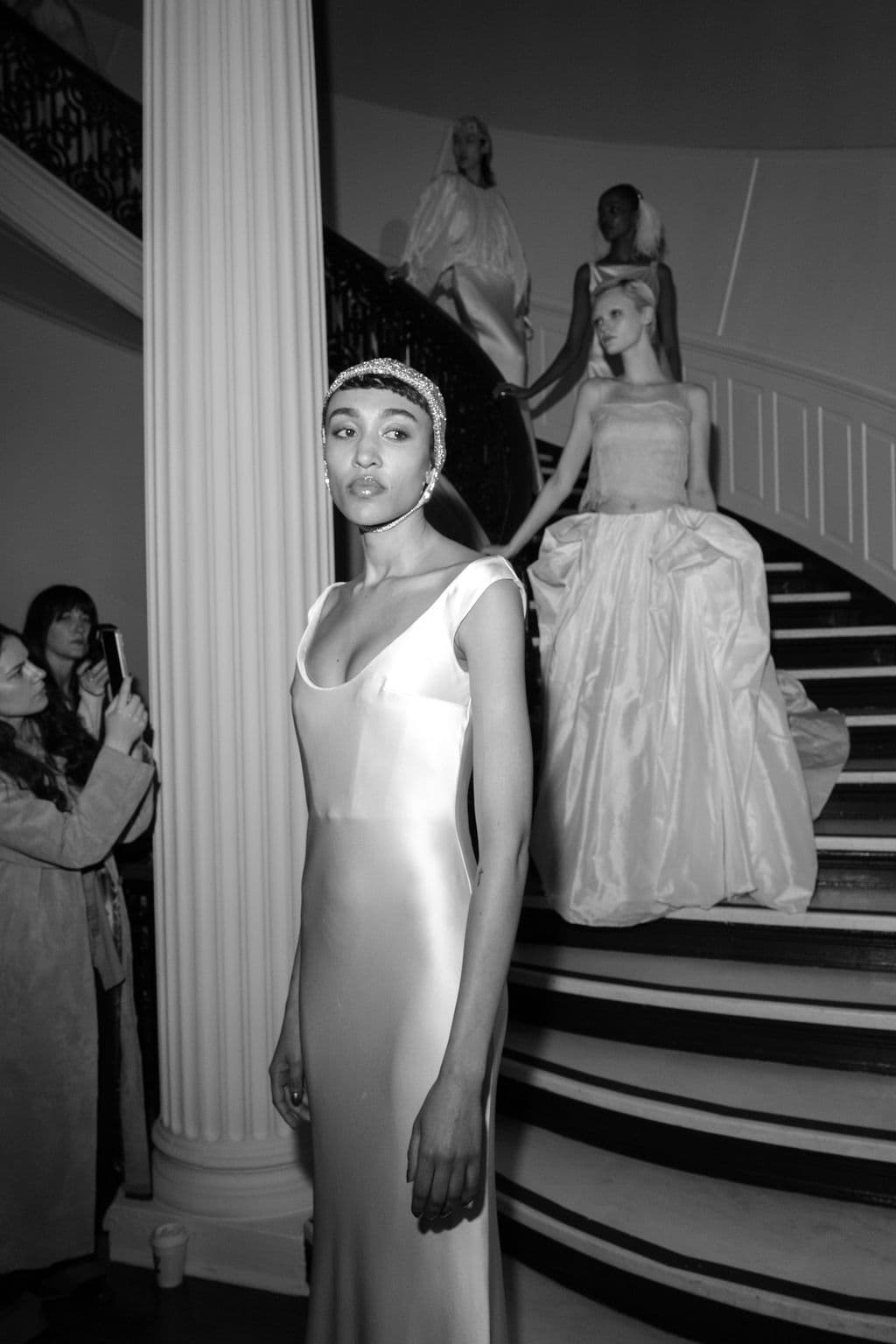
The beauty of a dropped waist is in where it places the eye. Instead of cutting the body at its narrowest point, it shifts the emphasis lower, so the torso appears longer and the skirt begins with a more fluid, deliberate sweep. In bridal coverage, the style is often described as hugging the body through the hips before opening into volume, which is exactly why it feels more sculpted than a standard A-line and softer than a fully fitted column.
That shape matters because it can change the whole visual proportion of a dress. On a bride who wants length through the upper body, it creates that stretched, vertical effect immediately. On someone who wants to keep the waist from dominating the look, it offers a graceful alternative to the usual nipped-in bridal script. The result is a silhouette with presence, but not pressure.
Why 1920s glamour feels relevant again
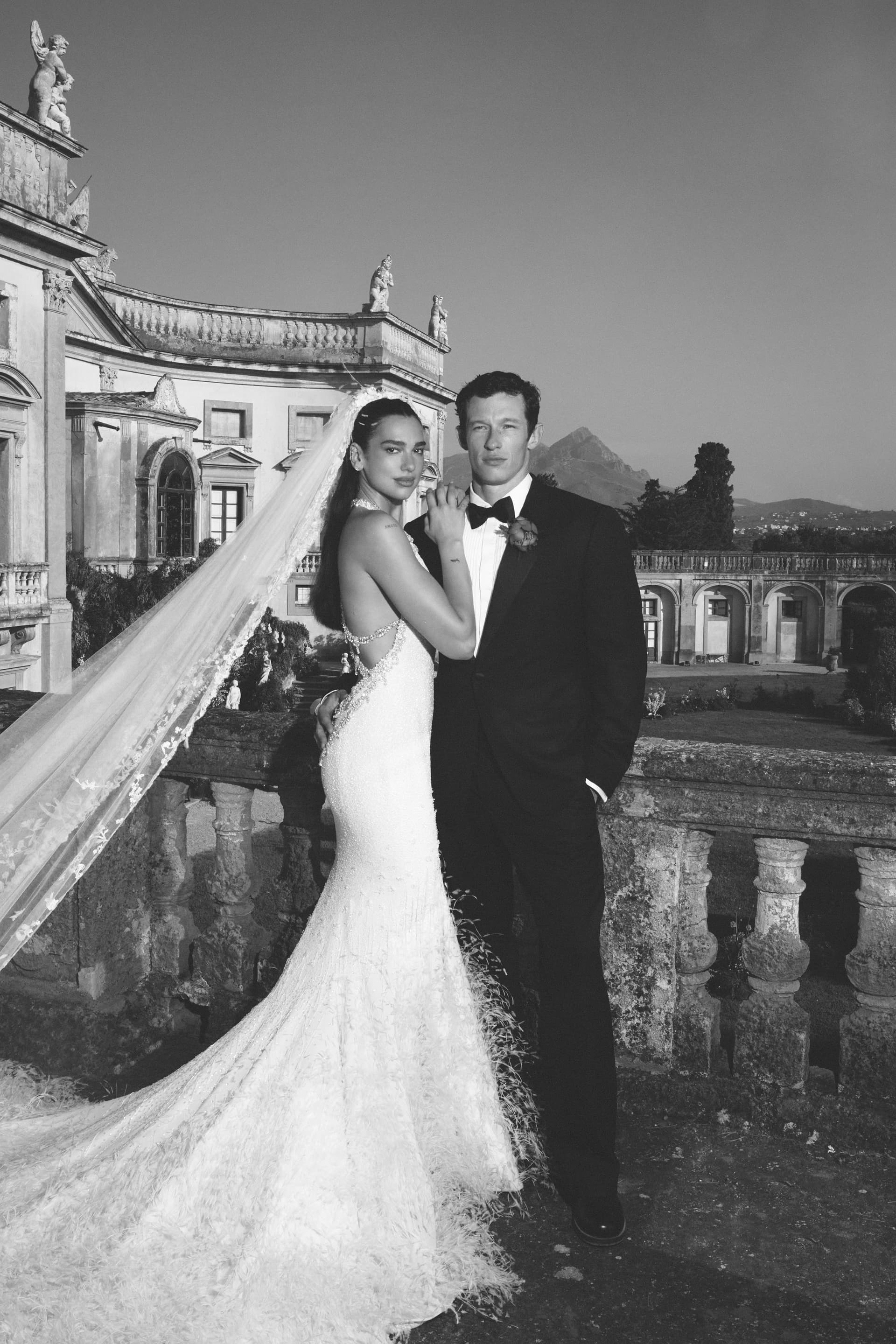
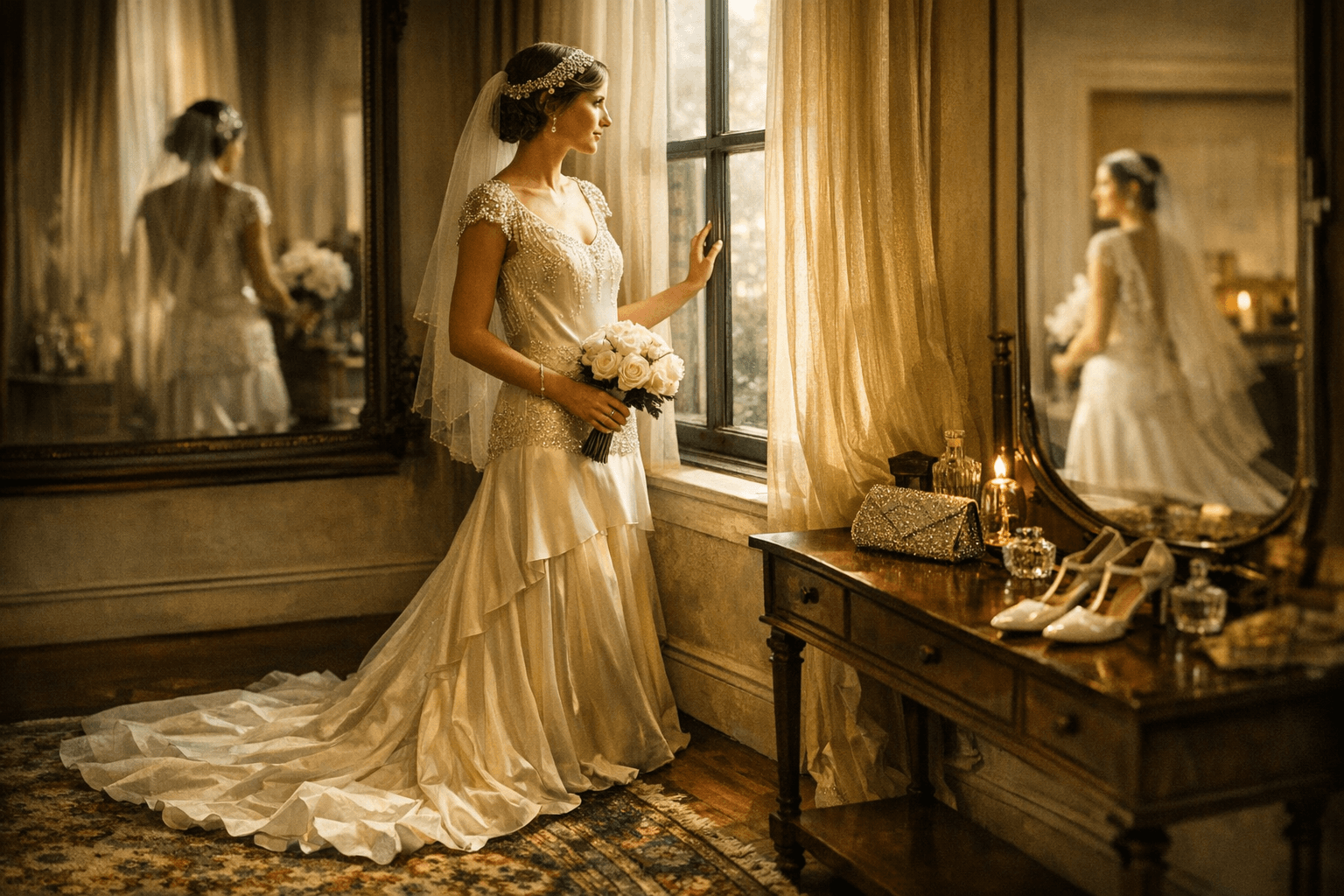
The dropped waist borrows directly from the 1920s, when bridal and evening dress moved away from restrictive rules and into a looser, more liberated shape language. Bridal Buyer connects the silhouette to that cultural shift, and that is part of its modern appeal: it is not just decorative vintage, it is vintage with intent. The original versions tended to be more tubular before flowing into fuller skirts, which gives the line its distinctive mix of restraint and release.
That historical note is one reason the style feels especially charged now. It has the spirit of the flapper era, but in 2026 it reads less literal and more edited. Brides are not chasing costume, they are borrowing the clean geometry of the period and stripping away the heaviness, so the dress feels like a fashion choice rather than a museum citation.
A trend that built slowly, not suddenly
The dropped waist has been building for at least two years. British Vogue predicted the shift in 2024, and by that point other bridal voices were already treating the silhouette as more than a runway curiosity. Rock My Wedding called it a 2024 bridal trend, noting the lower waistline, the curve-hugging fit, and the flare that follows. Sassi Holford placed it squarely in the move from fashion week into bridal, while Marie Claire UK carried it through 2025 and pointed out that The Own Studio had already developed its first dropped-waist design in 2022.
That longer timeline matters. It tells you this is not a one-season fetish for a pretty shape. It is part of a broader style cycle, one that has also revived low-rise proportions in ready-to-wear and pushed bridal toward cleaner, sleeker, more minimalist interpretations of vintage romance. By 2026, the dropped waist no longer feels like a novelty. It feels settled.
Who the dropped waist works for
This is the silhouette for the bride who wants the body to read longer, not tighter. If you have a shorter torso and want to visually extend it, the lower waistline does that beautifully. If you like the idea of a dress that traces the hips before releasing into skirt, it gives you structure without the hard stop of a traditional waist seam.

It also suits brides who love the intelligence of vintage but do not want to look overly themed. The shape has enough history to feel meaningful, especially with its 1920s roots, but enough simplicity to move across wedding settings. That is why editors have started describing it as flattering, sculpted, and elongating, and why it keeps resurfacing for brides who want their dress to do more than just look pretty in photographs.
How to keep it modern rather than costume-like
The quickest way to modernize a dropped waist is to let the silhouette do the talking and quiet everything else around it. The more ornate the styling, the easier it becomes to tip into rehearsal-room Gatsby. The more edited the accessories, the more the dress feels like a current fashion decision.
- Choose a clean veil, ideally with a sharp edge or simple cut, so the shape of the dress stays in focus.
- Keep the neckline streamlined. A square, strapless, or softly scooped neckline lets the lower waistline carry the drama without competing detail.
- Favor fabric that has movement and polish, such as satin, silk, or a crisp structured crepe, because the silhouette depends on line as much as decoration.
- Let the venue do some of the work. Art Deco hotels, city halls, galleries, and candlelit reception rooms all complement the silhouette’s vintage tension without making it feel theatrical.
- If you want softness, look for draping or a fuller skirt. Luxury London’s 2026 coverage suggests the shape is evolving in that direction, which makes it more adaptable for brides who want the romance without the severity.
Why brides are choosing it now
Brides are choosing the dropped waist because it resolves a modern styling problem: how to look directional without looking overworked. It gives you the glamour of the 1920s, the lengthening effect of a lower waistline, and enough architectural clarity to feel current against the broader return of low-rise shapes. It also carries a hint of rebellion, which is still one of bridal fashion’s most persuasive emotions.
Sealy described the silhouette as assured, elegant, elongating and contemporary, and that is exactly the point. The best dropped-waist dress does not behave like a theme piece. It reads as a line, a posture, a decision. That is why it keeps finding new brides, and why the silhouette now feels less like a revival than a permanent shift in the bridal vocabulary.
This article was produced by Prism’s automated news system from verified source data, official records, and press releases, then run through automated quality and moderation checks before publishing. The system is built and supervised by the people who set the standards it runs under. Read our full AI policy.
Did this article answer your question?