Dua Lipa’s Chanel gown shows the silhouette formula for iconic bridal style
Dua Lipa’s Chanel wedding dress turns couture labor into a bridal blueprint, with a fitted lace body, open back, long train and veil built for impact.
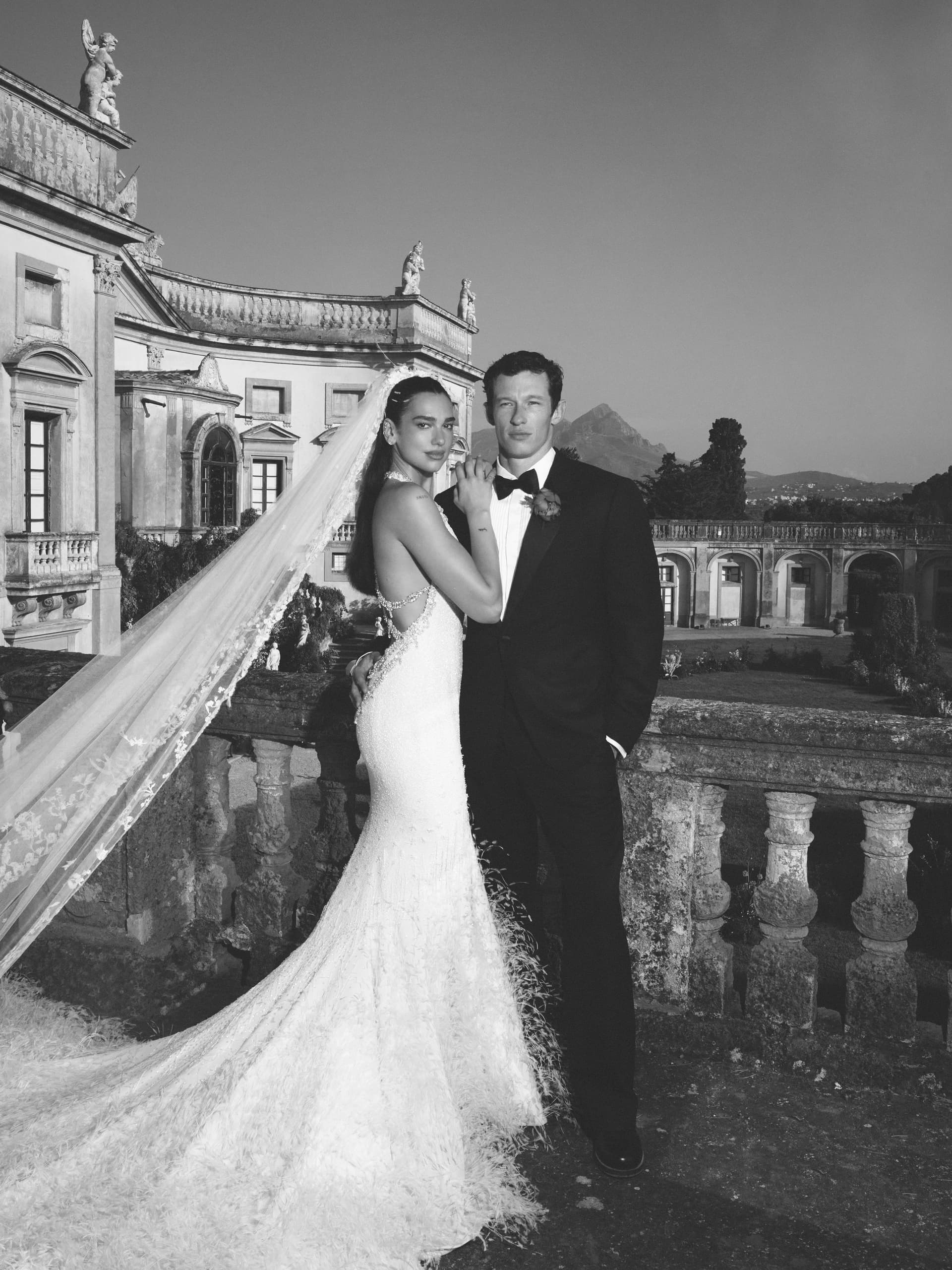
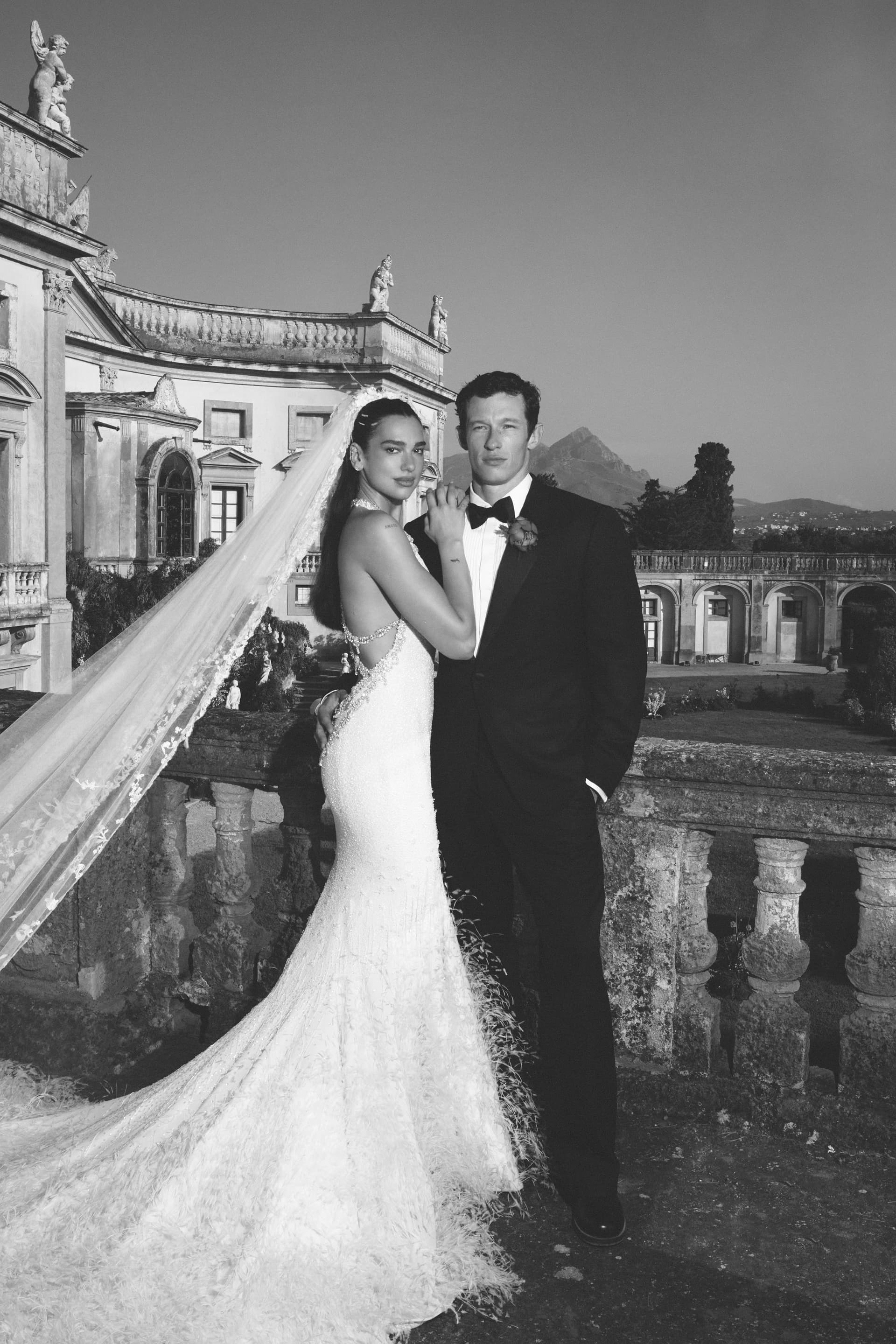
Dua Lipa’s Chanel wedding gown matters because it turns bridal silhouette into strategy. Matthieu Blazy made it his first Chanel haute couture bridal creation for a friend of the house, and the result was less a single dress than a set of signals: a fitted lace body, an open back, feathers at the hem, a two-meter train and a six-meter veil engineered to be seen.
The scale of the work gives the dress its authority. Chanel’s ateliers logged 1,155 hours of needlework through Lesage, then layered on 480,000 hand-applied beads by Atelier Montex and 25,000 feathers by Lemarié. That level of labor does more than flatter the eye, it tells the bridal market that memory is being built stitch by stitch, and that the most powerful wedding dress today is one that reads instantly from across a room and across a screen.
The timing sharpened the effect. Dua Lipa and Callum Turner were officially married in a private civil ceremony in London on May 31, 2026, then hosted a larger celebration in Sicily on June 6, 2026. The Chanel look arrived after that second celebration, which made it the final fashion reveal in a wedding sequence already built around anticipation. In bridal terms, that is a decisive move: the dress becomes the last image, the one that fixes the whole story in place.
The shape formula behind the Chanel moment
What makes the gown so instructive is that every dramatic gesture is anchored by a clear shape. The fitted lace body keeps the line close to the body, which lets the embellishment feel precise rather than bulky. When a dress is this fitted, every bead and feather has to earn its place, and that discipline is what makes the result feel expensive rather than merely decorative.
The open back does another kind of work. In wedding dressing, the back view often creates the most lasting photograph because it delays the reveal and gives the eye a second place to land. Here, the open back interrupts the lace body with a flash of skin, which adds tension without softening the couture severity of the front.
Then comes the hem, where the feathers create the illusion that the dress is dissolving into air. Lemarié’s featherwork gives the skirt movement even when the bride stands still, which is exactly why feathering keeps returning in high-impact bridal looks. It breaks the solidity of satin and lace, and it makes the end of the dress feel alive.
The train is the element that turns the look from beautiful to ceremonial. At two meters, it is long enough to signal occasion without overwhelming the body, and it gives the silhouette a clean tail that photographs cleanly from behind. That kind of train is one reason couture bridal keeps commanding attention: it stretches the figure, slows the exit and gives the dress a second life as it moves through a room.
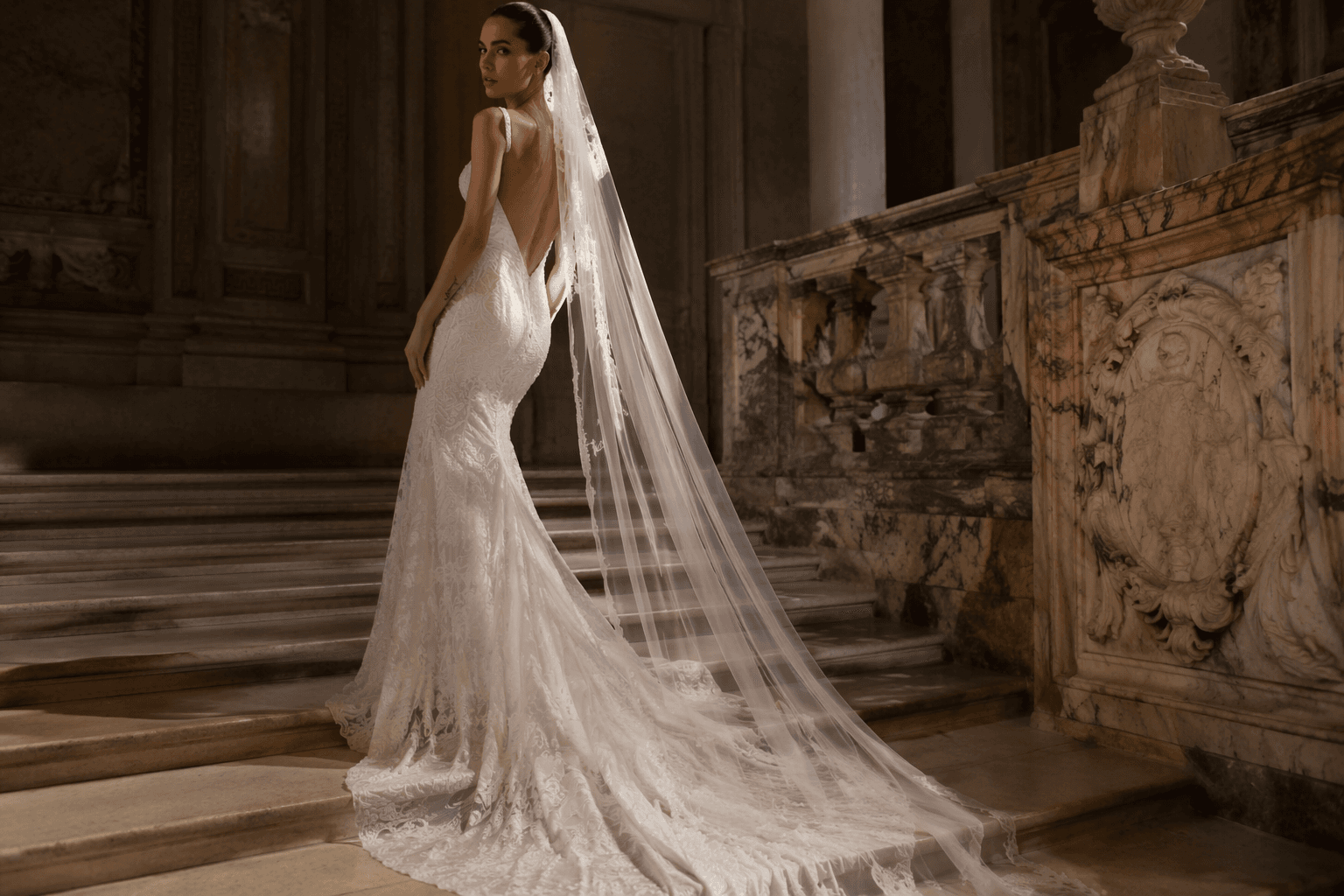
The six-meter veil completes the silhouette rather than merely accessorizing it. Embroidered with beads, feathers and organza appliqués, it extends the gown’s surface language into a second frame, which is why the look feels so finished. A veil of that length is not a soft afterthought, it is a visual architecture that expands the bride beyond the dress itself.
Why these five shapes keep coming back
These are the shapes bridal designers, stylists and trend forecasters keep circling because they solve the same problem in different ways: they create instant recognition. A fitted body says precision. An open back says surprise. A feathered hem says movement. A train says ceremony. A long veil says conclusion. Together, they make a wedding look feel like an event, not just an outfit.
That logic is exactly why celebrity bridal style now functions as a market signal. When a dress combines couture labor with a sharply legible silhouette, it gives brides and brands a blueprint for what luxury looks like in 2026. The numbers matter because they confirm the handwork, but the shape matters because it tells everyone what kind of bride the fashion system is rewarding right now.
Chanel already has history in this territory. Sofia Richie wore a custom Chanel bridal gown from the house’s fall/winter 2023 collection, and that look helped define Chanel as a place where wedding dressing can still feel modern without losing romance. Dua Lipa’s gown pushes the idea further by pairing that recognizability with Matthieu Blazy’s first haute couture bridal statement for the house, which makes the dress feel like both a debut and a signal of direction.
That is why the look lands so hard. It is not just about a famous bride in a famous label. It is about the way Chanel uses proportion, surface and movement to turn one wedding dress into a template for what iconic bridal style looks like when couture is allowed to speak in full sentences.
This article was produced by Prism’s automated news system from verified source data, official records, and press releases, then run through automated quality and moderation checks before publishing. The system is built and supervised by the people who set the standards it runs under. Read our full AI policy.
Did this article answer your question?