Dutch Bride Chooses Thrifted Gown for Eco-Conscious Station Wedding
Lara Peters found her thrifted wedding gown two days before the ceremony. Making a new one generates emissions equal to driving 155 miles.
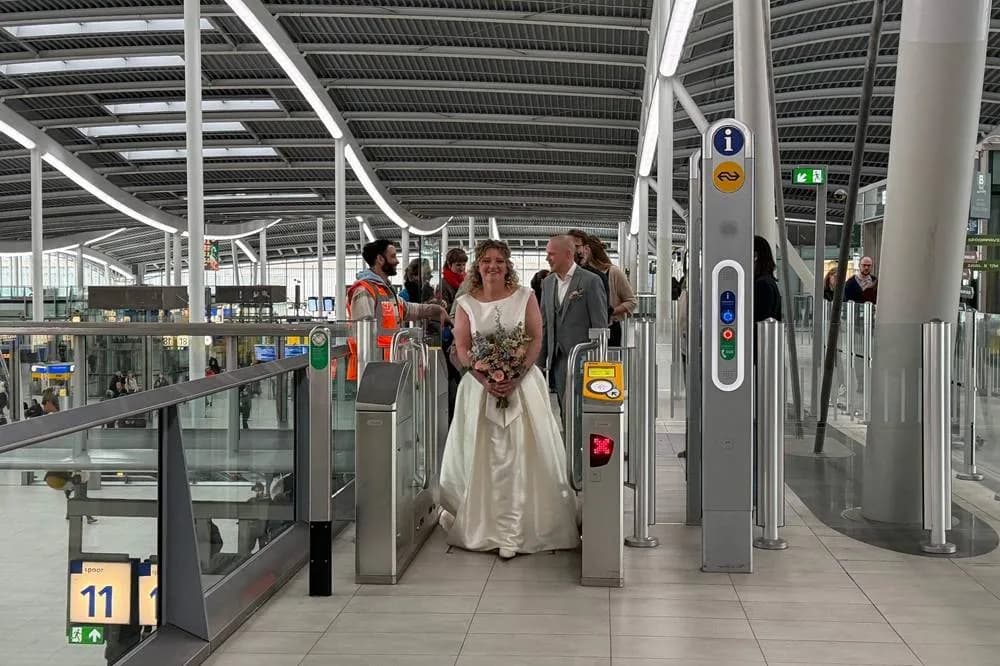
Lara Peters had two days to find a wedding dress. She found it in 30 minutes.
The gown, sleek and second-hand, came from a pop-up shop run by Free Fashion, a Dutch clothing-reuse foundation, set up inside Utrecht Central Station. Peters, 42, a sustainable development communications specialist, wore it to marry Mathijs Dordregter, 44, on April 2 in the middle of the Netherlands' busiest rail hub, surrounded by commuters passing through their Thursday. That wasn't an accident.
"The message that during your wedding you can also choose sustainable options is very important to me," Peters said. The public setting, the pre-owned dress, the vegetarian reception food: every element of the day was chosen to put the environmental cost of weddings in front of an audience that hadn't opted in to watch.
The dress itself carried that argument quietly. "Within like 30 minutes I knew this was the one," Peters said after the ceremony. Two days before exchanging vows, she had walked into the Free Fashion pop-up at the station and found exactly what she needed. Dordregter also wore pre-owned clothing.
The emissions case for thrifted bridal wear is blunter than most brides realize. Nina Reimert, who helped Free Fashion organize the event, was direct about the numbers: "We know that in terms of emissions... producing a wedding dress is similar to something like 250 kilometres (155 miles) by car." The material problem compounds it. "They're made of all different materials so they are really hard to recycle," Reimert added, "and almost everything is polyester."
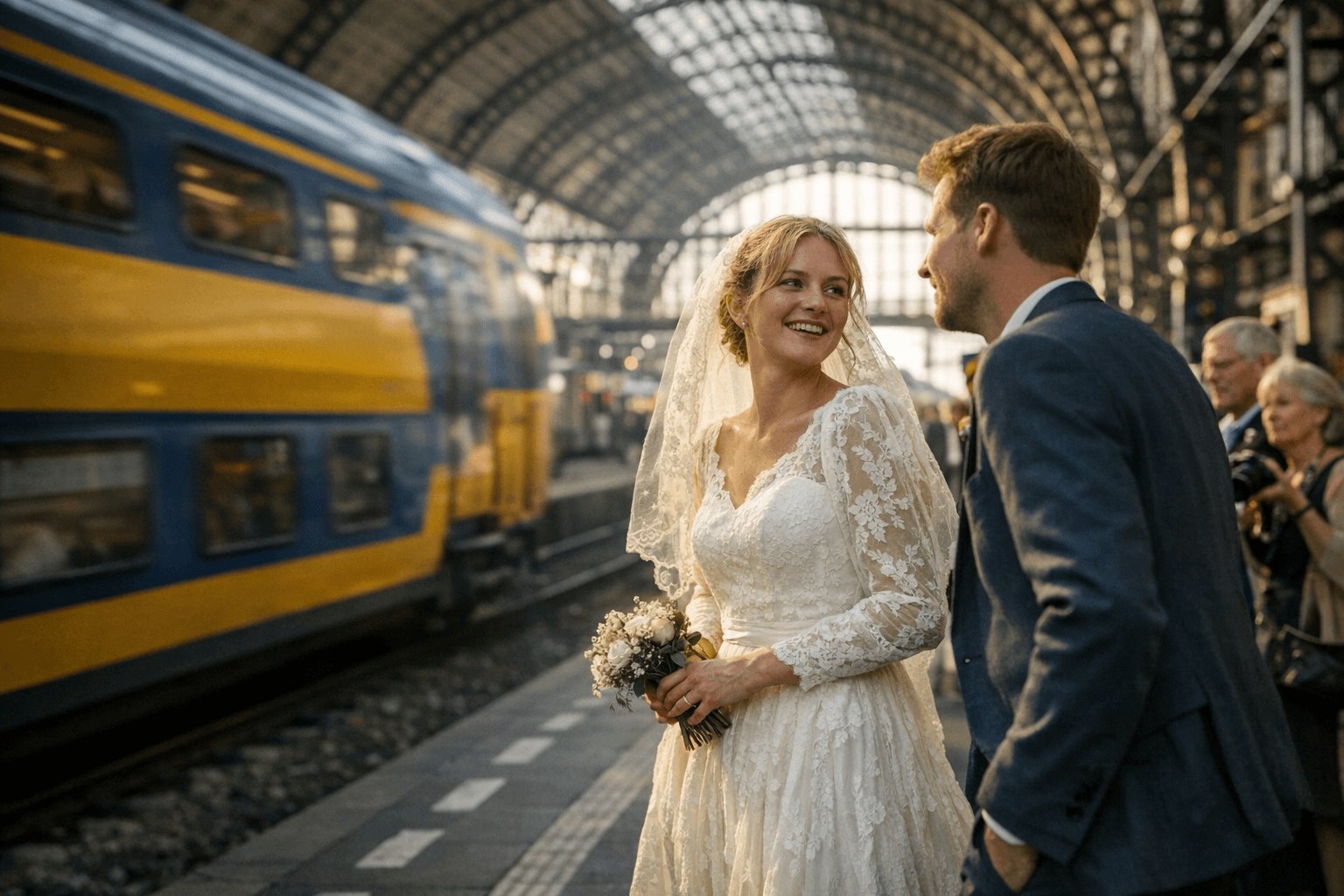
The pop-up that surfaced Peters's gown went further than a typical resale shop: Free Fashion offered dozens of wedding dresses at the station, free to anyone willing to commit to the concept. It's a model that trades the traditional bridal boutique appointment for something faster, louder, and considerably less carbon-intensive.
Dordregter framed the whole day as inevitability rather than idealism. "It's not a matter of if but when we are going to change," he said.
That confidence sits well with where bridal fashion is already moving. Rental platforms, resale marketplaces, and community clothing swaps have steadily pulled the once-immaculate tradition of the new wedding gown into the circular economy. What Peters and Dordregter did at Utrecht Central Station was compress that cultural shift into a single, very public afternoon. The commuters walking past became involuntary witnesses to a couple who had done the math and decided a dress doesn't need to be new to mean something.
This article was produced by Prism’s automated news system from verified source data, official records, and press releases, then run through automated quality and moderation checks before publishing. The system is built and supervised by the people who set the standards it runs under. Read our full AI policy.
Did this article answer your question?