How to Buy or Sell a Pre-Owned Wedding Gown the Right Way
A pre-owned Vera Wang gown that retailed for $8,000 can still fetch $5,000 at resale. Here's how to price, list, and shop the bridal secondhand market without leaving money on the table.

The bridal resale market has its own economy, and it rewards the informed. Whether a gown is headed back into the world or a new one is being hunted at a fraction of its original price, the rules are the same: know the numbers, understand the platforms, and treat the dress like the investment it is.
The Depreciation Reality Every Seller Should Understand
Jacqueline Courtney, founder of Nearly Newlywed, put it plainly: "A bridal gown is like a new car. The biggest depreciation comes when you drive it off the lot — or wear it for the first time for a few hours." That single wearing can cut resale value nearly in half. After that, the decline becomes more gradual with each subsequent transaction, which means the window to maximize a return is narrow.
According to data from Nearly Newlywed, a used wedding dress in great condition that is under two years old can typically sell for 50 percent of its original retail price. Gowns from popular designers like Oscar de la Renta and Vera Wang can make closer to 60 percent of their retail value. To put that in real terms: a Vera Wang gown that retails for $8,000 might fetch around $5,000 at resale. That is not a loss to mourn; it is equity to plan around.
Age matters significantly beyond that two-year mark. Dresses purchased within the last two to three years typically fetch higher prices, while gowns more than five years old might need to be priced lower unless they are timeless or vintage styles. If a gown has been sitting in a preservation box since 2018, tempering expectations about recovery is part of a realistic strategy.
How to Price Your Gown
Pricing a pre-owned gown requires research, not guesswork. Nearly Newlywed offers a Wedding Dress Value Calculator as a starting point, but comparable listings are equally instructive. Searching online for a specific gown, for example "Vera Wang Eliza wedding dress," brings up multiple listings with a range of prices; exploring those listings to compare condition and alterations helps identify where a dress sits competitively.
On platforms like Nearly Newlywed, sellers set their own price. For those who want to move the dress quickly, pricing it between 40 and 50 percent off what was originally paid is the recommended range. That sweet spot balances speed with return. Holding out for more is possible, but the longer a listing sits, the more the dress ages into a lower price bracket.
Where to Sell: The Platform Landscape
As of May 2024, Nearly Newlywed merged with PreOwnedWeddingDresses.com, the longest-standing bridal marketplace, which has been selling dresses since 2004. Together, they operate under the POWD umbrella, offering sellers what the platform calls a "hands-on" concierge experience.
The economics of listing are straightforward:
- There is a $25 listing fee per wedding dress and $5 per accessory or bridal party dress.
- Sellers earn a 70/30 commission split, keeping 70 percent of the sale price.
- The platform handles buyer questions, payments, shipping, and the return process.
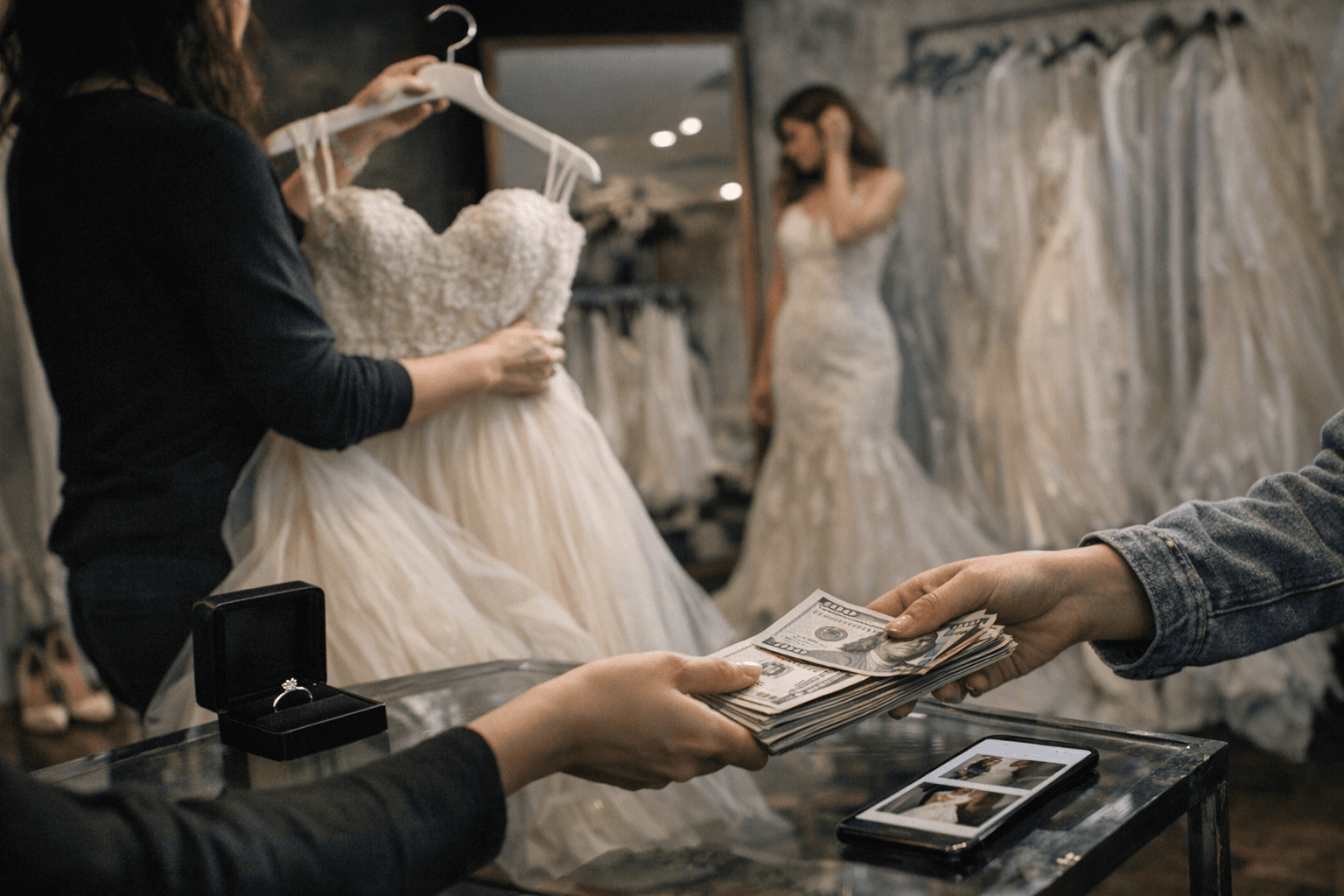
For those who want maximum reach and minimal involvement in the back-and-forth of fielding inquiries, this managed model removes most of the friction. Stillwhite positions itself as the largest global marketplace for preowned wedding dresses, with over 103,803 gowns listed, and allows for direct buyer-seller interaction including price negotiation and in-person meetings. eBay remains an option with a broader general audience, though it charges 10 percent of the final sale price and requires sellers to manage their own buyer communications.
Creating a Listing That Converts
The photograph is the first and most important sell. The primary picture should be a full-length shot of the front, showing at least from the shoulders down to the hemline. From there, include an image of the full front of the dress, one from the back, and a close-up on any detailing. Natural light is always best, and a photo of someone wearing the gown is better than a flat or hanger shot.
Beyond photography, the listing description requires honesty and specificity. Nearly Newlywed advises sellers to confirm the right size and color is listed, and critically, to note every alteration made to the dress and include photos of any stains or damage. Omitting this information is not a shortcut; it creates disputes, returns, and damaged seller credibility. A complete, transparent listing moves faster than a vague one.
Cleaning the gown before listing is not optional if the goal is to command a strong price. A professionally cleaned and preserved dress not only photographs better but signals to buyers that the gown has been cared for, which translates directly to buyer confidence and fewer price negotiations.
The Buyer's Checklist
Buyers on Nearly Newlywed can save up to 90 percent of the salon price on a designer gown, with dress prices on the platform ranging from $200 to $5,000. That spread covers everything from a lightly worn mid-market gown to a near-mint couture piece, which means buyers need to calibrate their expectations by designer, condition, and year.
Before committing to any listing, ask the right questions:
- Ask the seller about any stains, tears, or other signs of wear. Request detailed photos, especially of high-stress areas like seams, underarms, and the hem.
- Check if the dress has been professionally cleaned and preserved.
- If purchasing from a resale platform, understand their return and refund policy. Private sellers may not offer returns, so ensure confidence before committing.
- If the seller is local, arrange to try on the dress in person. If that is not possible, purchase through a platform with buyer protection built in.
Nearly Newlywed's POWD Purchase Protection and its five-day risk-free return window exist precisely for this reason: buying a gown without trying it on is a leap of faith, and those safety nets reduce the risk considerably.
The Sustainability Case
Shopping used not only saves money but helps reduce the environmental impact of designing and creating a new wedding dress. That argument is no longer a niche consideration. As sustainable wedding planning has become a mainstream priority rather than a fringe preference, the pre-owned bridal market has grown accordingly. Buying a gown that already exists is simply the more efficient choice.
The bridal resale market rewards sellers who move fast, price honestly, and photograph well. It rewards buyers who ask hard questions and shop through platforms with real consumer protections. Neither side needs to compromise on the dress itself; the right gown at the right price exists in this market for both.
This article was produced by Prism’s automated news system from verified source data, official records, and press releases, then run through automated quality and moderation checks before publishing. The system is built and supervised by the people who set the standards it runs under. Read our full AI policy.
Did this article answer your question?