Eloping brides trade ballgowns for fashion-forward bridal alternatives
Eloping brides are trading ballgowns for slips, sets, minis, feathers, and pillbox hats, turning bridal dressing into a sharper, more personal style code.

Elopements have become the place where bridal rules loosen fastest, and the old all-white ballgown is no longer the default. Brides are reaching for slip dresses, matching sets, romantic minis, feathers, pillbox hats, and peplums instead, which makes the modern bridal wardrobe feel less like a uniform and more like a point of view.
Why elopement dressing feels bigger than one dress
The Knot defines a nontraditional wedding dress as anything that breaks bridal styling norms, including choices beyond white or classic silhouettes. It also places chic pantsuits and structured blazers in the same lane, which tells you how far the category has moved from the old single-dress formula. WWD’s 2026 bridal coverage leans into the same shift with “striking minimalism” and other nontraditional options, while The Knot’s designer watchlist for 2026 and 2027 runs through Hayley Paige, Monique Lhuillier, Justin Alexander, Katherine Tash, Elie Saab, Ines Di Santo, and Sareh Nouri.
That runway pressure matters because New York Bridal Fashion Week still functions as the bridal industry’s trend engine. The Knot describes it as a biannual event where designers unveil upcoming wedding dress styles for editors, buyers, bridal stylists, and content creators, which is exactly how an idea goes from catwalk image to salon rack to saved Instagram post. The social feed is no side note either: in The Knot’s 2024 Attire & Fashion Study, 58% of brides said Instagram was the most helpful social platform during their attire search.
Which alternative fits which elopement
Slip dress
The slip dress is the cleanest answer for a courthouse ceremony, a rooftop vow exchange, or a dinner reservation after the paperwork is done. It works because it reads simple from a distance but turns luminous in motion, especially in satin or silk that catches light instead of swallowing it. If your elopement is about sleek photos and minimal fuss, this is the silhouette that lets the setting do the talking.
Matching set
A matching set suits the bride who wants to look pulled together without wearing a traditional gown at all. It is a smart choice for a travel-heavy elopement or a two-part day, because the pieces can feel tailored and intentional while still giving you more freedom than a full dress. In The Knot’s nontraditional framework, this is the kind of look that says bridal without repeating the bridal script.
Romantic mini
The mini is for the bride who wants the legs, the shoes, and the exit to be part of the moment. It is especially good for a city hall ceremony, a quick destination vow exchange, or any elopement that ends at a dinner table instead of a ballroom. Smithsonian coverage of Priscilla of Boston’s archives shows that bridal minis are not a new provocation, either, tracing mod-inspired short silhouettes, daisies, and oversized hats through the 1960s and early 1970s.
Feathered look
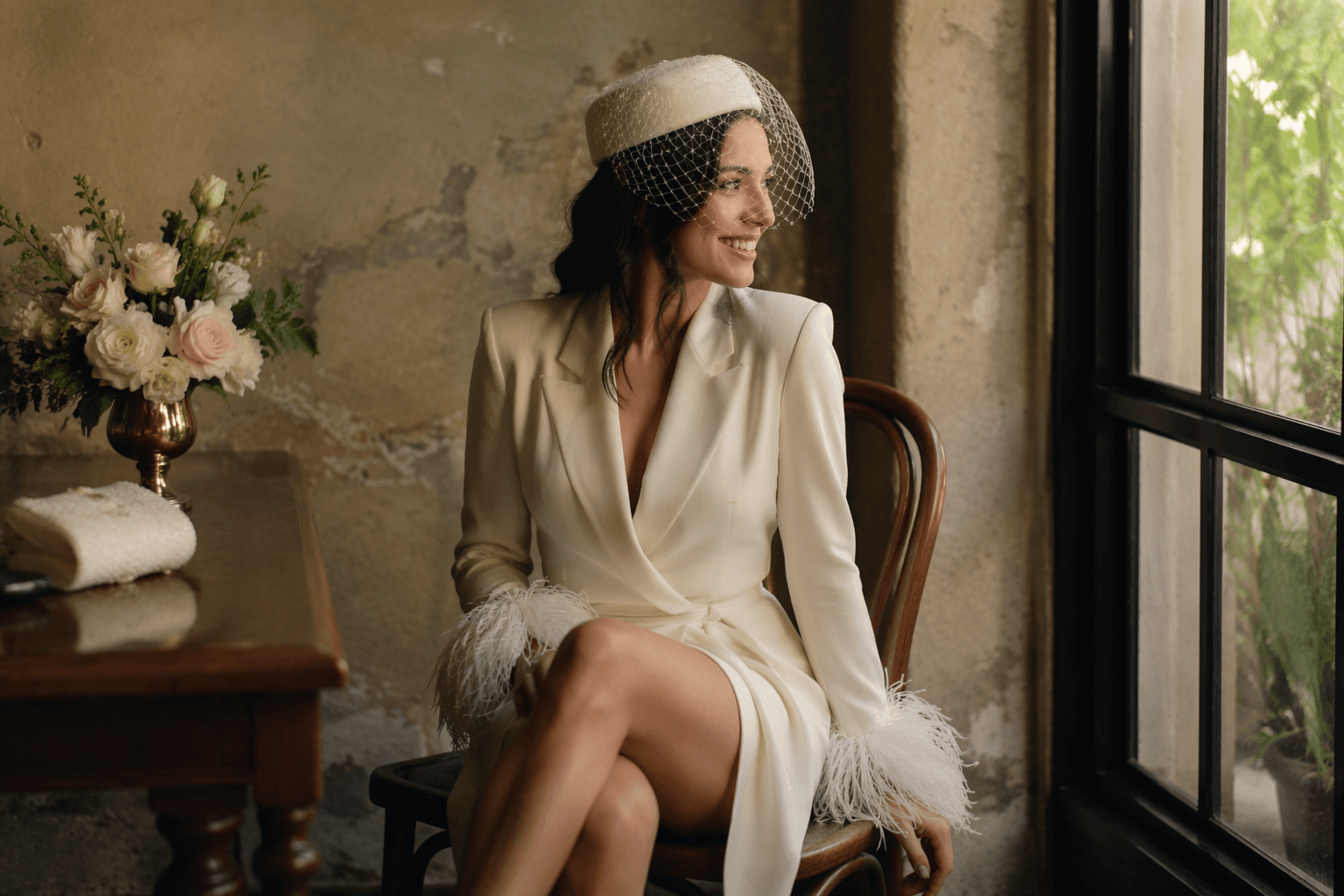
Feathers are for brides who want movement without committing to a full skirt. They add texture the way a strong accessory does, giving a short ceremony or small guest list a little theater when the dress itself stays restrained. WWD’s current bridal coverage makes clear that texture is part of the new language, and feathers are one of the quickest ways to turn that idea into a real-world outfit.
Pillbox hat
The pillbox hat belongs with a polished civil ceremony, a winter elopement, or any bride wearing a clean column or minimalist dress that needs one sharp finishing move. Harper’s Bazaar says the pillbox is one of the defining hat trends for 2026, and in bridal styling that makes perfect sense because it gives structure without overwhelming the rest of the look. It also brings a compact, vintage edge that photographs beautifully from the side and front.
Peplum
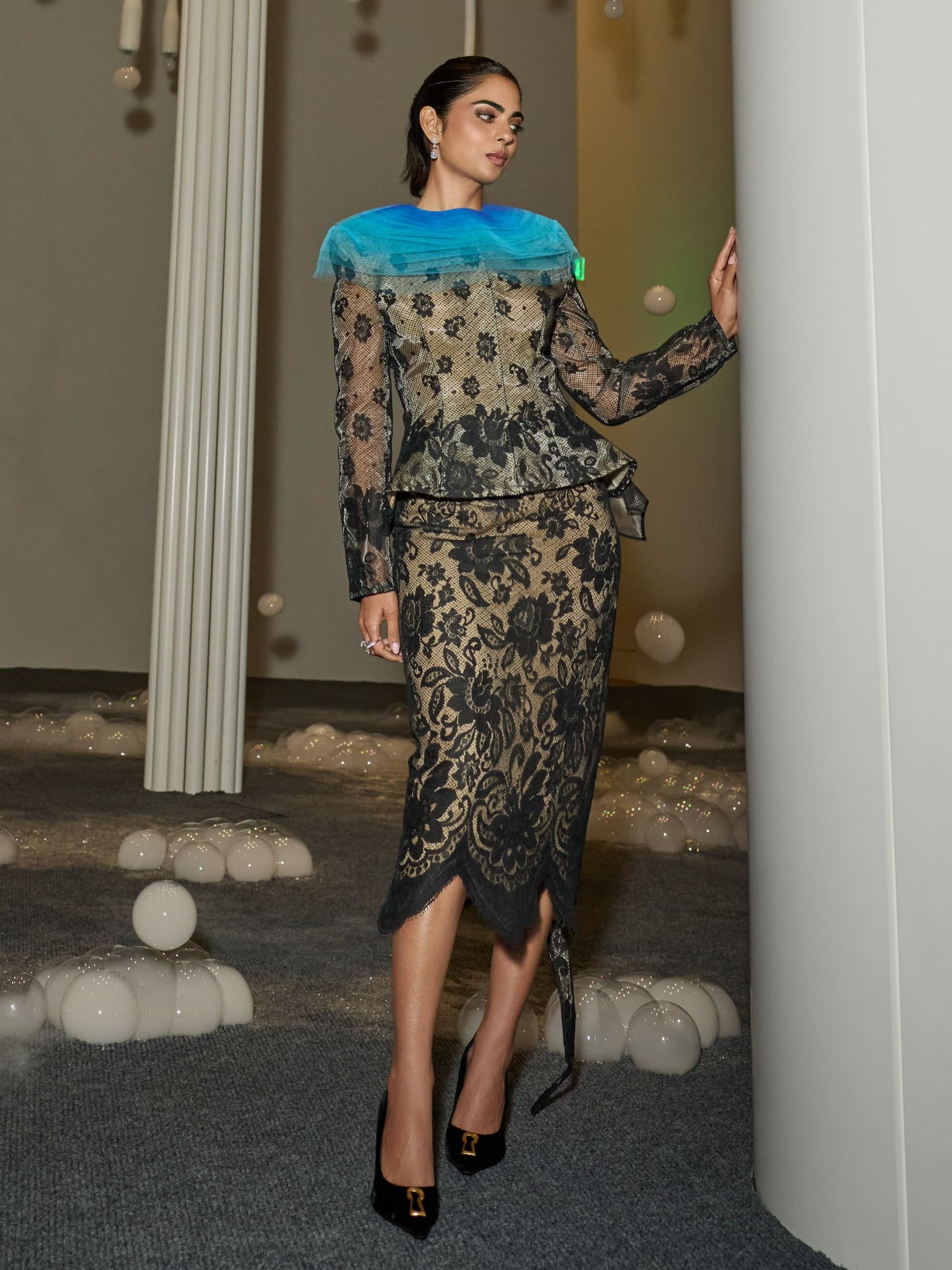
Peplum is for the bride who wants shape, not volume. That small flare at the waist gives a fitted look a bit of architecture, which can make a simple elopement outfit feel considered instead of improvised. It sits comfortably beside the broader nontraditional lane The Knot is tracking, where structured blazers and pantsuits have already made room for tailoring to feel bridal.
Why the trend has staying power
Bridal fashion keeps reinventing itself because brides have always used weddings to try on the look of the moment. The Met’s Costume Institute collection spans seven centuries of fashionable dress and accessories, and that long view makes the current elopement shift look less like a fad and more like a fresh chapter in a very old habit. The Smithsonian archive material on Priscilla of Boston reinforces the point, with mod minis, daisies, and oversized hats already showing up decades ago.
The market is also large enough to move quickly. The Knot’s 2025 Real Weddings Study surveyed nearly 17,000 U.S. couples, and its data read-out covers weddings from January through December 2025 while looking ahead to 2026. That scale helps explain why a style caught on Instagram can become a salon request almost overnight, especially when 58% of brides already name Instagram as their most helpful search tool.
So the new bridal equation is pretty clear: if the ceremony is smaller, the styling can be sharper. Eloping brides are not dressing down, they are editing up, and that is why slip dresses, matching sets, minis, feathers, pillbox hats, peplums, and even blazer-led looks now feel like the real center of bridal fashion.
This article was produced by Prism’s automated news system from verified source data, official records, and press releases, then run through automated quality and moderation checks before publishing. The system is built and supervised by the people who set the standards it runs under. Read our full AI policy.
Did this article answer your question?