Krithi Shetty’s Kanchipuram lehenga spotlights heritage bridal occasionwear
A polka-dot mini and a Kanchipuram lehenga capture the split in modern wedding dressing: playful cocktail energy versus silk-rich bridal weight.
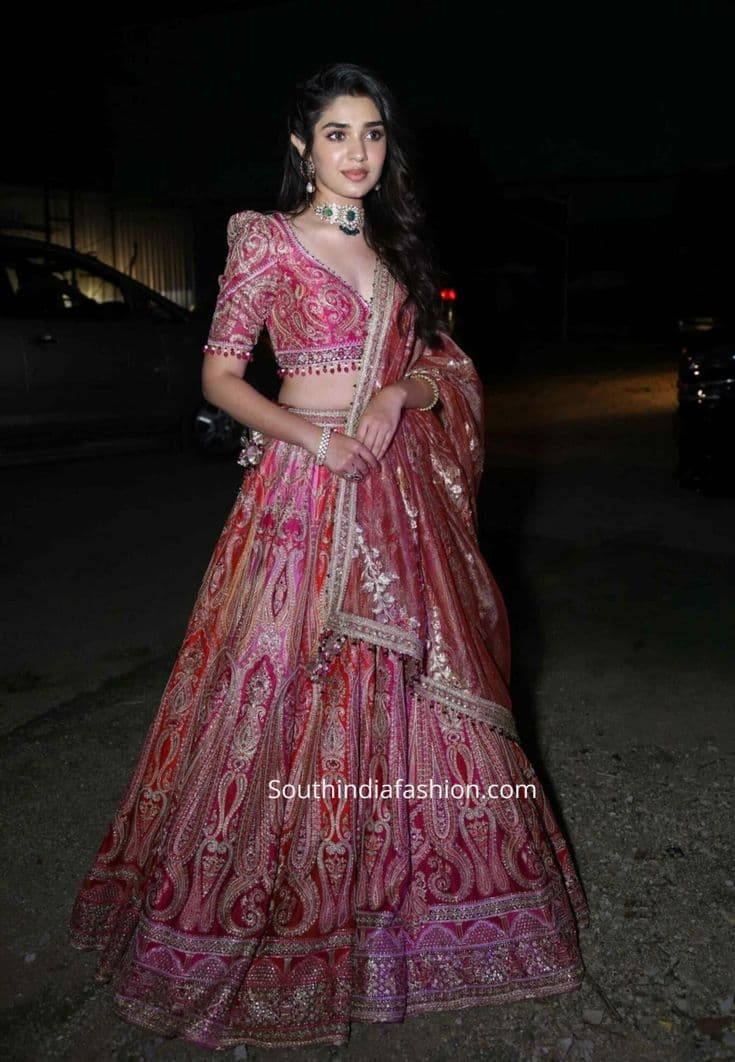
Krithi Shetty’s Kanchipuram look brings handloom silk and gold zari into a wedding wardrobe split in two. One side is fast, playful and print-driven, the kind of wardrobe that moves easily through cocktail hours and film-promotional glamour; the other is rooted in handloom depth and the kind of craft that reads as ceremony the moment it enters the room.
The new wedding wardrobe
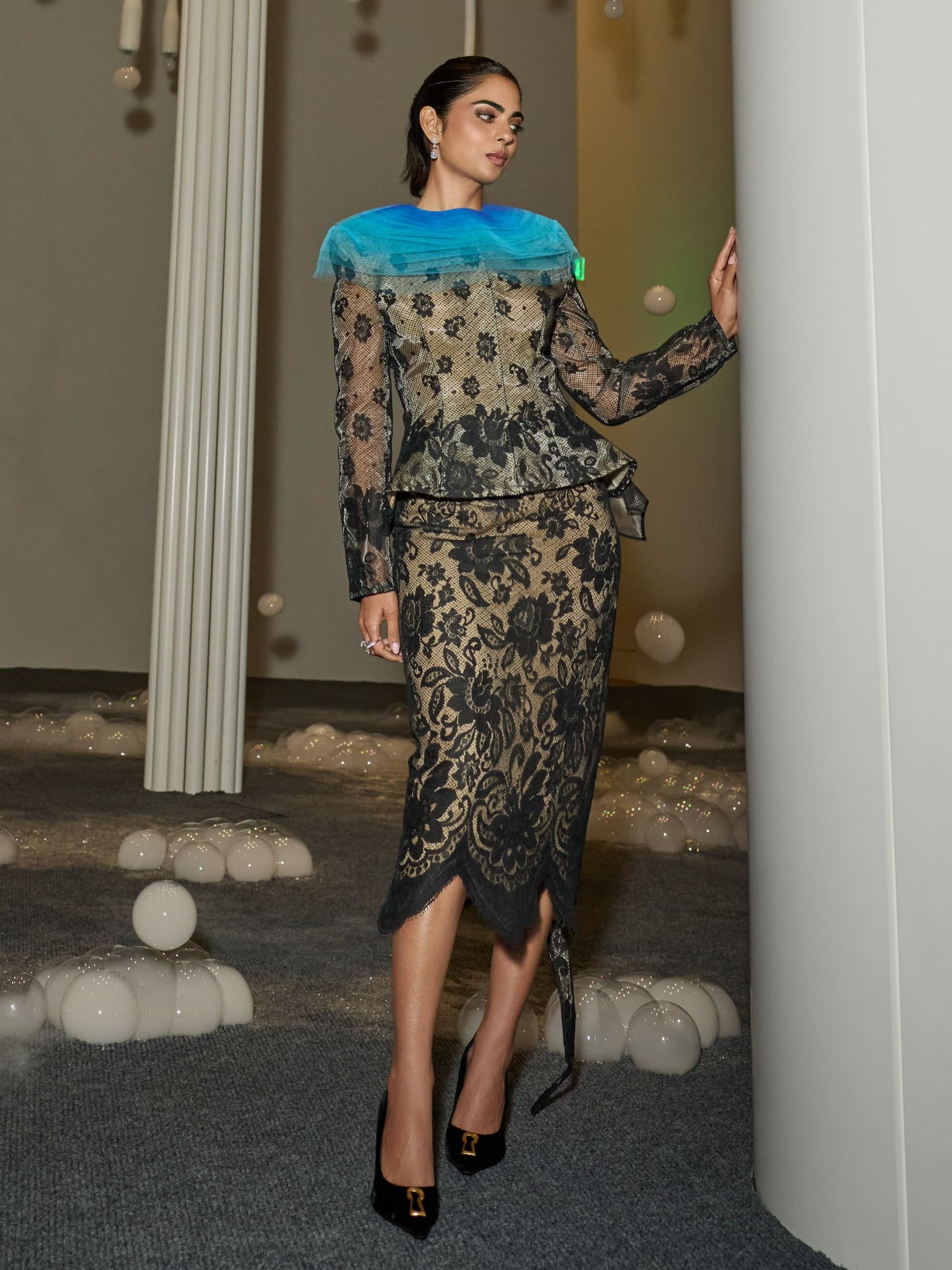
This week’s celebrity style ranged from Vogue’s “sculptural haute couture” to embellished saris, co-ords and heritage occasion wear. The polished, short, print-forward dress has its place, but so does a textile like Kanchipuram, which brings visual weight, texture and lineage that a mini can never claim.
The contrast is not about one look replacing the other. It is about knowing which kind of impact you want: the quick, flirtatious hit of a polka-dot mini, or the slower, richer authority of a handwoven silk set built for the rituals around a wedding rather than only the photograph.
Why Kanchipuram still reads bridal
Kanchipuram silk saris remain a bridal and special-occasion staple across Tamil Nadu, Kerala, Karnataka and Andhra Pradesh. The Government of India recognised the textile as a geographical indication in 2005-2006.
By 2008, 5,000 families were involved in Kanchipuram sari production. The saris are traditionally handwoven in pure mulberry silk and zari, with rich gold borders and dense brocades that make the cloth gleam even before the styling begins.
The korvai technique is one of the weave’s defining signatures. It interlaces the borders with the body of the sari, creating that crisp seam of contrast that makes Kanchipuram instantly recognisable from across a room.
When a print-forward mini makes sense
The polka-dot mini belongs to the other half of the modern wedding wardrobe, the side that favors movement, wit and an easier kind of glamour. It makes sense for cocktail events, after-parties and fashion-heavy gatherings where you want the silhouette to feel light, social and camera-friendly rather than ceremonially dense.
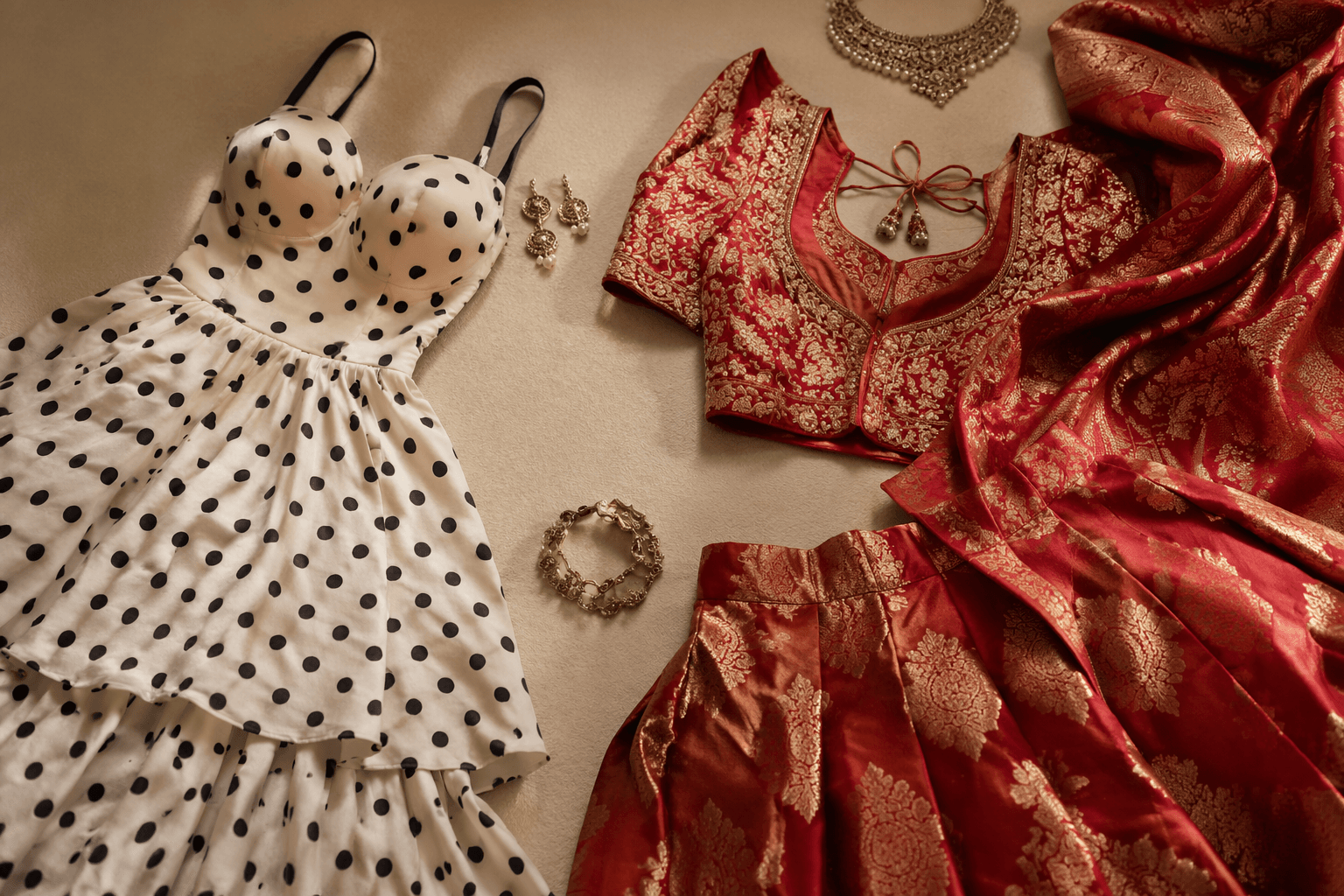
Print also works when the rest of the function is already visually busy. If the venue is full of embroidery, drapes and jewel tones, a short dress with a sharp motif can feel like a reset button, especially in a scene of international award ceremonies, film promotions and red-carpet moments where celebrity wardrobes are expected to flick between one mood and another.
What to skip: anything that tries to make a mini feel bridal by piling on excess sparkle. Once the hemline is short and the print is doing the work, too much embellishment can flatten the look into noise. Let the silhouette stay crisp, and let the print carry the charm.
When heritage occasionwear delivers more impact
A Kanchipuram lehenga or sari belongs in a different register. It works best when the function calls for presence, lineage and a textile that can hold its own beside family heirlooms, temple jewellery and ceremonial photography. The handwoven silk, zari borders and brocade density give it a gravity that reads beautifully at weddings, especially where the bride or close family wants the clothes to feel anchored in tradition.
Craft becomes the styling strategy. A Kanchipuram piece already has the architecture built in through its korvai borders and gold-rich surface, so the smartest styling usually means making space for the weave rather than competing with it. Choose jewellery with intention, not quantity, and let the fabric’s own structure stay visible.
What to skip: over-modernizing the look until the weave disappears.
Khushi Kapoor and the current celebrity mood
Khushi Kapoor’s fashion coverage stayed active through July 2026, including a subsequent Anamika Khanna lehenga feature on 7 July.
This article was produced by Prism’s automated news system from verified source data, official records, and press releases, then run through automated quality and moderation checks before publishing. The system is built and supervised by the people who set the standards it runs under. Read our full AI policy.
Did this article answer your question?