Harriet Sperling’s Emilia Wickstead gown brings modern royal bridal elegance
Harriet Sperling’s Emilia Wickstead gown proves one dress can do ceremony, portraits, and polish at once. The removable lace bodice is the quiet stroke that makes it work.
Harriet Sperling’s wedding dress did not need volume or glitter to feel regal. Emilia Wickstead gave her a square-neck column gown that could move between ceremony and portrait with a removable lace bodice and long sleeves, a sharp lesson in modular elegance for brides who want one look to carry the whole day.
She married Peter Phillips on 6 June 2026 at All Saints’ Church in Kemble, Gloucestershire, with King Charles III, Queen Camilla, Prince William, Catherine, Princess of Wales, Princess Beatrice and Princess Eugenie among the guests. The setting mattered, of course, but the dress did the heavier lifting. It looked composed enough for a royal church wedding, refined enough for formal photographs, and flexible enough to feel personal rather than stiff.
The new appeal of modular bridal dressing
The smartest part of Harriet Sperling’s Emilia Wickstead gown is that it reads as one design with more than one mood. The column silhouette keeps the line long and clean, while the removable lace bodice and sleeves add the ceremony and softness that a church wedding demands. That is exactly the sort of bridal thinking modern brides are embracing now: a dress that can begin with restraint, then gain texture, coverage and presence without changing into a second look.
That approach matters because wedding dressing today has to solve multiple problems at once. It must satisfy tradition, photograph beautifully and still feel wearable after the vows. A modular gown does all three. The base dress can feel elegant and contemporary in its own right, then the lace layer turns it into something more ceremonial, almost like a built-in answer to the question of how to make a simple dress feel worthy of a royal aisle.
Why the silhouette works so well
A square neckline is one of the quietest power moves in bridal fashion. It frames the face and collarbones without the sweetness of a sweetheart shape or the severity of a straight strapless cut. On Harriet, it gave the dress a crisp, architectural finish, and that precision softened the risk of a column gown feeling too minimal.
The column shape is what keeps this look modern. Instead of swallowing the body in volume, it follows the figure with a straight, controlled line that feels sleek in photographs and elegant in motion. Wickstead’s tailoring always understands that polish does not have to shout, and this dress proves the point. The result is formal without fuss, which is often the hardest balance to strike in bridalwear.
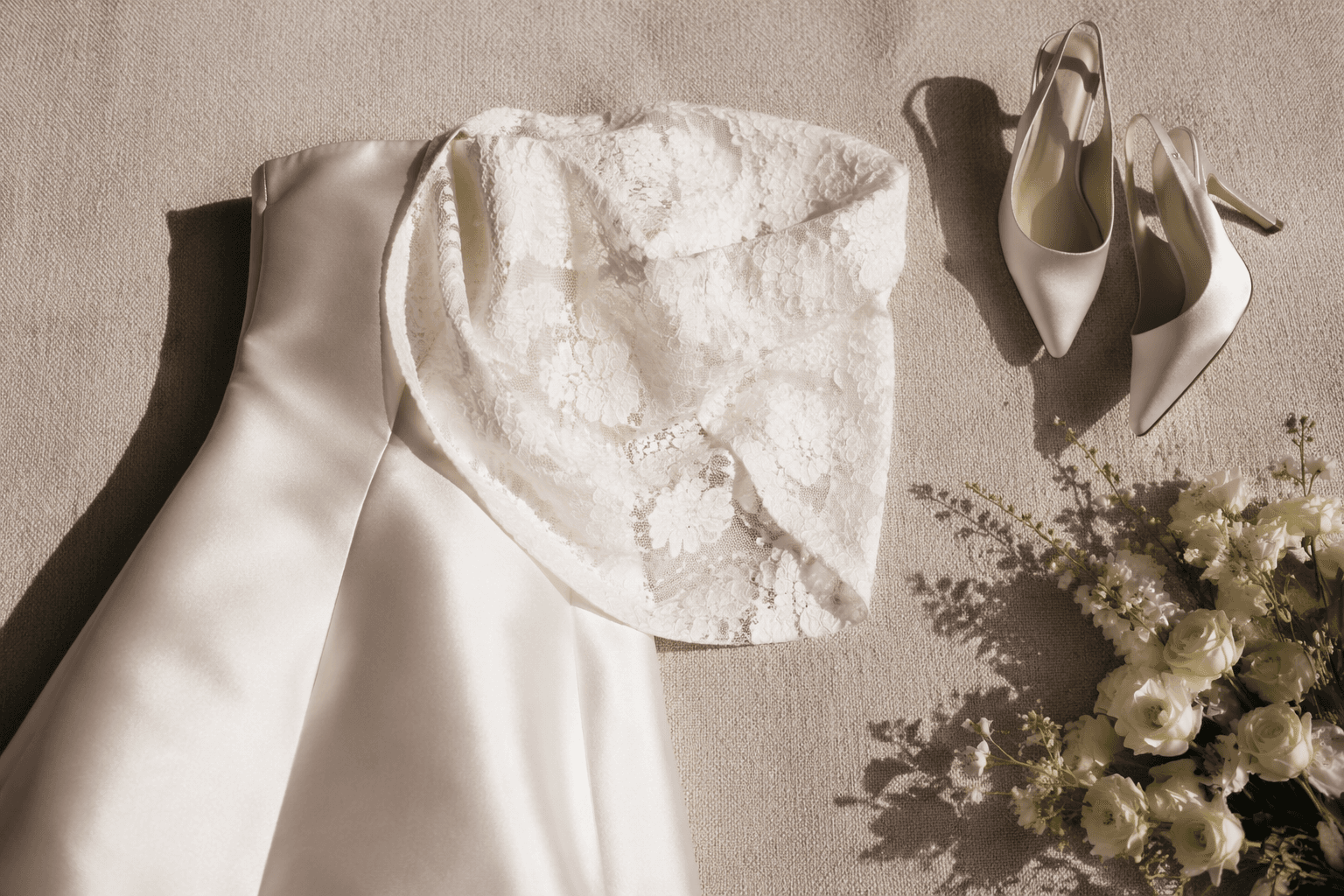
The lace changed the tone without changing the silhouette. That matters. Too many bridal add-ons feel like separate costumes; here, the lace bodice and long sleeves sharpened the gown’s sense of occasion while preserving its long, lean line. It is a useful model for brides who want coverage for the ceremony but do not want the dress to lose its modernity the moment sleeves are involved.
The craftsmanship is part of the statement
The gown reportedly took 140 hours to make, and that number tells you everything about the kind of luxury this dress represents. It is not loud luxury. It is hours of precision, handwork and control, the sort of labour you feel in the finished line rather than in obvious decoration. French lace added richness without clutter, which is exactly why the dress still reads so cleanly in photographs.
That same attention carried through the accessories. Harriet wore a Pragnell diamond-and-pearl tiara, a choice that leaned into royal polish without tipping into excess, and Jimmy Choo Love Sling Back 85 shoes that cost £675. The shoes are a useful reminder that modern bridal styling often works best when one piece carries the quiet glamour and the rest stays disciplined. A sculpted heel, a fine tiara and a clean dress line can feel far more considered than piling on ornament.
The scallop-hem veil completed the image with just enough softness. It echoed the lace without competing with it, which is another reason the whole look landed so well. In bridal styling, the best accessories never fight the dress; they sharpen its point of view.
Why the flowers and family details mattered
The bouquet brought in the most poignant note of the day. Lily of the valley, described as a tribute to Elizabeth II, sat in a floral arrangement that was referred to as a “bowl of cream,” a phrase that suits the pale, lush and unmistakably ceremonial quality of the flowers. That gesture gave the wedding an unmistakable royal lineage without making the look feel trapped by heritage.
The family imagery mattered too. Harriet became stepmother to Peter Phillips’ daughters, Savannah and Isla, and the photographs showed the girls in matching floral crowns holding the bride’s train. That detail turned the dress into more than a solo fashion statement. It became part of a wider domestic picture, one where ceremony and family were folded into the same frame. For bridal dressing, that is a powerful reminder that the most successful looks often serve both the public image and the private moment.
What modern brides can take from this look
Harriet Sperling’s gown is a strong argument for choosing a bridal look that adapts rather than overwhelms. The lesson is not to make the dress busier. It is to build in flexibility so the same silhouette can work harder throughout the day.
- Start with a clean base shape, like a column or slim sheath, if you want the dress to feel elegant in motion and in photos.
- Use removable lace, sleeves or a bodice overlay to add ceremony without sacrificing the simplicity of the original gown.
- Keep accessories disciplined, as Harriet did with the Pragnell tiara, scallop-hem veil and pointed Jimmy Choo slingbacks.
- Let one detail carry meaning, whether that is a flower, a family reference or a historical nod, so the look feels personal rather than overdesigned.
That is why Harriet Sperling’s Emilia Wickstead gown feels so current. It understands that bridal elegance now is not about choosing between tradition and modernity. It is about building a dress that can hold both, then wearing it with enough clarity that every detail, from the lace to the lilies, feels intentional.
This article was produced by Prism’s automated news system from verified source data, official records, and press releases, then run through automated quality and moderation checks before publishing. The system is built and supervised by the people who set the standards it runs under. Read our full AI policy.
Know something we missed? Have a correction or additional information?
Submit a Tip