High street bridal dresses are redefining wedding style in 2026
High street wedding dresses now offer real style at clear prices, but fit, fabric and alterations are still where salons pull ahead.
The high street has stopped acting like bridal backup
The most important shift in bridal right now is not a silhouette or a hemline. It is the location of the purchase itself. ELLE’s latest bridal edit makes the case plainly: more brides are stepping away from the princess fantasy and turning to the high street for dresses that look current, cost less, and feel less emotionally loaded than a full bespoke buy.
That matters because weddings are still expensive, even before the dress enters the conversation. Hitched says the average UK wedding cost reached £21,990 in 2025, up from £20,700 in 2024. Against that backdrop, a dress with transparent pricing and a shorter lead time stops feeling like a compromise and starts feeling like strategy.
What high street bridal now gives you
The clearest advantage is control. High street bridal is easy to price, quick to browse, and broad enough to serve more than one wedding moment. Monsoon’s UK bridal category currently lists 26 products, with wedding separates starting at about £129 and pieces rising to £750 before discounts. John Lewis & Partners has 104 wedding-dress items online, while ASOS has built a dedicated bridal and wedding shop that goes beyond gowns to include bridal outfits and bridal suits.
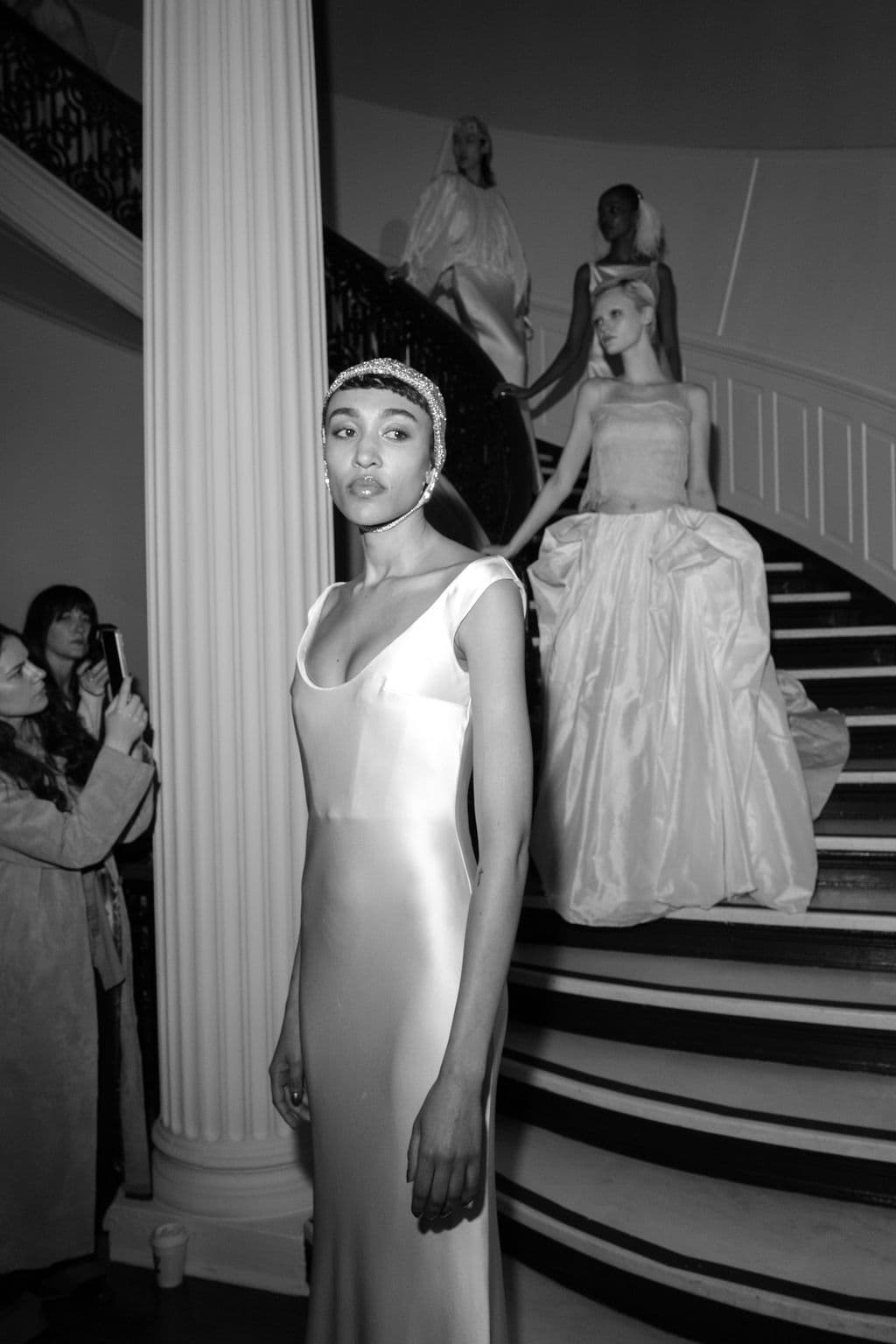
That expansion changes the mood of shopping. You are no longer forced into one archetype of bride. A floor-length lace dress, a tailored all-white suit, a satin midi, a softer maxi or a two-piece separates look now sit in the same conversation. On Marks & Spencer’s occasionwear pages, wedding-appropriate maxis, satin dresses and midi and maxi shapes are presented as part of the same modern occasionwear wardrobe, alongside partner brands such as Monsoon, Ghost and Phase Eight.
This is why high street bridal feels so relevant to 2026. It answers the practical realities brides are living with now: faster decision-making, second-look flexibility, civil ceremonies, more relaxed receptions and a desire to wear something that does not demand the entire budget.
Why the mood has moved away from the big white fantasy
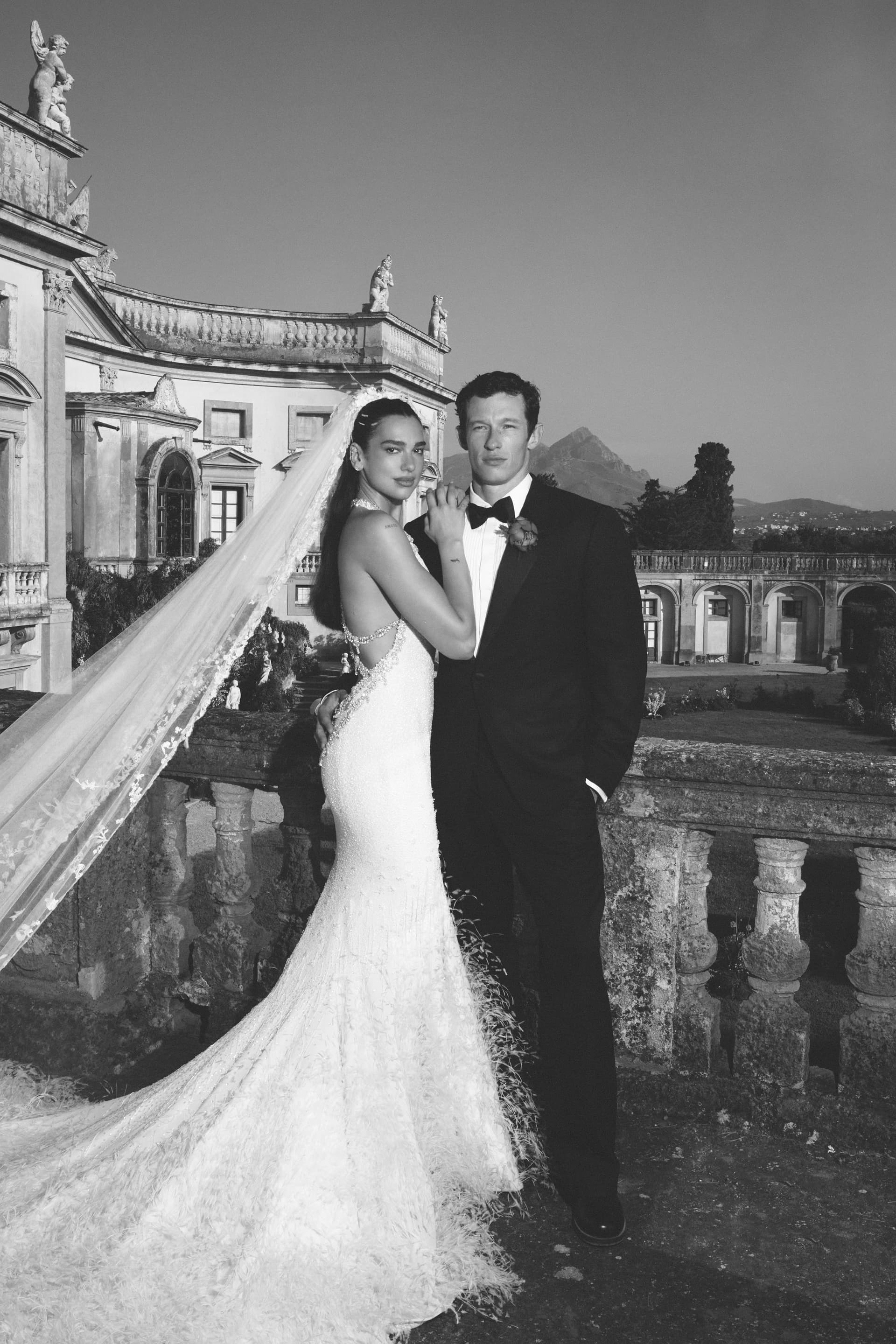
The design language of bridal is becoming more personal and less ceremonial. British Vogue’s weddings coverage has leaned into modern bridal stories, while Marie Claire UK’s 2026 wedding direction points toward fashion-led choices rather than rigid tradition. Short wedding dresses are part of that shift, especially for civil ceremonies, hen parties and second looks, where a long train can feel like overkill.
That move opens the door to shapes that are easier to wear and easier to re-wear. A sharp mini with clean seams feels right for a registry office. A satin midi works for a dinner reception. A suit gives the bride a silhouette with line and attitude rather than volume and ceremony. High street retailers have understood this before many salons have, and that is why the category is now doing more than simply offering lower prices. It is defining a different kind of bridal identity.
Where the salon still wins
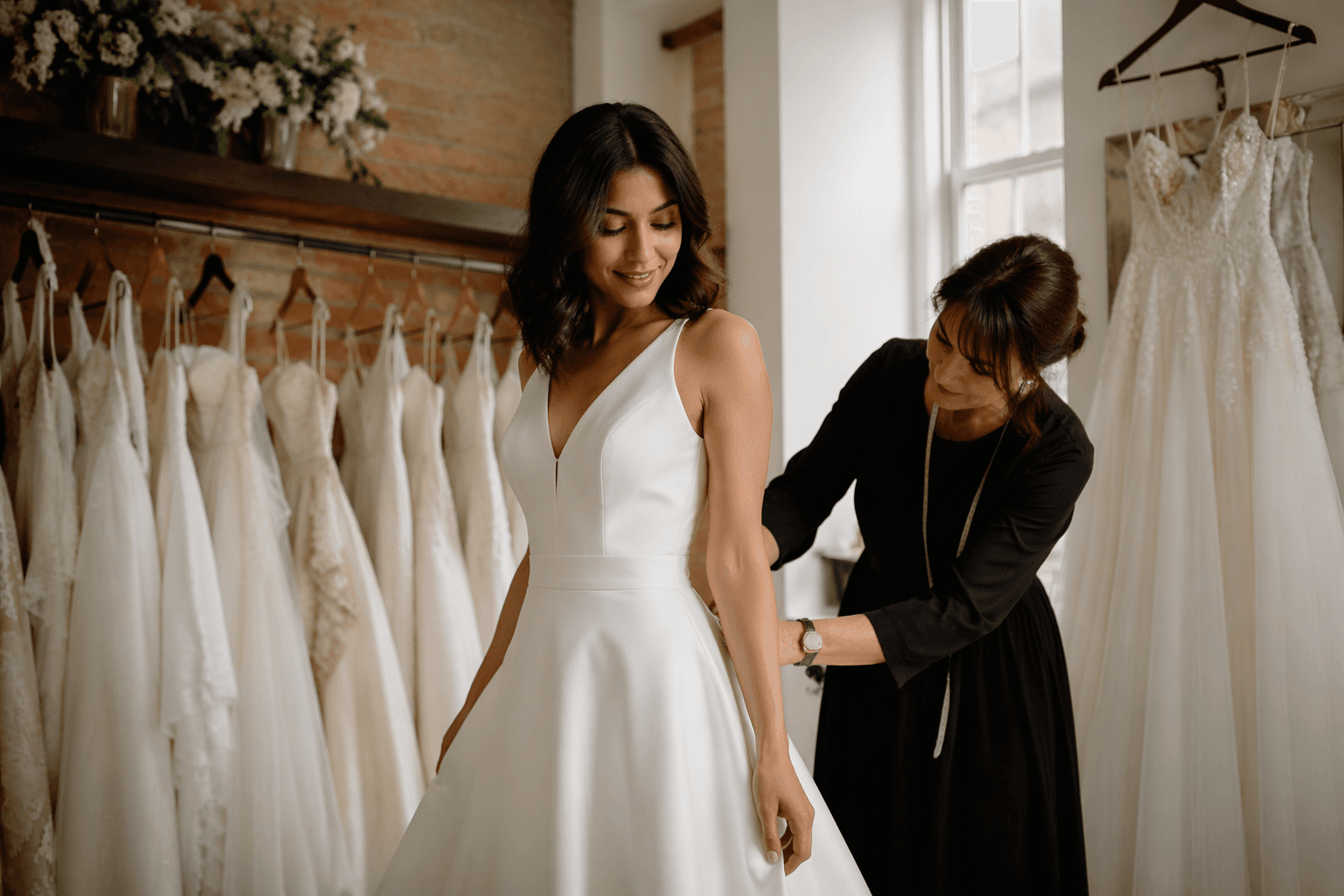
For all the progress on the high street, the salon experience still has real advantages, and they sit in the areas that matter most once the photos are over and the evening begins. Fit is the first one. A bridal salon is built around shaping, pinning and alterations from the start, while high street dresses are usually produced for a broader size spectrum and then adapted later.
Fabrication is the second. High street can deliver style, but it often cannot match the hand-feel, lining, structure and finishing of a couture gown. A dress may look elegant online and still feel lighter, less sculpted or less substantial in person. That difference is especially clear in corsetry, internal support and hems, where a salon piece is engineered to hold its form rather than simply flatter the hanger.
Alterations are the third cost to keep in mind. Hitched’s bridal pricing guide makes clear that wedding dress pricing now spans high street, charity shops, boutiques and couture, which makes neat averages almost meaningless. Dotty Bridal co-directors Shan and Steph, along with senior bridal buyer Rebecca Harding, underline the same point in different ways: the real price of a dress depends not just on the tag, but on the category, the appointment process and what still needs to be adjusted after purchase.
That is the hidden truth of high street bridal. The sticker price is lower, sometimes dramatically lower, but the final bill can still rise once hems, bust shaping and waist adjustments are factored in. The saving is real. It just is not always the whole story.
How to shop the high street like a fashion editor
The best high street bridal buys are the ones that understand proportion and restraint. Look for clean necklines, strong seams and fabrics that do not collapse the moment they leave the hanger. Separates can be especially clever because they allow you to control fit at the top and bottom independently, which is useful if your proportions do not match standard sample sizing.
A smart bridal wardrobe now might look like this:
- A satin midi for a low-key ceremony or rehearsal dinner
- A short dress for a civil wedding or second look
- A tailored white suit for a bride who wants structure instead of volume
- A long, simple gown from Monsoon, John Lewis & Partners or ASOS if you want the comfort of a classic shape without the salon price
The key is to think like a dresser, not a fantasist. High street bridal works best when you know exactly what you want the dress to do: travel well, photograph well, move easily and leave room in the budget for shoes, alterations and the rest of the wedding.
The new bridal equation
High street bridal is not replacing salons so much as redrawing the map. It gives brides speed, price clarity, flexibility and a lower-stakes way to dress for one of the biggest days of their lives. What it still cannot fully replace is the precision, fabric depth and tailoring architecture of a true bridal appointment.
That is why the smartest bridal wardrobes in 2026 will not be the most expensive ones. They will be the ones that understand exactly where high street brilliance ends and where expert fit still matters most.
This article was produced by Prism’s automated news system from verified source data, official records, and press releases, then run through automated quality and moderation checks before publishing. The system is built and supervised by the people who set the standards it runs under. Read our full AI policy.
Did this article answer your question?