How a historic bridal gown's train is conserved for touring
Margaret Whigham’s Hartnell gown turned its train into the main conservation challenge, proving how couture bridal drama depends on engineering as much as beauty.
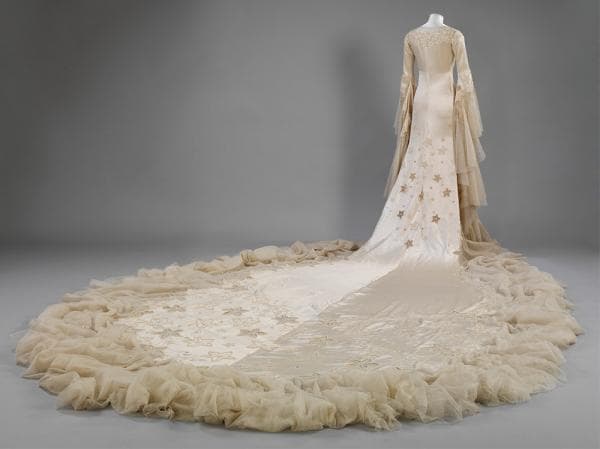
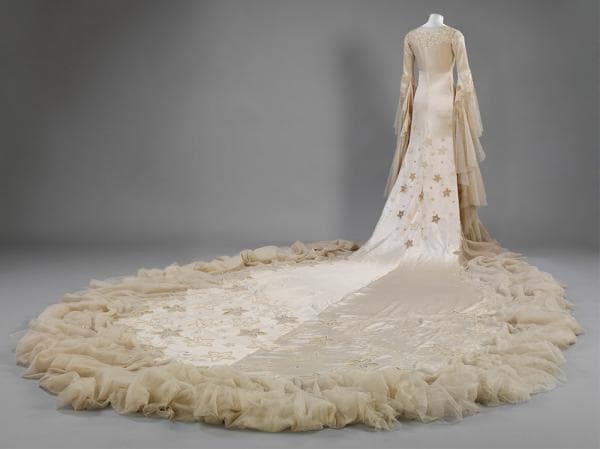
Designed by Norman Hartnell for Margaret Whigham’s 1933 wedding to Charles Sweeny in London, the gown was built to make an entrance, then survive the far less glamorous work of being packed, mounted, and sent on tour. Its train is the star of the story, but it is also the part that most clearly reveals how couture, conservation, and bridal display meet.
A train that defines the whole garment
The Victoria and Albert Museum identifies the dress as object 2010EG1994. The gown is silk satin and tulle, richly embroidered with delicate glass beads. The museum’s own social description gives the train at nine feet, while another published account puts the embroidered train at 18 feet.
A long train transforms silhouette, movement, and photography, but it also loads the garment with weight and tension. Every seam leading into the train, every hemline, and every section of beadwork becomes part of the load-bearing structure, which is why historic bridal fashion can never be treated like simple occasion wear once it enters a museum case or a travel crate.
What conservation has to solve
Keira Miller, the V&A’s Costume Mounting Specialist in the Textile Conservation Department, prepared the dress for exhibition touring after spending the whole of 2009 on the first phase of the Wedding Dress exhibition. Before a gown can travel, it has to be physically persuaded into a stable form that preserves the silhouette without asking the fabric to bear its own weight.
A train creates a conservation puzzle because it wants to collapse, crease, and crush under pressure. Conservators have to think about weight distribution, folding lines, vibration in transit, and the way beadwork or embroidery can snag against itself. The goal is not just to protect the gown from visible damage, but to keep the line of the skirt and train readable when the dress is mounted for display.
How a historic gown is mounted for touring
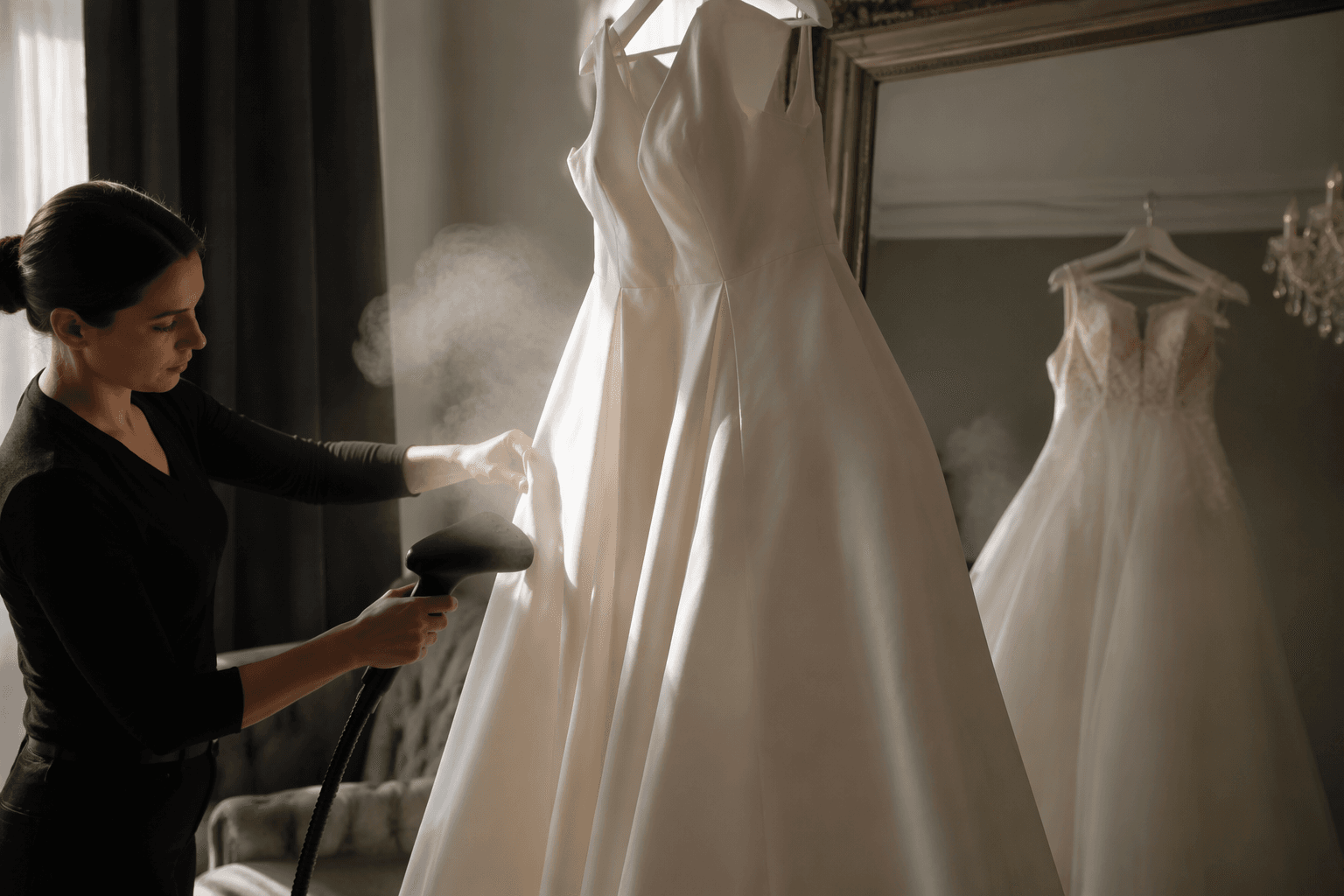
The practical handling of a dress like Whigham’s starts with support. A train is typically treated as its own structural zone, with the skirt and trailing length cushioned separately so the fabric is not forced into sharp bends or unnecessary compression. Custom mounts, padded supports, and acid-free materials help spread stress across a larger surface, rather than concentrating it at the waistline or the edge of the hem.
Packing a bridal gown for tour is nothing like placing a dress in a box. The silhouette has to be preserved in transit, but the train also has to be prevented from crushing its own surface ornament. In a garment like this, the delicate glass beads and embroidered decoration are as vulnerable as the satin and tulle underneath them, so the packing plan has to protect both the shape and the finish.
The exhibition behind the logistics
The dress travelled internationally as part of the V&A’s Wedding Dresses 1775-2014 exhibition, a project that was developed over ten years and displayed at the V&A for ten months before it toured.
A dramatic bridal sweep reads beautifully in a museum room, but it is the part most likely to be stressed by handling and shipment. For collection piece 2010EG1994, the challenge is to show the dress without flattening the train during handling and shipment.
What modern bridal dressing can learn from couture-era handling
The train is not an afterthought. It is a structural feature that affects how the gown moves, how it is stored, and how it will age after the wedding photographs are long gone.
- Support matters as much as decoration.
- Weight should be spread, not left to pull on one seam or waistband.
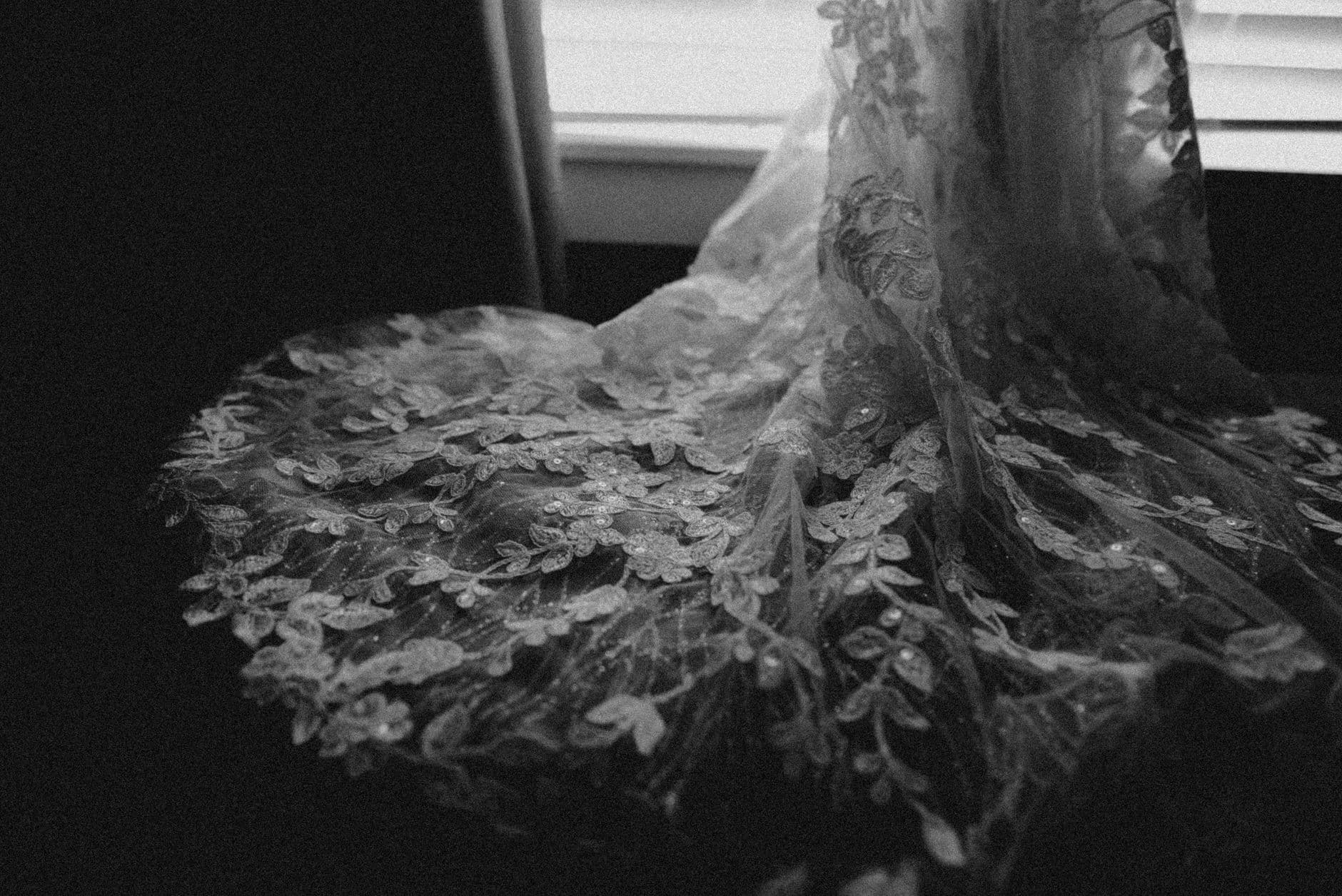
- Beadwork and embroidery need protection from friction as well as impact.
- A train should be considered in storage and transport plans, not only in styling.
That logic is visible in the Whigham gown itself. Silk satin, tulle, and beadwork are already a fragile mix, and a long trailing shape adds another layer of vulnerability. The same qualities that make a dress unforgettable on a bride can make it difficult to conserve after the event.
Hartnell’s broader bridal language
Whigham’s gown also sits within Norman Hartnell’s larger bridal legacy. He later designed Queen Elizabeth II’s wedding dress; the Royal Collection Trust describes it as having a 13-foot silk tulle full court train embroidered in pearl, crystal and appliqué duchesse satin.
This article was produced by Prism’s automated news system from verified source data, official records, and press releases, then run through automated quality and moderation checks before publishing. The system is built and supervised by the people who set the standards it runs under. Read our full AI policy.
Did this article answer your question?